
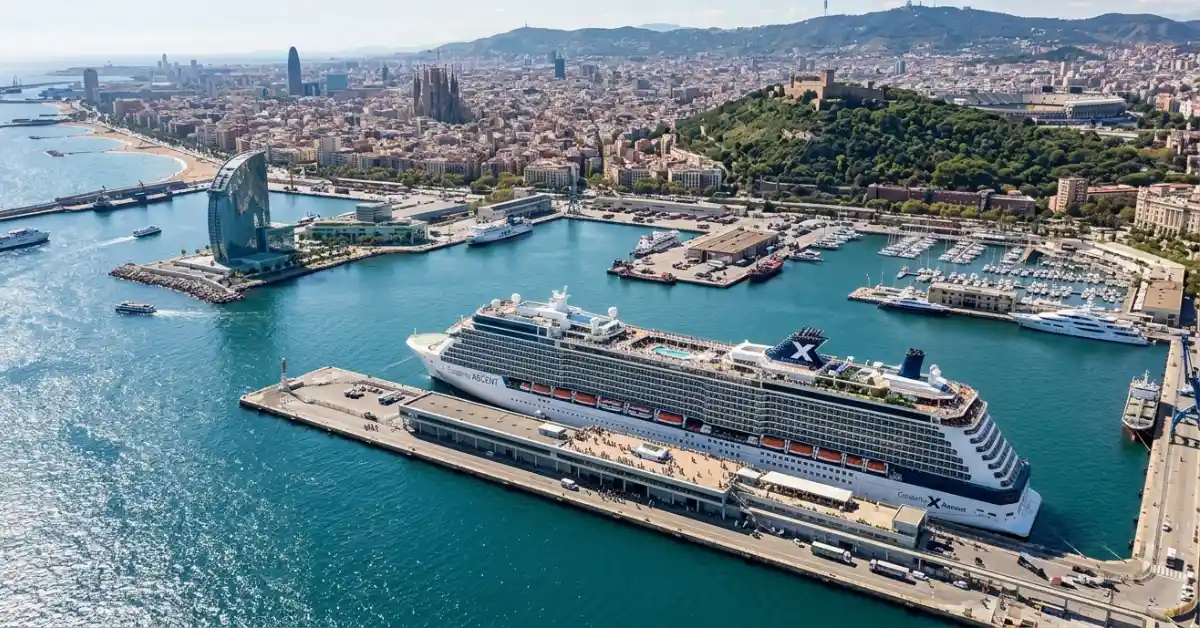
Planning a cruise stop in Barcelona this year? Expect to pay more for it. City officials have moved to nearly triple the municipal fee charged to short-stay cruise passengers — a policy now shorthanded as the Barcelona overtourism cruise tax. This isn’t a footnote buried in some budget document nobody reads. It’s the visible edge of a much larger campaign, years in the making, aimed at slowing visitor growth in one of Europe’s most-photographed destinations. If your Mediterranean itinerary touches Barcelona, the change will show up somewhere: your total cost, your onboard schedule, maybe even how welcome you feel wandering a few streets off the beaten path.
I’ve tracked tourism policy across Europe for years, and this one doesn’t read like theater. Plenty of cities announce crackdowns that quietly fade once the headlines move on. Barcelona is different. The numbers keep climbing instead of settling. Each new proposal lands higher than the last. That’s the signature of a government planning to follow through, not one performing outrage for a single news cycle.
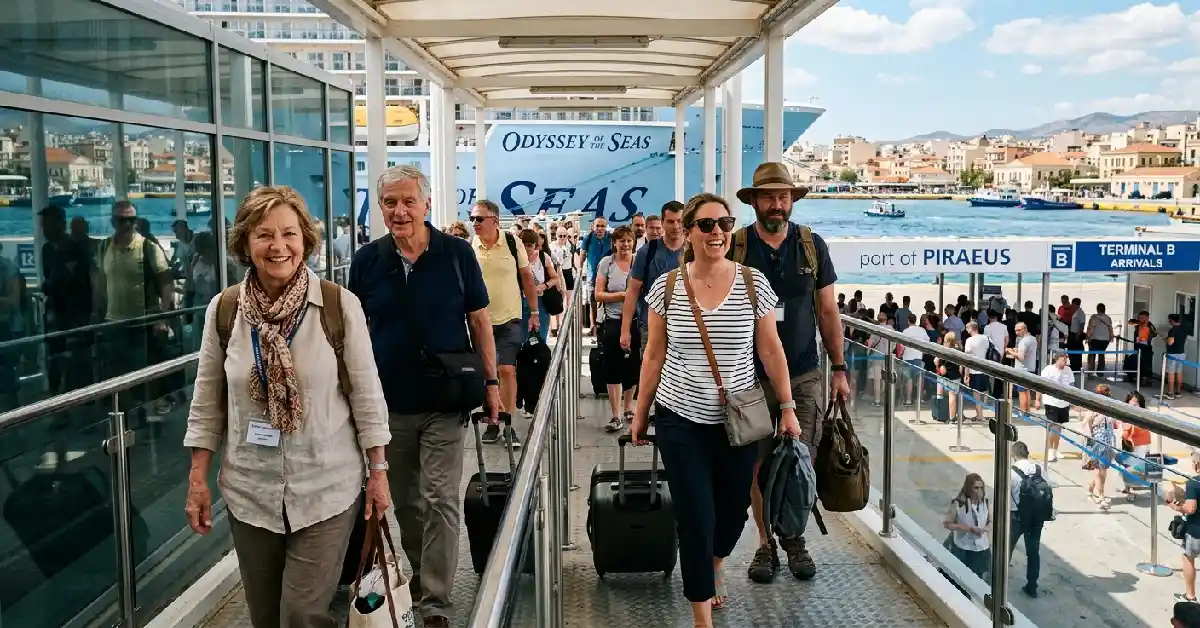
Why Barcelona Is Cracking Down on Cruise Tourism
José Antonio Donaire doesn’t soften his message. As Barcelona’s commissioner for sustainable tourism, he’s made the position clear: growth for its own sake is no longer the goal. The city has already welcomed as many tourists as it can comfortably handle, in his view. Enough is enough — not more is better — and that framing has quietly shaped nearly every tourism decision Barcelona has made this past year.
It’s also why the Barcelona overtourism cruise tax looks this aggressive. When the relevant committee met on July 15, officials skipped the middle-ground option entirely. They went straight for the highest municipal tax legally available for short-stay cruise visitors, tripling a rate that had only existed as a proposal a few months before.
The Numbers Behind the Policy
Here’s the shape of what’s changing, according to Cruise Industry News:
- Passengers spending fewer than 12 hours in Barcelona could face combined taxes of up to €30 (about $35).
- The city is pursuing a municipal tax of €24 (about $27) for short-stay cruise visitors.
- That’s triple the previously proposed rate of €8 (about $9).
- Just months earlier, the mayor had floated something smaller still — €4 to €8 per overnight cruise passenger.
No single figure tells the story here. It’s the trajectory. Every version of this proposal climbed higher than the one before it, never lower, and that pattern points to a settled view inside city government: short-stay cruise tourism delivers little economic value while straining infrastructure disproportionately. Taxing it harder is just catching up to that reality.
The Backstory: Two Decades of Growth, One Breaking Point
Catalonia, the broader region surrounding Barcelona, took in roughly 20.1 million tourists in 2025. That’s only a 0.6% increase over the year before — small by most standards. But size isn’t really the point. That growth is piling onto ground already at capacity, and Barcelona’s physical footprint hasn’t expanded to match years of steady visitor totals.
Reuters traces much of the resulting resident frustration to a familiar trio: rising housing costs, overcrowded public transit, historic neighborhoods that rarely feel like they belong to the people living in them. The New York Times arrived at a similar conclusion, separately. Overcrowding now sits near the top of the list of complaints Barcelona residents raise most often.
None of this is new, even though the tax fight feels urgent right now. Trace it back to 2017. That’s when Barcelona introduced a moratorium on new hotel construction — its first real acknowledgment that unchecked tourism growth carries real costs. One policy. Nearly a decade of gradually tightening rules followed from it.
A Timeline of Barcelona’s Tourism Restrictions
- 2017 — Moratorium on new hotel construction introduced.
- 2024 — Residents protest publicly, some using water guns as a symbolic act against mass tourism.
- April 2026 — Barcelona nearly doubles its hotel guest tax, raising nightly charges from roughly $5–$9 to $10–$17 per person.
- Mid-2026 — Mayor Jaume Collboni proposes doubling the cruise overnight tax from €4 to €8.
- July 2026 — City committee votes to triple that figure to €24, pushing the Barcelona overtourism cruise tax toward its legal maximum.
Must Read: Discovering the Best Italian Restaurant in Toronto
What “Not One Tourist More” Actually Means
Not one tourist more. Four words, and city officials have made them into a philosophy. Donaire points specifically to 2025 — 15.7 million tourists that year — as the moment Barcelona effectively hit its limit. Officials now treat 16 million as a ceiling they don’t intend to cross.
Most cities don’t think this way. Dubai wants more visitors next year than this one. Orlando measures success by rising attendance. Growth is the default metric almost everywhere tourism gets discussed as economic strategy. Barcelona chose the opposite: settle on a number first, then build tax policy to keep the city under that line.
Why Short-Stay Cruise Passengers Are the Target
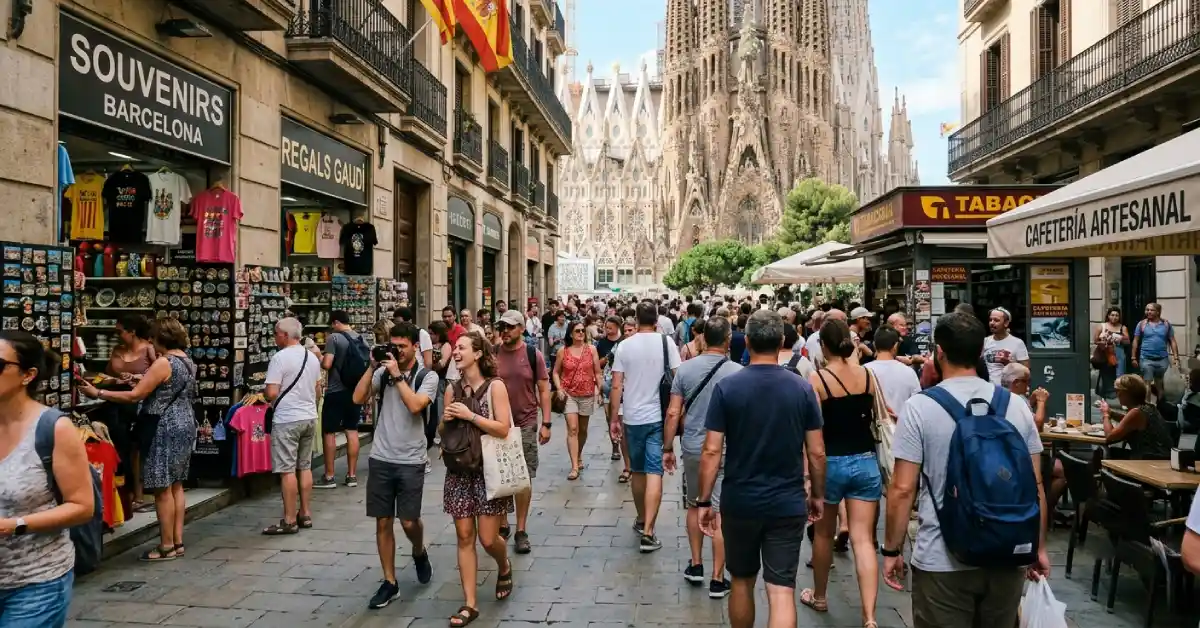
This policy deliberately treats visitors differently, and the logic holds up once you look at the numbers. Short-stay cruise passengers — anyone in port under 12 hours — spend considerably less per person than an overnight guest. Yet their impact on crowding is just as severe. Sometimes worse. A single ship can release thousands of passengers onto the same narrow streets near the Sagrada Familia, Park Güell, and the Gothic Quarter, all within the same tight window of time.
Pros and Cons of the Cruise Tax Strategy
Potential benefits:
- Reduces foot traffic at oversaturated landmarks during peak cruise-ship days.
- Generates municipal revenue that can fund infrastructure and resident services.
- Signals to the cruise industry that itineraries need to shift toward longer, higher-value stays.
- Aligns with similar measures already used in Venice and other overtourism-affected cities.
Potential drawbacks:
- Higher fees may simply get passed along to passengers without changing cruise line routing.
- Smaller port-side businesses that rely on quick cruise-day foot traffic could see reduced spending.
- Some travelers may view Barcelona as less accessible on a budget, shifting demand to nearby ports like Palma or Marseille instead of solving the underlying problem.
None of these drawbacks look severe enough to derail the strategy on their own. Especially if the city pairs the tax with stronger crowd control — and Barcelona already has, rolling out timed-entry systems at its busiest sites. That combination tends to blunt most of the downside before it becomes a real problem.
How This Affects Residents
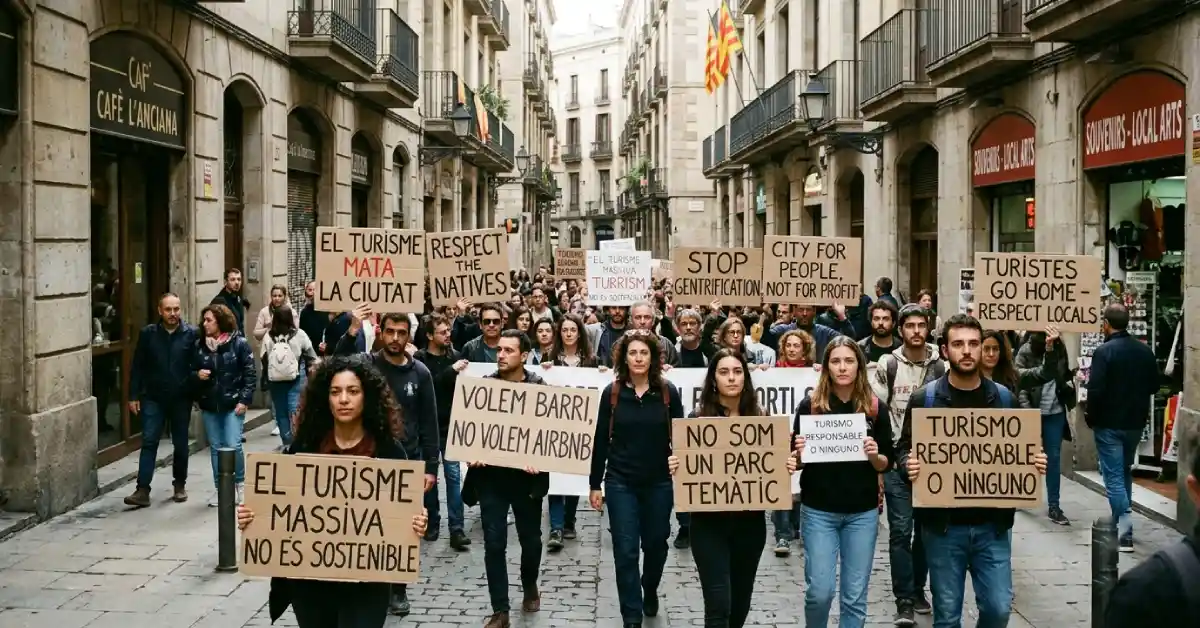
Behind every policy detail sits a resident who’s lived with the consequences for years. Last summer, thousands of them marched through Barcelona’s streets. Some sprayed tourists with water guns — a lighthearted but pointed act of protest that drew international attention. The signs made the sentiment plain: “Tourist go home,” read one. “One more tourist, one less resident,” read another.
Andreu Martínez was among the demonstrators. His rent rose more than 30% as apartments in his own neighborhood got converted, one after another, into short-term vacation rentals. He’s not an outlier. Similar stories surface across dozens of Barcelona neighborhoods, and that pattern helps explain why officials are pursuing the Barcelona overtourism cruise tax with such evident urgency.
Donaire, for his part, pushes back against any suggestion that Barcelona wants tourism gone entirely. What he describes wanting is more modest: a city where a resident can still buy bread, or a book, or a hardware-store screw, in their own neighborhood — rather than navigating past souvenir stalls and phone-case kiosks that replaced the shops locals used to rely on.
Practical Tips for Travelers Planning a Barcelona Cruise Stop
Booking a Mediterranean itinerary for 2026 or 2027? Here’s how to plan around the new tax structure and the broader overtourism crackdown before it catches you off guard:
- Check your total port fees before booking. Combined taxes on short-stay visits can reach €30 per person — factor that into your cruise budget.
- Consider longer port stays. Overnight or extended stops face lower per-day tax rates than quick 12-hour visits.
- Book major attractions in advance. Sagrada Familia and Park Güell already use timed-entry systems, and demand isn’t slowing down.
- Avoid peak cruise-ship days. Cross-reference your cruise line’s Barcelona port schedule with other ships docking the same day.
- Explore neighborhoods beyond the historic core. Areas like Poblenou and Gràcia offer authentic local experiences without the congestion.
- Respect local guidance on short-term rentals. Many buildings now restrict tourist stays, so verify your accommodation is properly licensed.
Expert Perspective: What This Means for the Cruise Industry
Cruise executives, take note. A tax structure that punishes short stays doesn’t just raise costs — it reshapes itineraries. Give it time. Lines will likely start favoring fewer, longer port calls over the current habit of cramming three or four rushed stops into one Mediterranean route.
And Barcelona isn’t inventing this from scratch. Venice already runs a day-tripper access fee, introduced in 2024. Amsterdam capped cruise arrivals at its city-center terminal around the same time. But Barcelona’s version cuts sharper: tax rate tied directly to hours ashore. Stay less, pay more. It’s practically a precision tool built to hit the exact segment of tourism that returns the least local economic value.
Suppose it works as designed — crowding drops, revenue holds. Then expect the model to travel. Other Mediterranean and Caribbean ports could adopt something similar within two or three years. Policies like this rarely stay confined to one city once they prove themselves.
The Bigger Picture: Sustainable Tourism Barcelona Is Betting On
Eliminating tourism was never the plan. Reshaping which kind Barcelona welcomes — that’s the actual goal, per officials. Business travelers. Culture seekers. People after something with real substance behind it, not the twenty-minute photo-stop crowd clogging a plaza and leaving nothing but foot traffic and noise.
Fewer transient visitors. Longer stays that actually mean something. A city center that keeps working for the people who live there all year, not just during peak season. Officials now describe this as the blueprint for sustainable tourism Barcelona wants going forward.
The result? A Barcelona in 2026 that looks different from the one a decade back, and deliberately so. Quick stops cost more now. New hotels face tighter caps. Short-term rentals sit under steady regulatory pressure. Three separate levers, one shared direction.
Final Thoughts
This goes well beyond a routine fee increase. The Barcelona overtourism cruise tax functions as a statement from a city government that has decided, without much hedging, that enough is enough. Add the 2026 hotel tax hike and years of restrictions on new hotel construction to the tripled cruise tax, and what you get is one of the more comprehensive tourism management frameworks found anywhere in Europe right now.
For travelers, the advice is simple enough: plan ahead, factor higher port fees into your budget before checkout surprises you, and consider whether a longer, slower visit might actually serve you better than a rushed twelve-hour dash off a cruise ship. For the cruise industry, the message is harder to miss. Unlimited short-stay port calls in Barcelona are winding down — faster, it seems, than most in the industry expected.
Frequently Asked Questions
1. What is the Barcelona overtourism cruise tax?
A steep hike aimed at short-stay visitors. Cruise passengers spending fewer than 12 hours in Barcelona could face combined taxes as high as €30 (about $35) per person.
2. When does the new cruise tax take effect?
City officials moved to pursue the maximum €24 municipal tax after a July 15, 2026 committee vote, though the exact start date still depends on final approval from Barcelona’s city council.
3. Why is Barcelona limiting tourism?
Housing, public transit, and historic neighborhoods have all felt the strain of rising visitor numbers — enough that officials capped annual tourism at roughly 16 million people.
4. Will this affect all cruise passengers?
No. The steepest increase hits short-stay passengers only, anyone in port under 12 hours. Overnight cruise visitors fall under a separate, lower tax structure entirely.
5. Has Barcelona made other tourism changes in 2026?
Yes, and recently. On April 1, 2026, the city nearly doubled its hotel guest tax, pushing nightly per-person charges from roughly $5–$9 up to $10–$17.