

Beach time or bucket-list sightseeing? A good San Diego travel itinerary doesn’t force you to pick. San Diego packs coastal towns, historic neighborhoods, a genuinely great food scene, and one of the best zoos in the world into a metro area small enough to cross by car in under an hour, so the real challenge was never finding things to do – it’s resisting the urge to cram in too much.
Years of walking this city block by block went into the plan below. It’s been tested against real wait times, real traffic, real tired feet by the end of day two – not assembled from a list of attractions that just sound good written down. If you’re building your own San Diego travel itinerary from scratch, use this as the skeleton. Follow it exactly, or don’t. Bend it however your trip needs to bend.
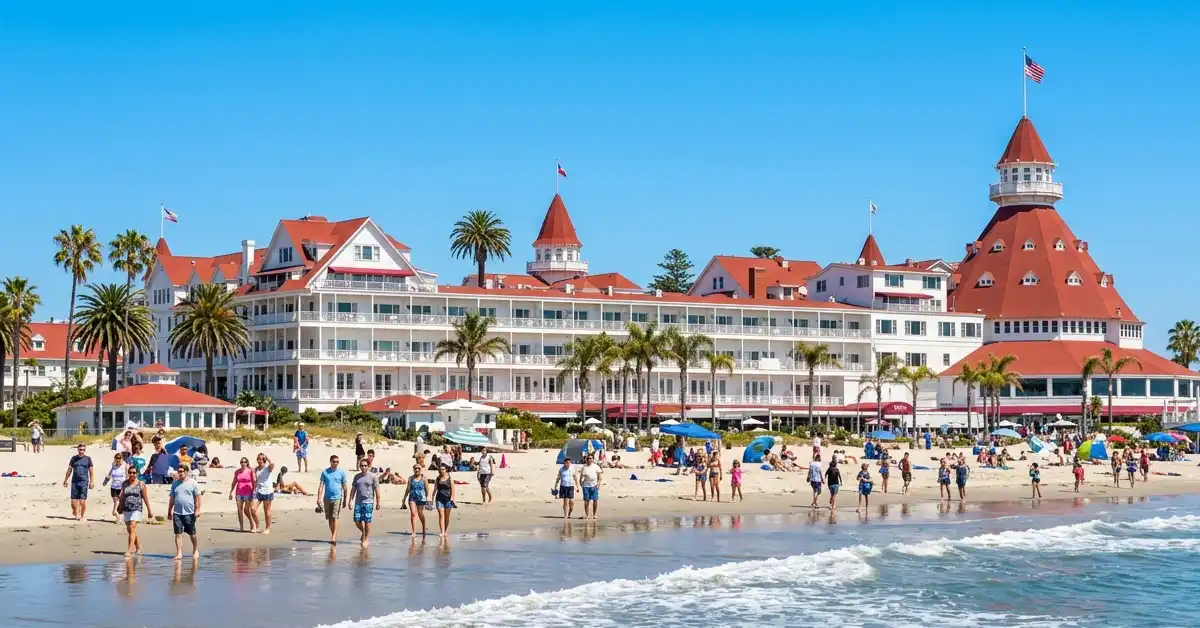
Why San Diego Should Top Your Next Travel Itinerary
Consistency is the edge San Diego holds over almost every other California destination, and it’s not subtle once you notice it. The average high barely shifts more than 10 to 15 degrees between winter and summer. Rain outside December through March is genuinely rare. A San Diego travel itinerary built for a July trip will hold up nearly as well if you show up in February instead – try saying that about most coastal cities in the country.
Its highlights:
- Mild, predictable weather almost year-round – lows and highs rarely exceed 55°F – 80°F
- Everything from surf towns to 70 miles of quiet little beaches
- Little Italy, La Jolla, Coronado, North Park – each feels like a completely different city with a truly dense mix of residential areas
- A strong food culture with craft beer, and fresh seafood, especially Mexican cuisine
- There’s something for every type of traveler, whether it’s family days at the zoo and parks or nights spent until dusk in the Gaslamp Quarter,
-
Worth knowing before you book: locals have nicknames for late May and June – “May Gray,” “June Gloom” – and they’re not just being cute. Fog rolls in most mornings during this stretch. But it typically clears by early afternoon, so your day usually isn’t a wash.
Do You Need a Car in San Diego?
That’s the question people ask me more than any other – and honestly, it comes down to one thing: how much you actually want to explore while you’re here.
You can skip the rental car if:
- You’re staying in one central area like downtown or the Gaslamp Quarter
- You’re comfortable relying on rideshare apps and the Coronado Ferry
- Your itinerary is light on stops outside walking distance
Rent a car if you’re planning to hit La Jolla, Point Loma, and Coronado all on one trip. A car also makes sense for families – when nap schedules and mealtimes need flexibility, having your own wheels just makes life easier.
Must Read: Discovering the Best Italian Restaurant in Toronto
Where to Stay: Matching Your Hotel to Your Itinerary
Match the hotel to the trip, not just the budget. That’s really the only rule worth following. Here’s how the main options break down:
| Area | Best For | Vibe |
|---|---|---|
| Coronado | Beach-first travelers, honeymoons | Quiet, historic, resort-style |
| Gaslamp Quarter | Nightlife, walkability | Central, energetic |
| La Jolla | Luxury, wildlife viewing | Upscale, coastal |
| Point Loma | Families, private beach access | Relaxed, residential |
For a beach-heavy San Diego travel itinerary, Coronado or La Jolla puts you closest to the water, no contest. If food and nightlife matter more, the Gaslamp Quarter or Little Italy keeps nearly everything within walking distance – which matters more than people expect after two glasses of wine.

The 3-Day San Diego Travel Itinerary
Arrive Friday evening, leave Monday. Three full days, no wasted mornings – that’s the shape this plan assumes.
Day 1: Balboa Park and the Coast
Breakfast downtown first. Balboa Park comes next, and it’s not just a park – it’s the cultural heart of San Diego, packed with more than a dozen museums, gardens that ramble on for acres, and the Spanish Village Art Center, still home to working artists in studios dating back to 1935. Two hours, minimum. Nobody budgets enough time for this place.
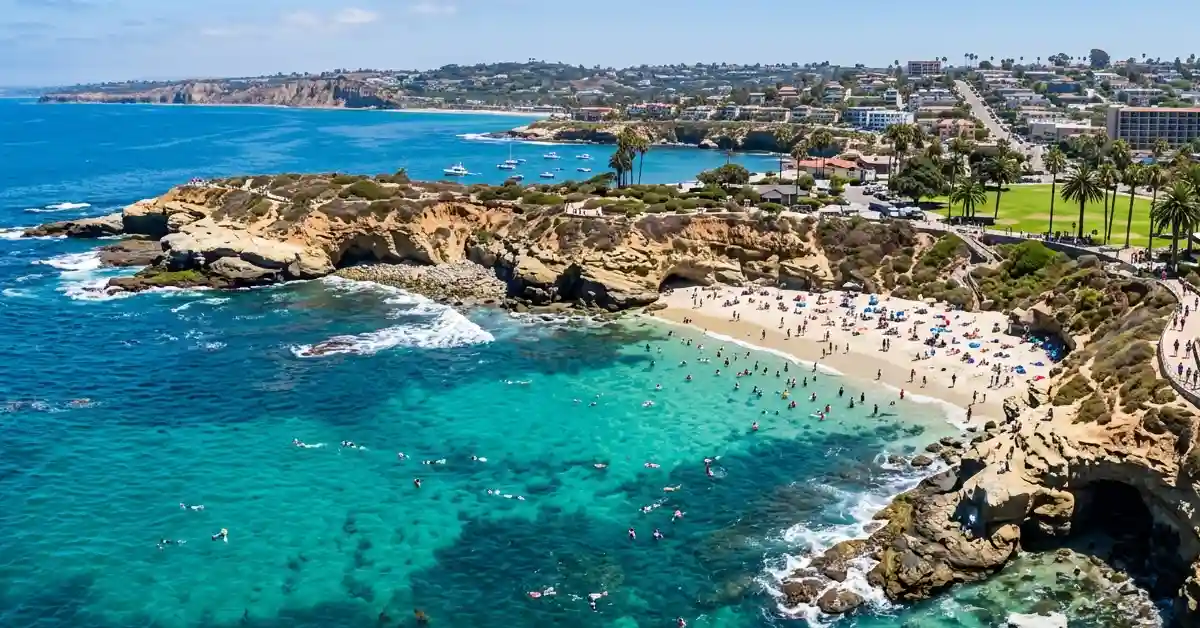
Afternoon Drive north to La Jolla, one of the most scenic coastlines in the region – and it earns the reputation every single time. Don’t miss:
- Dive into La Jolla Cove for a swim, or strap on a mask and explore the reef below.
- Just down the shoreline, harbor seals have claimed Children’s Pool Beach as their own – and they don’t seem to be leaving anytime soon.
- Shops to browse, food to try, and nowhere in particular you have to be: that’s the Village.
Parking tip: skip the coast. A few blocks inland, street parking is much easier to come by – and honestly, the walk back is nothing.
Evening Dinner in Little Italy. Over the last decade or so, this neighborhood quietly turned into one of the city’s best food scenes. Craft breweries, upscale steakhouses, everything in between – all crammed into a handful of walkable blocks that somehow never feel crowded.

Day 2: Point Loma and Old Town
Morning Liberty Station first – a former naval base turned public market, where restaurants and boutique shops sit alongside an open-air food hall big enough to swallow an hour without you noticing. Grab breakfast there. Afterward, Point Loma is the move: Cabrillo National Monument, a historic lighthouse, and tide pools that barely anyone thinks to add to their San Diego plans.
The National Park Service marks this as the spot where the first European expedition reached what’s now the U.S. West Coast. Historically significant. Constantly overlooked.
Afternoon Two directions from here, depending on your mood:
- Pacific Beach – boardwalk strolls, casual bars, a younger crowd
- Old Town San Diego State Historic Park comes next – this is where the city began, and it shows: restaurants, shops, and museums all preserved right down to the details.
Evening Dinner in South Park. Independent boutiques, strong Italian food, and a layout compact enough that even a wait for a table doesn’t feel like dead time. Weekends fill up fast, so book ahead – otherwise you might end up standing around for an hour.
Day 3: The Zoo and Coronado
Morning Grab coffee in North Park or Hillcrest first. Then it’s off to the San Diego Zoo, sitting inside Balboa Park – one hundred acres, home to more than 3,500 animals, including one of the largest koala populations outside Australia. Three hours, minimum, if you want to actually see the place instead of just jogging through it.
Afternoon Cross the Coronado Bridge, or take the ferry if you’d rather skip the drive. Coronado feels like nowhere else in San Diego, with Hamptons-style mansions sitting next to Spanish casitas next to classic beach cottages – nobody agreed on a theme, and somehow it works. You’ll also spot the historic Hotel del Coronado – quite possibly the most photographed building in all of Southern California.
Evening End the day with sunset drinks on the beach, feet in the sand. Dinner follows at one of Coronado’s coastal restaurants. It’s the right note to close out a San Diego trip on.
Beyond the 3 Days: What to Add If You Have More Time
Got an extra day? These are worth it:
- North County beach towns. Encinitas, Carlsbad – slower pace, noticeably fewer tourists
- A Temecula day trip, about 60 miles northeast, if wine country sounds appealing
- Petco Park, if the Padres happen to be playing while you’re in town
- The San Diego Zoo Safari Park, a wilder and far more spread-out version of the main zoo
- USS Midway Museum – a retired aircraft carrier, docked right downtown, bigger inside than it looks from the water
Pros and Cons of a 3-Day San Diego Trip
Pros:
- Everything’s close. Less time driving, more time actually doing things
- The climate makes outdoor plans a safe bet almost regardless of season
- Good food and good coffee, in nearly every neighborhood you’ll pass through on this itinerary
Cons:
- Three days runs tight the moment you add extras like Temecula or the Safari Park
- Brunch means waiting. The popular spots fill up fast, especially on weekends
- Peak-hour traffic between neighborhoods can eat 20 to 30 minutes you didn’t budget for
Expert Tips for Building Your Own San Diego Travel Itinerary
- Book brunch ahead when you can. Weekend waits at the popular spots regularly stretch past 45 minutes.
- Crowds at the zoo thin out noticeably on weekday mornings – go early, go on a Tuesday if possible.
- Layer. Coastal mornings run 10 to 15 degrees cooler than inland afternoons, and that gap catches people off guard.
- Low tide is your window for the tide pools at Point Loma. Check NOAA’s tide prediction tool before you go.
- Watch the parking signs closely. Street sweeping in Little Italy and North Park is enforced strictly, and the tickets aren’t cheap.
Real-World Example: How This Itinerary Plays Out
A couple I know visited for a long weekend in October and followed this exact structure – Balboa Park, La Jolla, Point Loma, Old Town, the zoo, Coronado, all of it, without ever feeling rushed. Each day had one clear geographic focus instead of bouncing across the city chasing attractions in the wrong order, and that’s really the whole trick behind a workable San Diego travel itinerary. Group your stops by location first. Build the day around that cluster.
Conclusion
Group your days by neighborhood. That’s it – that’s basically the whole strategy for a good San Diego itinerary. Resist the urge to zigzag across town chasing every place you’ve bookmarked online. Balboa Park and La Jolla on Day 1. Point Loma and Old Town on Day 2. The zoo, then Coronado, to close out Day 3. Hold that shape and the trip stops feeling like a highlight reel – it starts feeling like a city you actually visited. San Diego doesn’t ask for much. Just a little structure, and an appetite to match, whether you’ve got two days or two weeks.
Frequently Asked Questions
1. How many days does a San Diego trip actually need?
Give yourself three days. It’s the sweet spot – Balboa Park, La Jolla, Coronado, the zoo, all covered with room to breathe. Throwing Temecula into the mix? That’ll cost you a fourth day.
2. What is the best time of year to visit San Diego?
Honestly, you can’t go too wrong with any month. Fall stands out, though – September through November brings noticeably thinner crowds, and the sun tends to hold up better than it does all summer.
3. Do I need to rent a car for a San Diego trip?
Only if your plans demand it. A downtown, walkable trip? Rideshare and transit cover the gaps just fine. Trying to hit La Jolla, Point Loma, and Coronado in the same few days is another story – that’s when a car starts paying for itself.
4. Is San Diego good for a family trip?
Very much so. The zoo, Balboa Park, Coronado’s beaches – kids are practically the target audience for half this city, and hotels and restaurants here plan around that.
5. How much does a 3-day San Diego trip typically cost?
Two people, three days, mid-range hotel – expect something in the $800–$1,500 range once meals and attractions like the zoo are factored in. That number climbs or drops fast depending on where you sleep, and it doesn’t include flights.