

Ask five people about the UK Ireland ferry passport requirement and you’ll get five confident, contradictory answers. Nobody quite agrees. For decades, hopping across the Irish Sea meant grabbing a driving licence, maybe not even that, and going. Simple. That simplicity is disappearing, quietly, one route at a time, one operator at a time, until suddenly it isn’t simple at all. Turn up with a library card as your ID and don’t be shocked when the ferry leaves without you.
So why the fuss? Because nothing about this stays fixed long enough to memorise. One operator waves you through with almost anything resembling a photo. The next studies your card like it’s a forged hall pass from school. Get the current UK Ireland ferry passport requirement wrong, and a relaxed crossing turns into a stressful scene at check in, luggage everywhere, booking gone.
Why the UK Ireland Ferry Passport Requirement Is Changing
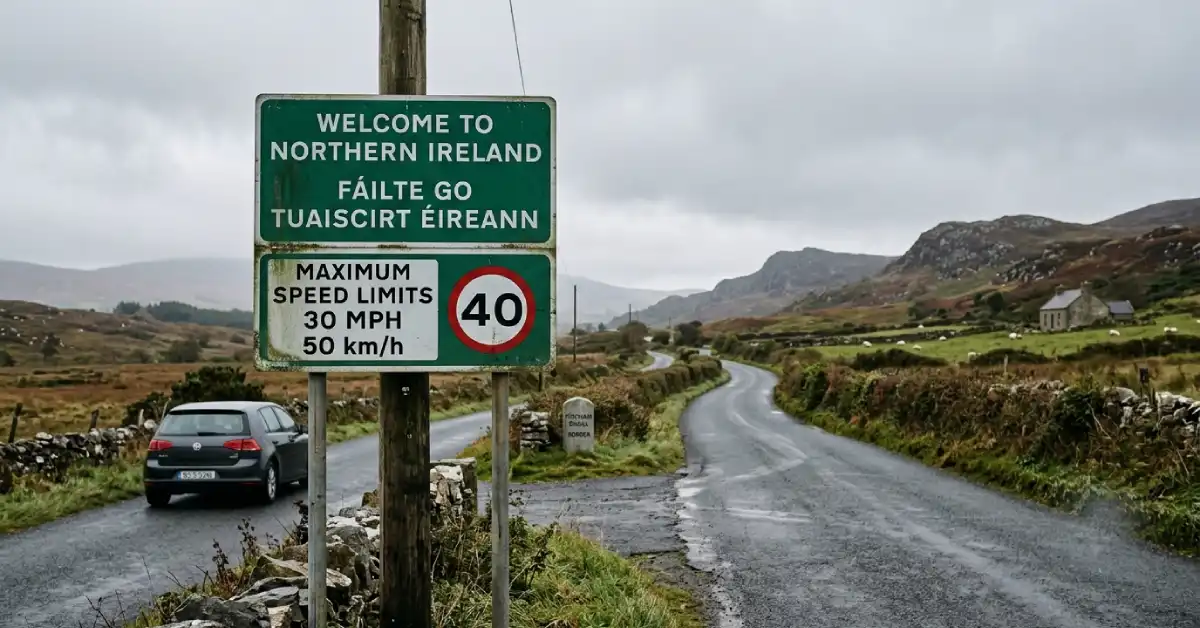
There’s this thing called the Common Travel Area, CTA for short, dating back to 1923. The pitch was simple back then: no passports, we trust each other, an old handshake deal that never quite hardened into strict law. Governments signed it, though, not ferry companies out of pure kindness. A 2019 Memorandum of Understanding reaffirmed the whole arrangement, for what it’s worth.
Here’s the catch nobody mentions. Legally exempt and actually allowed to board are not the same thing, not even close. Official UK government guidance on the Common Travel Area confirms CTA citizens don’t need a passport inside the zone. True. But carriers decide what counts as valid ID, and lately most of them are landing on the same answer. Passport, or the long walk home.
Airlines Moved First, Ferries Are Following
Ryanair got there first. Aer Lingus followed soon after. Bus passes, work badges, student cards, gone, retired without so much as a farewell email. Ferry companies have been watching quietly from the sidelines, and now the Isle of Man authorities have confirmed active talks with the Steam Packet Company about bringing in formal identity checks, tied explicitly to CTA security obligations. Read that carefully. The UK Ireland ferry passport requirement isn’t softening anywhere. It’s tightening, fast.
Security Pressure Is the Real Driver
Three things are behind this, and none of them are thinking about your holiday.
- Post Brexit border enforcement. Ireland stayed inside the EU. Britain walked out. Naturally, both governments now want a sharper picture of exactly who’s crossing.
- The UK’s Electronic Travel Authorisation scheme. Since 25 February 2026, most visa exempt travellers need an Electronic Travel Authorisation before entering the UK, full stop. Carriers must verify it somehow, and a passport happens to be the easiest thing to check.
- Organised crime concerns. Isle of Man officials have directly linked ferry terminal ID checks to catching vehicles used for criminal activity. Not exactly the plot twist most travellers expect from a routine sailing.
What the UK Ireland Ferry Passport Requirement Actually Looks Like Today
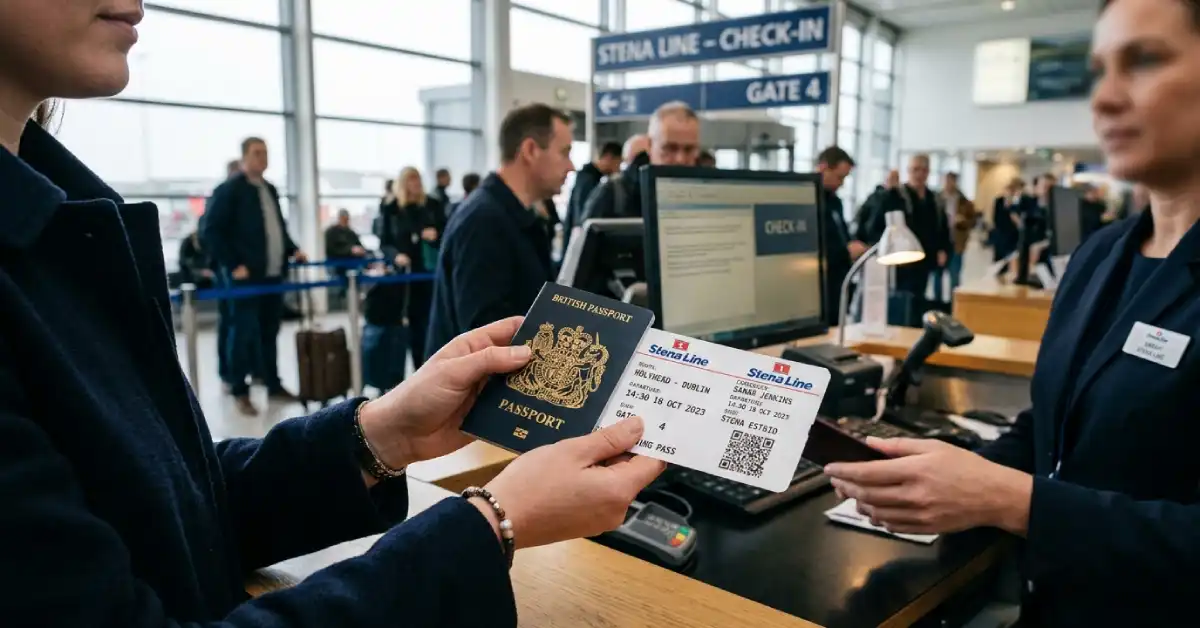
Messy. Genuinely messy. It comes down almost entirely to whose ticket you’re holding.
British and Irish Citizens
Legally? No passport required. Still true under CTA rules, and that hasn’t changed. Comforting, until you actually get to the counter:
- Most operators still take photo ID: a UK or Irish driving licence, an Irish passport card, that sort of thing.
- Others are heading toward passport only, trailing the airlines like ducklings falling in line.
- Kids without adult ID? Expect questions. A birth certificate or a passport spares everyone an awkward exchange.
Non-CTA Nationals
Passport issued somewhere outside the UK, Ireland, or the Crown Dependencies? There’s barely any wiggle room here, and no amount of charm changes that. You’ll need:
- A valid passport, essentially always.
- A UK ETA, if you’re visa exempt and heading to or through the UK. Apply at least three working days out, ideally more, because panic paperwork is rarely good paperwork.
- Whatever Irish visa your nationality requires, since Ireland runs its own entry rules independent of Britain’s.
EU, EEA, and Swiss Nationals
A national ID card still works for Ireland. Small mercy. The UK side, though, keeps leaning harder toward passports, particularly now that ETA checks sit inside booking systems like a surprise fee you never noticed at checkout.
Must Read: Best Places to Visit in Ireland for Couples
Ferry Operator Rules Compared

| Route Type | Typical Accepted ID (2026) | Trend |
|---|---|---|
| GB to Ireland, CTA citizens | Photo driving licence, passport, Irish passport card | Tightening toward passport only |
| GB to Isle of Man | Under review, formal ID checks proposed | Moving toward mandatory ID |
| GB to Ireland, non-CTA nationals | Passport plus ETA where required | Already strict |
| Ireland to GB, EU/EEA nationals | National ID card generally accepted | Stable for now |
Think of this table as a weather forecast. Accurate for now. Possibly wrong by next month, since conditions of carriage shift with barely any warning at all.
Benefits and Drawbacks of the Tightening Rules
Benefits:
- Less forged ID at ports. Bad news only for the people relying on the forgeries.
- Ferry rules now mirror airline rules, so travellers stop juggling two mental rulebooks at once.
- Biometric and electronic checks are speeding things up across UK borders, in theory anyway.
Drawbacks:
- Older travellers, and anyone without a passport already, are suddenly facing costs they hadn’t planned for.
- Families with young children? Extra time, extra documents, extra patience required for what used to be a quick day trip.
- Enforcement stays wildly inconsistent between companies. Social media proves it daily, full of travellers who learned this the hard way, right at the gate, in front of everyone waiting behind them.
Practical Steps to Avoid Being Turned Away

- Check your operator’s conditions of carriage before booking. Not after. Reading the fine print once you’re stranded helps absolutely nobody.
- Carry a passport if you have one. Even when it’s technically optional, it works everywhere, and it future proofs you against whatever new rule shows up next.
- Apply for a UK ETA early. A week ahead is safer than the recommended three days. Typos happen. Photo uploads fail. Give yourself room.
- Bring ID for every single passenger, kids included. One missing document holds up the whole group, like a traffic jam that only exists for your car.
- Screenshot the operator’s ID policy the day you book. Useful proof if the desk staff suddenly recall the rules differently than you did an hour ago.
- Arrive earlier than you think you need to. Manual ID checks eat time that tap and go boarding never used to.
Expert Insight: What Frequent Sea Travellers Are Reporting
Same story, over and over, through 2026’s travel coverage. Aer Lingus chose passports over general photo ID, matching what Ryanair already required. Security and consistency, the airline called it. Not a strict legal obligation under CTA rules, technically. Try telling that to someone stuck at the gate holding only a work badge and a boarding pass.
The takeaway is almost annoyingly simple. Read the ferry company’s own terms and conditions. Ignore the CTA folklore your uncle keeps repeating at family dinners. Regular travellers on the Holyhead to Dublin route, and Cairnryan to Belfast too, now just carry a passport by default, regardless of nationality. Why? Because nobody wants to be the next cautionary story trending online.
How This Affects Trip Planning
Booking a ferry crossing, family holiday or business trip or a quick day return, treat the UK Ireland ferry passport requirement exactly like a visa or an ETA. Plan around it early. Don’t stumble into it at the desk. Assuming last year’s rules carry over is like assuming your old phone charger fits the new phone. Hopeful, sure. Rarely accurate.
- Book early enough to renew an expired passport. Peak season processing crawls, sometimes for weeks.
- Consider an Irish passport card if you’re an Irish citizen who travels often. Smaller, cheaper to replace, fully accepted for CTA travel.
- Check multi leg tickets carefully. Codeshares, combined ferry-rail bookings, they can quietly demand different documents per leg without ever flagging it upfront.
Conclusion
The UK Ireland ferry passport requirement isn’t the relaxed, settled system it used to be, not anymore. Travellers still leaning on old CTA habits are exactly the ones getting caught out at the port. British and Irish citizens remain legally exempt from carrying a passport, that part is unchanged. What’s changed is the operators themselves, quietly writing stricter rules and following Ryanair and Aer Lingus the way a classroom copies the top student’s homework. Check your operator’s policy first. Carry a passport if you own one. Get your ETA sorted early if your nationality needs it. It takes minutes. A missed sailing takes a lot more than that, and explaining it to the family waiting in the car takes even longer.
FAQ
Q1: Do I legally need a passport for the UK Ireland ferry crossing?
No, not legally. Under the Common Travel Area, British and Irish citizens don’t need one to travel between the UK and Ireland. But individual ferry operators set their own ID rules, and plenty now insist on a passport regardless of what the law technically says.
Q2: What ID do ferry companies accept between Britain and Ireland in 2026?
Depends entirely on the operator, a bit like restaurant menus claiming the same dish tastes nothing alike between chains. Photo driving licences and Irish passport cards still work in many cases. The direction of travel, though, following Ryanair and Aer Lingus, points firmly toward passport only. Check before you book, every time.
Q3: Do non-UK and non-Irish citizens need a passport for the ferry?
Yes. No way around it, no exceptions worth counting on. Non-CTA nationals need a valid passport nearly always, and many visa exempt travellers also need a UK Electronic Travel Authorisation before they can board.
Q4: What is the UK ETA and does it affect ferry travel?
A digital entry permission, required since 25 February 2026 for most visa exempt travellers entering the UK. Irish citizens skip this one. Everyone else within the CTA, plus third country nationals, generally needs to apply before travelling by air, rail, or ferry. Sort it early. The terminal is no place for last minute panic.
Q5: Can children travel on the UK Ireland ferry without a passport?
Sometimes, yes, a birth certificate can work under CTA rules. But it depends on the operator, and policies shift without much warning, not unlike a toddler’s mood on a long car ride. Bringing a passport for kids remains the safer call.