
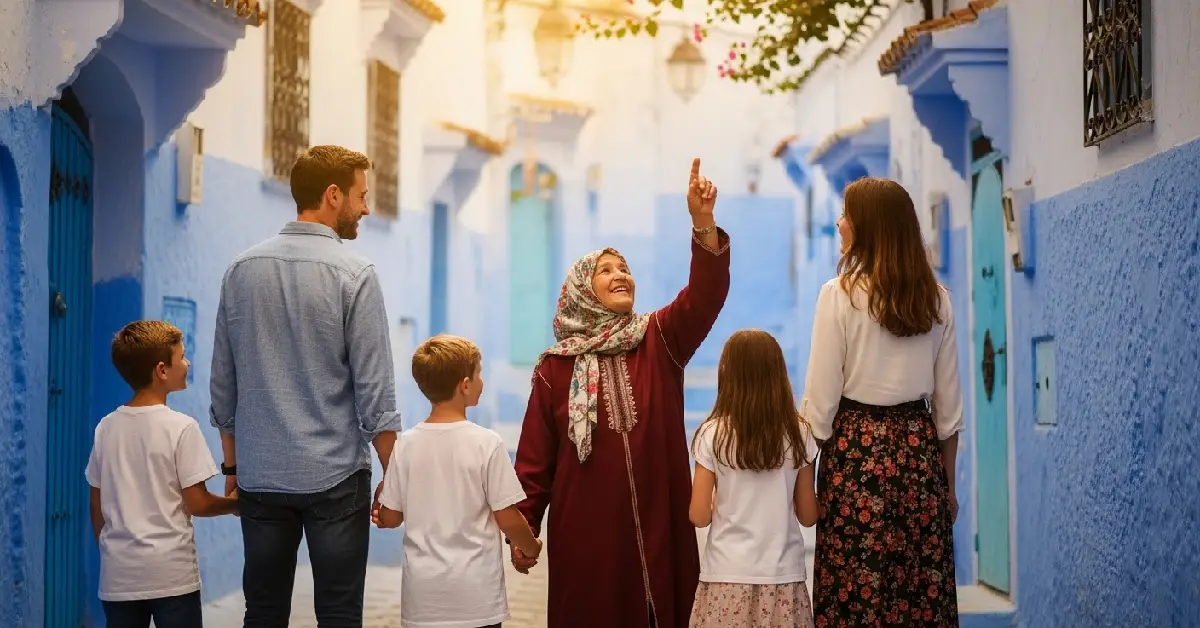
The first time I watched my own child sit cross-legged on a worn kilim and roll semolina flour into tiny pearls with a Berber grandmother who spoke no English, I knew this wasn’t just a holiday. It was a quiet, profound lesson in what matters. That’s the heart of a real cultural exploration in Morocco, it seeps into your family’s bones in ways a resort pool never will. This North African kingdom doesn’t put culture behind glass. It invites you into kitchens, into clay workshops, onto fossil-strewn desert plateaus, and into stories told by firelight. I’ve been designing these kinds of trips for well over a decade now, and I can tell you without hesitation that Morocco is one of the few places left where deep, generous, entirely unscripted human connection still defines the travel experience.
Table of Contents
ToggleWhy Families Are Choosing Morocco for Deep Cultural Travel
Something shifted in family tourism around the mid-2010s. Parents got tired of the surface-level stuff. They started asking better questions: “Where can my kid learn something real? Where can we be challenged and delighted at the same time?” A cultural exploration in Morocco answers those questions beautifully.
Moving From Passive Vacations to Active Discovery
The old model was simple: fly somewhere warm, check into a resort, and maybe take a half-day bus tour. That’s rest, I suppose, but it’s rarely transformation. Traveling families today, particularly from the U.S. and Canada, want what I’d call “sticky learning.” The kind that follows a child home. When a 12-year-old from Ohio learns to haggle respectfully in a Fes souk using three words of Arabic, or watches a craftsman chisel impossibly intricate patterns into plaster while explaining the geometry behind it, that kid is never going to sit in math class the same way again. Morocco turns abstract curriculum into lived memory.
A Country Built Around Welcome
One thing you can’t fake: a culture’s default posture toward strangers. Morocco’s tradition of wajib al-qiran, the moral duty of hospitality, runs deep and old. It’s woven into the fabric of daily life. I’ve lost count of the times a shopkeeper has invited my family for tea not to sell us anything, but because my daughter smiled at his cat. Traveling here with children amplifies this warmth. The kingdom has also made smart, practical investments, improved roads in tourist corridors, a dedicated Brigade Touristique in major cities, and a genuine governmental commitment to making international visitors feel safe. You’ll notice it.
The Real Morocco: What Daily Life and Culture Feel Like
Let me paint a picture beyond the Instagram shots. The true texture of a cultural exploration in Morocco lives in smaller moments and sensory details that no photograph quite captures.
Morning Rhythms and Rooftop Light
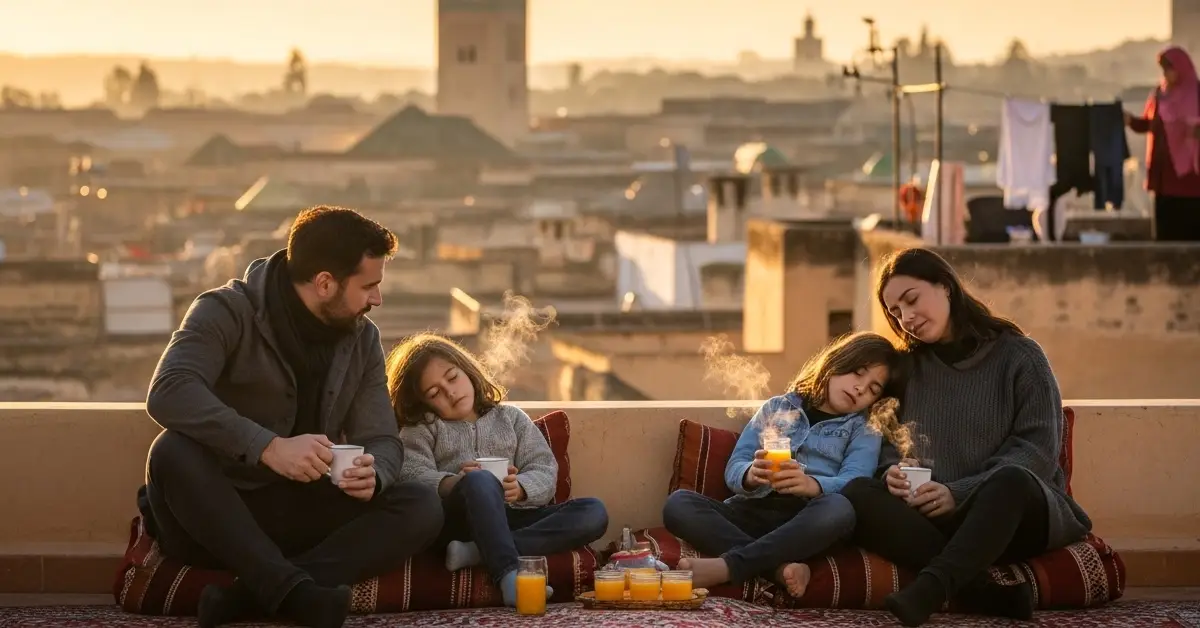
Wake early in a Fes or Marrakech riad. The call to prayer will drift across rooftops, layered and echoing from multiple minarets, not jarring, but strangely melodic. Wander upstairs and you’ll see women on neighboring terraces hanging laundry, shaking out rugs, setting out breakfast trays. The medina below you is stirring: shop shutters clattering open, donkeys clattering up stone alleyways delivering gas bottles. This is the city breathing in. If you sit quietly with your coffee, kids still sleepy-eyed beside you, you’ll feel like part of the neighborhood, not a spectator. That’s the difference.
The Hammam is Not a Spa
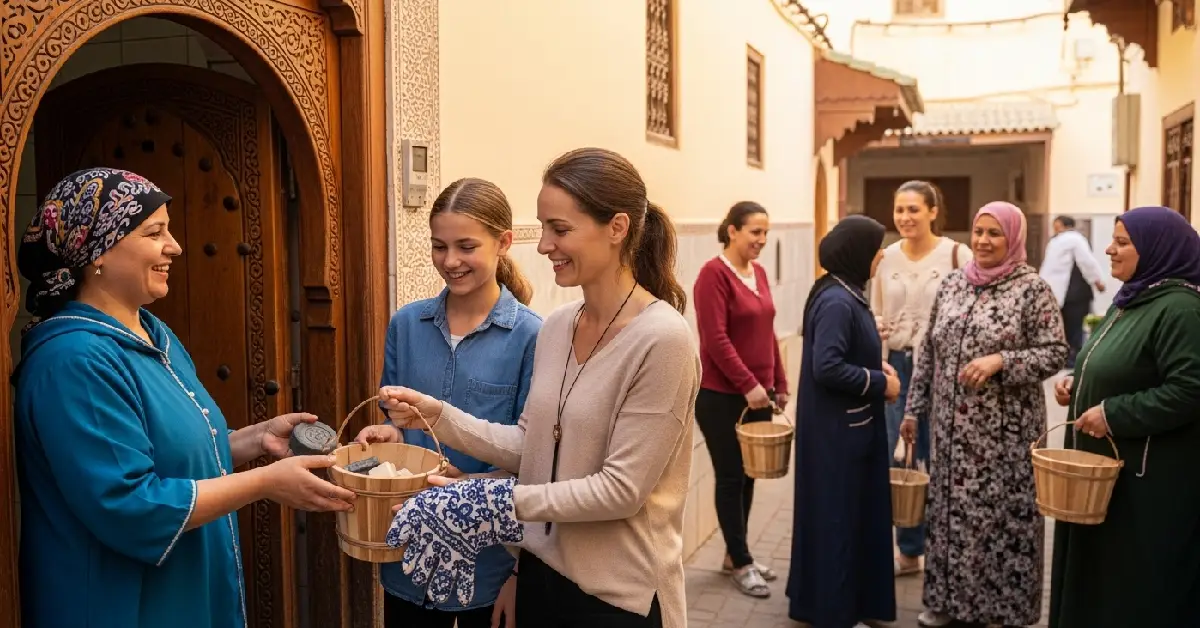
I need to be blunt about this because it’s one of the most misunderstood cultural institutions in Morocco. A public hammam is not a five-star spa treatment. It’s a hot, steamy, loud, community bathhouse where generations scrub each other’s backs and catch up on gossip. It is glorious. Going with a local guide who can arrange a family-appropriate visit (women’s session, for example) strips away pretense. Your kids will see bodies of all shapes, hear uproarious laughter, and get scrubbed until their skin tingles. It’s a lesson in body neutrality, community care, and the fact that real wellness isn’t about products, it’s about people.
Must Read: Best Restaurants in Koreatown NYC
A Balanced Look: What’s Wonderful and What’s Hard
I refuse to sell a trip without honestly. The highs are soaring. The challenges are manageable if you know they’re coming.
The Best Parts, Straight Up
-
Skill-Building Disguised as Fun: Kids learn Darija greetings (“Labas?” – “How are you?”), they figure out exchange rates in the souk, they learn to eat with bread as a utensil. All of it is stealth education.
-
Multi-Sensory Memory Anchors: Smell is the strongest memory trigger. The cedar smoke, the rose water, the cumin-heavy merguez sausages sizzling. Your children will catch a whiff of something years later and be instantly transported back.
-
Intergenerational Connection: Moroccan families rarely separate by age the way Western families do. Your kids will be welcomed by elders, not shushed. They’ll see grandparents as vital, respected, joyful members of the household. That’s a gift.
The Hard Parts, Honestly Named
-
Exhaustion is Real: The stimulation of a medina, motorbikes squeezing past, vendors calling out, vivid colors everywhere, can drain even the most extroverted child’s battery. Build in white space days. A riad courtyard with a fountain and some paper and colored pencils is a balm.
-
Digestive Caution: Not a scare tactic, just a rule: bottled or filtered water only. Peel your fruit. Eat at busy, high-turnover food stalls if you’re eating street food. I pack probiotics and kids’ Pepto just in case. In fifteen years of trips, careful families rarely have issues.
-
Beggars and Hustlers: This catches Westerners off guard. The solution isn’t to harden yourself but to prepare. We role-play with our kids before the trip. A firm, kind “La, shukran” (No, thank you) delivered with eye contact but no guilt. We also carry small, non-food items (pencils, hair clips) to give to families we’re formally visiting, never to street children, to avoid incentivizing school absence.
Designing Your 2026 Family Itinerary: Practical, Field-Tested Advice
I’ve made the mistakes so you don’t have to. Here’s what a smartly paced cultural exploration in Morocco actually looks like.
Fes: Start Here, Not Marrakech
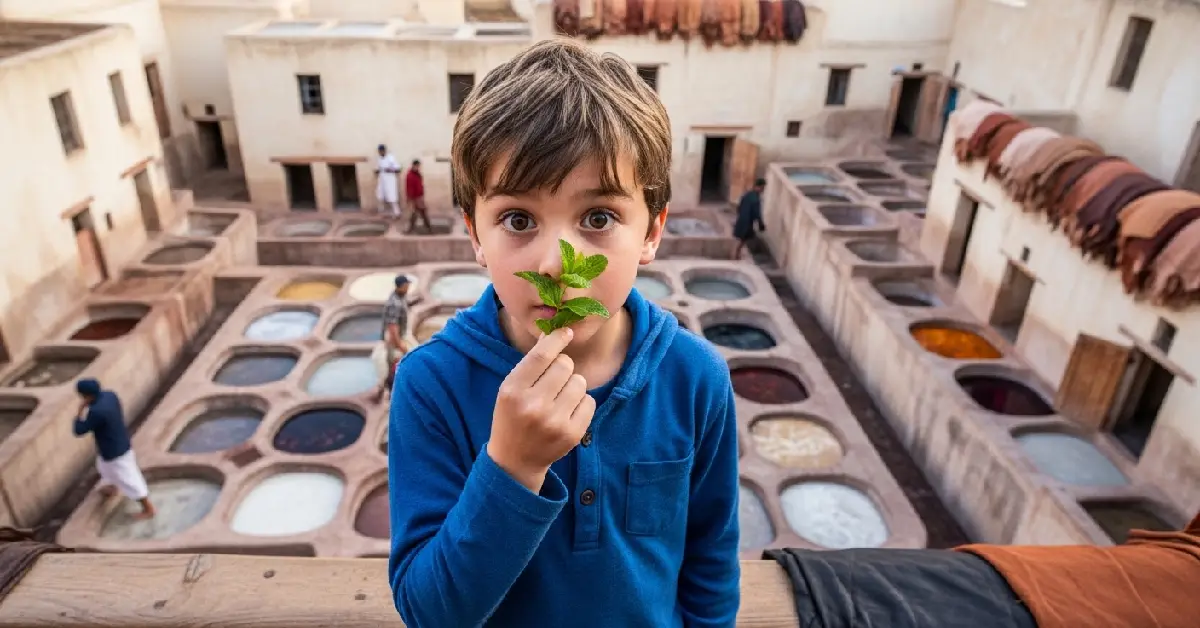
I know Marrakech is famous. Save it for last, or skip it if you’re prioritizing depth over spectacle. Fes is the soul of Moroccan craft and knowledge. Book a guide through a reputable firm like Morocco Family Vacation; specifically request one who works well with children. Your morning should begin at the Chouara Tannery. Yes, it smells, but a sprig of fresh mint held under the nose solves that. The real magic is the view from the leather shop terraces and the story: an 11th-century technique unchanged, using pigeon droppings and cow urine to cure hides, then natural dyes like saffron and poppy. It’s science, history, and economics in one stop.
Afterwards, walk to Funduq al-Nejjarine, the wood museum, and then let your kids loose in a pottery cooperative where they can sit at a kick-wheel and make a mess. The artisans love teaching children. End your day with a family cooking class in the riad. Your kids will make khobz (bread) and a simple chicken tagine with preserved lemon while you drink mint tea. Dinner that night will taste better than any restaurant meal.
The Desert: It’s About More Than Camels
The drive to Merzouga is long. Break it at Ifrane (the “Switzerland of Morocco” with wild Barbary macaques on the outskirts, hold your kids’ hands, they’re cheeky) and Midelt. The real cultural gem is near Erfoud, where the desert yields extraordinary Ordovician fossils. Book a fossil-mining walk. Your 8-year-old can crack open black shale and find genuine trilobite fossils that predate the dinosaurs. The intellectual leap,that this was once an ancient seabed, humbles everyone.
Choose your desert camp carefully. A good camp facilitates a dusk walk with a nomadic family who will show you how to find water, how to track, and what plants can heal. After a sandboard session and a tagine dinner, the drums come out. Share a clumsy song from your own culture. Then the guide will ask you to turn off the lanterns and lie back. The Milky Way in that deep desert silence is a spiritual reset.
A Real Family’s Story: The Hendersons in 2025
Tom and Sarah Henderson brought their three children (ages 7, 11, and 15) from Oregon last spring. They were nervous about the 15-year-old, who was deeply attached to his phone and resistant to the entire idea of a family trip. I suggested we structure the itinerary to give him specific responsibilities learning Darija numbers for haggling, navigating with a paper map of the medina, learning to make the perfect mint tea pour from height.
The turning point came in a village near Aït Benhaddou. A farmer showed the family his irrigation system, the ancient khettara channels and the wells. The 15-year-old, fascinated by engineering, asked question after question. The farmer, delighted, let him help open a sluice gate with a heavy wooden lever. That evening, the boy said to his parents, “He told me I was the first American to touch that lever. I think that’s the coolest thing that’s ever happened to me.” Sarah emailed me later to say he has since joined the robotics club and talks about water engineering as a career. That’s the power of a thoughtfully built cultural exploration in Morocco. it’s not tourism; it’s a quiet redirecting of a young life.
Final Tips for a Trip That Truly Connects
-
Five Words Go Farther Than You Think: Before you land, learn these as a family: Salaam Alaikum (Peace be upon you), Shukran (Thank you), Afak (Please), Bismillah (the blessing before eating, children love this one), and Zween (Beautiful!). Use them daily. The smiles you’ll get back are your real currency.
-
Dress is a Bridge, Not a Barrier: Lightweight linen trousers, long cotton skirts, loose shirts that cover shoulders. For women, carry a scarf to drape loosely, it’s useful for sun protection and a gesture of respect at religious sites. Your kids will notice that dressing thoughtfully signals cultural awareness, and they’ll internalize that lesson.
-
One “Big Thing” Per Day: Packing a schedule sounds tempting but backfires. Pick one major cultural activity each morning. Afternoon is for riad-pool time, journaling, and napping. Boredom is fertile ground for reflection.
-
Let Spontaneity Lead Sometimes: The best memory of your trip may be the unplanned one. The shopkeeper who teaches your son a woodworking trick. The old woman on a rooftop who pantomimes that your baby is beautiful and offers a fresh fig. Don’t cling too tightly to the itinerary.
Conclusion
A genuine cultural exploration in Morocco changes the furniture of your family’s mind. It’s not the photos you frame afterward; it’s the conversations that start months later at dinner. “Remember that farmer who let me open the water gate?” “Do you think the women in the hammam are laughing together right now?” These threads knit a family’s sense of place in the world. Morocco gives you its hospitality, its texture, its stories freely, warmly, generously. All you have to do is slow down, listen, and let it work on you. These are the trips your children will tell their own children about, with the same wonder in their eyes.
Frequently Asked Questions: Morocco Cultural Family Travel
1. Is Morocco a safe destination for American families in 2026?
Yes, and with confidence. The Moroccan government has consistently prioritized tourist safety, with a visible security presence in medinas and key transit points. More importantly, the Moroccan people’s deep cultural value of hospitality and family makes traveling with children an almost protective factor. Common-sense precautions, hiring licensed guides, watching belongings in crowds, drinking bottled water, are all that’s required for a smooth, safe journey.
2. Which Moroccan city is better for a first-time cultural family visit: Fes or Marrakech?
While both are compelling, I lean strongly toward Fes for families pursuing cultural depth. Fes feels more like a living, working medieval city and its medina, though labyrinthine, is less aggressively commercialized than Marrakech’s Jemaa el-Fnaa area. The artisan workshops in Fes are extraordinarily accessible, and the city’s scholarly, spiritual character subtly encourages a slower, more thoughtful engagement that suits curious families.
3. How should we handle the intense heat during a summer trip?
Summer travel in Morocco requires a rhythm shift, not a surrender. Plan all major outdoor explorations for the early morning (before 11 a.m.) and late afternoon (after 5 p.m.). The midday block is for a long, shaded lunch, a rest in your air-conditioned or courtyard-cooled riad, or a visit to a museum. This mimics the local siesta rhythm and prevents exhaustion and heat stress, while teaching children that adapting to climate is a skill.
4. What’s the most respectful way to deal with begging in tourist areas?
This is a sensitive topic that deserves a clear, values-aligned approach. Never give money or candy to children on the street, as this can create harmful dependencies and disincentivize school attendance. Instead, the most impactful approach is to ask your tour operator to arrange a visit to, or a donation to, a local community cooperative, women’s literacy program, or educational charity. This channels compassion into sustainable support of local infrastructure.
5. How can we avoid “performative” culture and have truly authentic local engagement?
The difference hinges on participation versus observation. Choose itineraries that are built around hands-on cooperative activity, working alongside a baker, planting with a farmer, weaving with a collective rather than staged performances. A good tour operator will facilitate spaces where you work together on a shared task. Enter with humility, learn at least greetings in Darija, and frame your time as a reciprocal exchange, not a service being rendered. This posture instantly transforms the dynamic from transactional to human.