
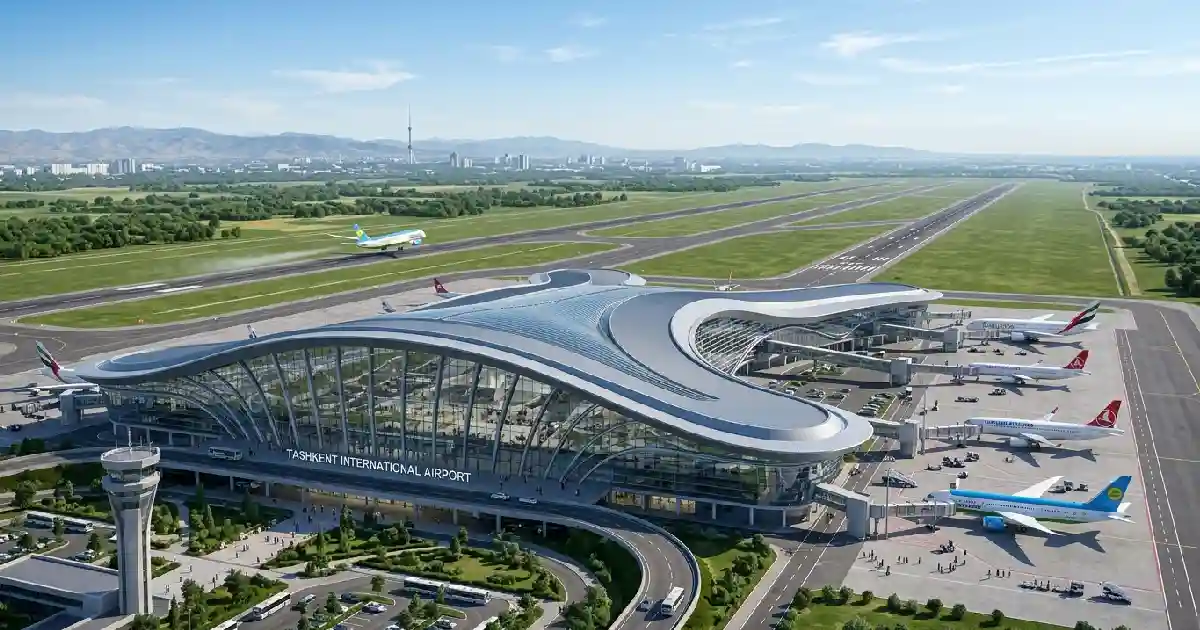
June 2026 marks the moment construction finally begins on the new Tashkent International Airport. Fast has Uzbekistan moved on this project. Nearly 10 million passengers used the existing airport last year alone. Room for that kind of growth simply does not exist without major new capacity.
Something had to change.
Why the New Tashkent International Airport Has Become Essential
Exploded has air travel in and out of Uzbekistan. More visitors tourism keeps attracting. Stronger too have business connections become. Decent airports all of it depends on. Upgrades the old Tashkent facility has received, yet volumes like today’s it was never built to handle. Rising keeps demand. Across all Uzbek airports, 15.5 million passengers national traffic reached in 2025. A 15 percent increase that represents in just one year. Stronger still early 2026 figures appear. Past 24 million annual passengers by 2040 now point projections.
Space the current airport simply runs out of. At the root that problem a new site solves.
For good reason planners chose the Tashkent region. Room to grow the location offers. Near existing highways it also sits that already connect the capital with Samarkand, Andijan, and other key areas. About adding gates this is not just. A proper regional gateway about building it is.
What Capacity the New Tashkent International Airport Will Deliver
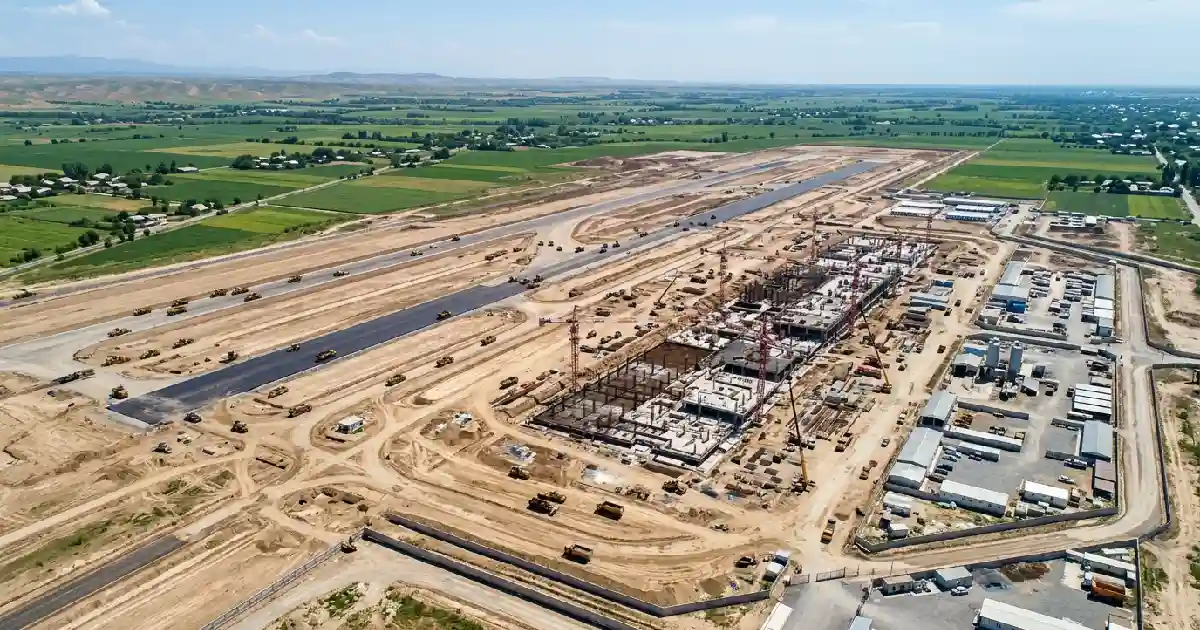
Ambitious but clear remain the capacity targets. Every year 20 million passengers once complete the airport should handle. Annually 129,000 tons cargo throughput reaches. Each hour up to 30 aircraft movements can occur. At the same time for 62 planes parking stands exist.
The core two four-kilometer runways form. For long-haul flights that length opens doors that today struggle. Roughly $2.5 billion the first phase alone costs. The main terminal it covers, about 208,000 square meters, and the initial airfield work. Four phases total planned are. Three to four years the main elements construction itself should wrap in. Around 2029 or 2030 full operations expected are.
Real demand growth those numbers match rather than wishful thinking.
Which Partners the New Tashkent International Airport Project Brings Together
Responsibility four organizations share. At 45 percent the largest stake Vision Invest from Saudi Arabia holds. 30 percent Japan’s Sojitz Corporation owns. 15 percent Incheon International Airport Corporation from South Korea takes. 10 percent Uzbekistan Airports keeps.
Distinct strengths each partner brings. With large-scale projects Saudi experience. In engineering and delivery Japanese precision. Operational know-how Korean, among the world’s most efficient airports year after year Incheon ranks. Strong local oversight Uzbekistan’s share ensures.
A public-private partnership model the deal uses. On passenger numbers no government guarantees offered were. On actual Uzbekistan passenger traffic growth the partners are betting. Solid ground recent numbers give them to stand on.
By mid-May signing should happen. June groundbreaking follows.
Must Read: How to Travel Abroad on a Low Budget: The 2026 Guide That Actually Works
How the Construction Will Unfold
This June work begins. Already in places some site preparation is moving. On the terminal building and runways the first phase concentrates. Gates, cargo facilities, and commercial areas around the airport later stages will expand.
Risk breaking the project into phases reduces. Earlier revenue start flowing it also lets. Overnight nothing about a project this size happens. More than speed for its own sake steady progress matters.
Helps high-level backing. A clear priority the airport President Mirziyoyev has made. That support cuts through delays that often slow big infrastructure work.
What Connections Beyond the Runways the Project Creates
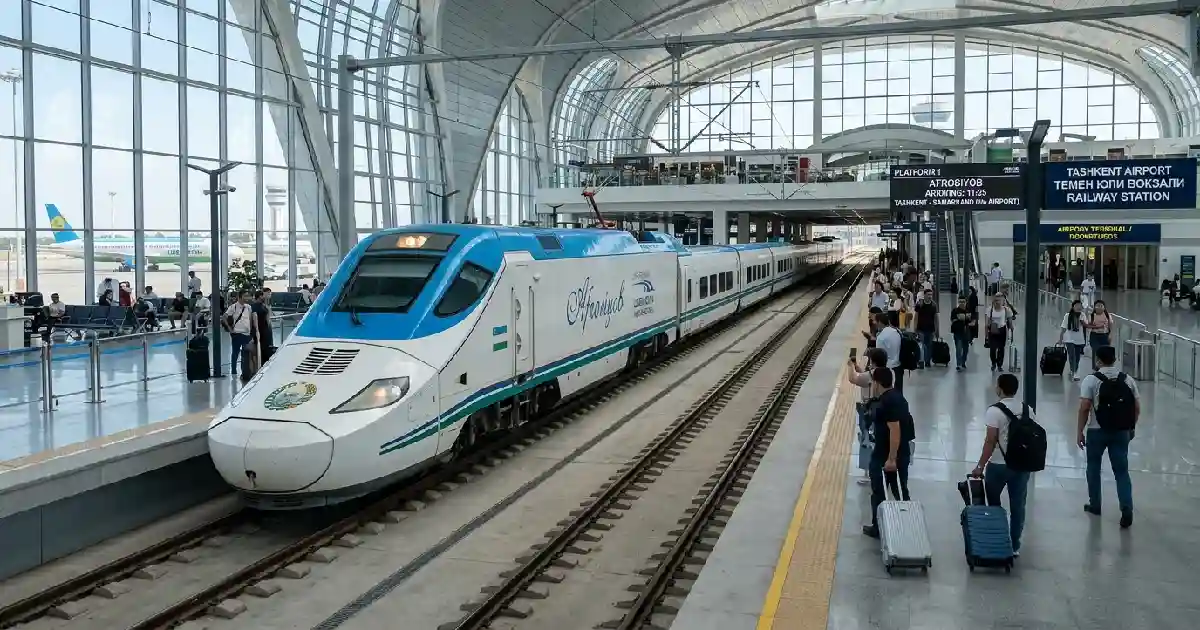
Alone the new facility will not stand. Close by major toll roads already run. On the airport grounds a dedicated high-speed rail station will sit. Everything back to central Tashkent shuttle services will link.
A true multimodal hub this kind of setup turns the airport into. Straight to a fast train heading to other cities a passenger landing from abroad could transfer. More efficiently cargo moves too. Directly industrial zones trucks and future rail connections will feed.
Around the capital fewer cars clogging roads. For many journeys lower emissions. Across the whole country stronger links. Past planes alone the design looks.
Which Benefits and Trade-offs the Project Brings
In stages jobs appear. First construction crews come. In operations, retail, security, and maintenance permanent roles follow. Into hotels, restaurants, logistics companies, and local suppliers indirect work spreads.
The clearest lift tourism gains. Longer stays and repeat visits smoother arrivals encourage. Quickly to Gulf and European markets better cargo facilities help exporters move fresh produce or textiles.
Questions big projects always bring. Controlled will costs stay? In time enough local workers specialized training can receive? Nearby communities and the environment the large footprint how will affect? Ongoing attention these issues require. Some risks strong partners lower, yet entirely nothing vanishes.
Significant the potential payoff remains. A region’s profile a modern airport of this scale can raise. Paying attention other Central Asian countries are.
What Different Groups Should Prepare For
Gradual improvements travelers will see. Through mid-2026 the existing airport continues receiving upgrades. Obvious the contrast should feel once the new one opens. Smoother passenger flows. Modern facilities. Over time more route choices.
Bigger airlines can plan. Additional long-haul services longer runways support. Packages that use the planned rail connections tourism operators can design. Official updates investors eyeing hotels or warehouses near the site should track.
Now training programs matter. So local people as many jobs as possible capture English skills, customer service standards, and technical maintenance knowledge need building.
What Other Airports Demonstrate
By luck Incheon did not reach world-class status. What actually works the Korean partner understands. How quickly a well-executed new airport can reshape a country’s connectivity Istanbul and Doha prove. Exactly them Uzbekistan does not need to copy. The patterns that matter most it can take: clean operations, strong passenger experience, and smart commercial development around the terminals.
Those lessons straight into the project the international consortium Tashkent airport structure brings.
Where the Project Now Stands
In June construction of the new Tashkent International Airport starts. For Uzbek aviation that single milestone shifts the timeline. Increase capacity will. Strengthen connections will. For tourism, trade, and transit traffic a better platform the country gains.
As they always do with major infrastructure challenges will appear. The real outcome execution will decide. Solid though the foundation looks. Experienced partners. Clear demand signals. Political commitment. To rail and road networks thoughtful links.
How everything comes together the next few years will reveal. Begins the work for now.
Frequently Asked Questions
When will construction of the new Tashkent International Airport actually start?
June 2026. The PPP agreement needs signing by mid-May first, followed by final government approval.
What passenger and cargo capacity will the new Tashkent International Airport provide?
Full operations target 20 million passengers and 129,000 tons of cargo per year. The airfield supports 30 movements hourly and parking for 62 aircraft at once.
Who are the main international partners in the Tashkent airport project?
Vision Invest (Saudi Arabia) leads with 45 percent. Sojitz (Japan) holds 30 percent. Incheon International Airport Corporation (South Korea) owns 15 percent. Uzbekistan Airports retains 10 percent.
Will the existing Tashkent International Airport close once the new facility opens?
It will likely hit capacity limits around 2029. Officials are still weighing options, closure or repurposing remain under discussion.
How will the new airport improve transport connections across Uzbekistan?
Direct highway links plus an on-site high-speed rail station and shuttles create a genuine multimodal hub. Passengers and cargo move faster between the airport and cities across the country.