
Why the Best Dark Sky Locations for Stargazing in America Matter More Than Ever
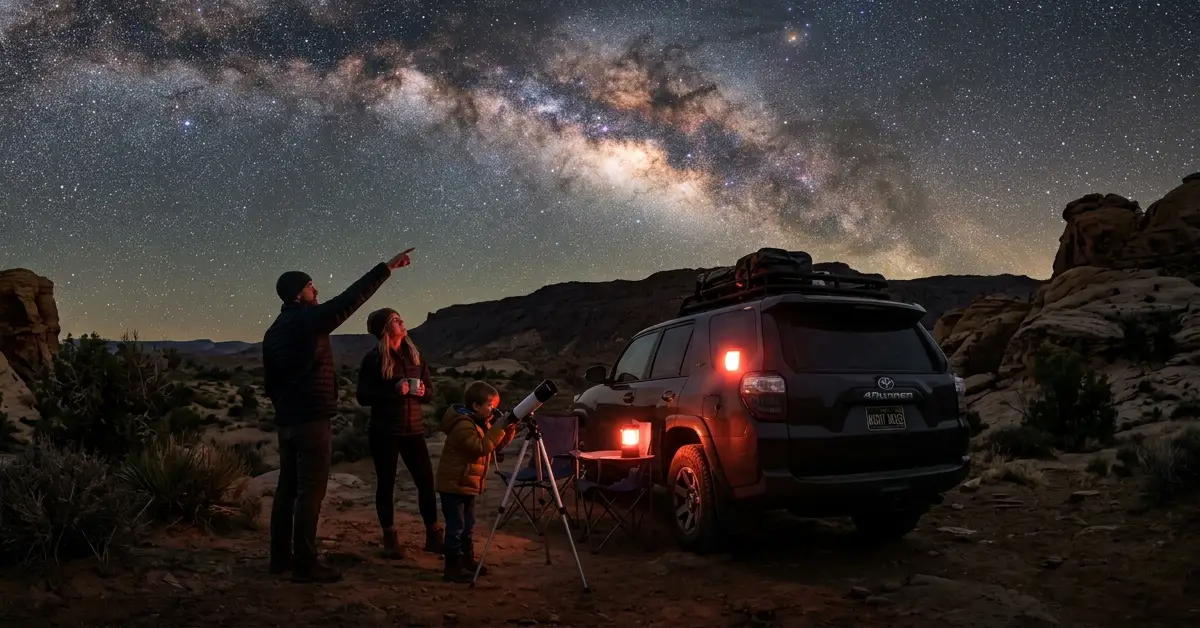
Artificial light at night disrupts wildlife. It wastes energy. And it messes with your sleep. Those are the surface level problems. However, go deeper, and you will find something more troubling. We are raising the first generations of humans who cannot see their own galaxy from their backyards. Consequently, they are losing a connection every previous culture took for granted. For this reason, identifying the best dark sky locations for stargazing in America has become a conservation priority.
The International Dark Sky Association has certified over two hundred sites worldwide. These are places where communities actively manage lighting to preserve natural darkness. Thus, they are supporting a conservation movement that extends far beyond stargazing. Accordingly, when you visit a certified International Dark Sky Park USA, you are not just helping yourself. You are interlinking your visit with broader efforts to protect nocturnal wildlife and reduce energy waste. You can learn more about certification standards on the IDA’s official park list.
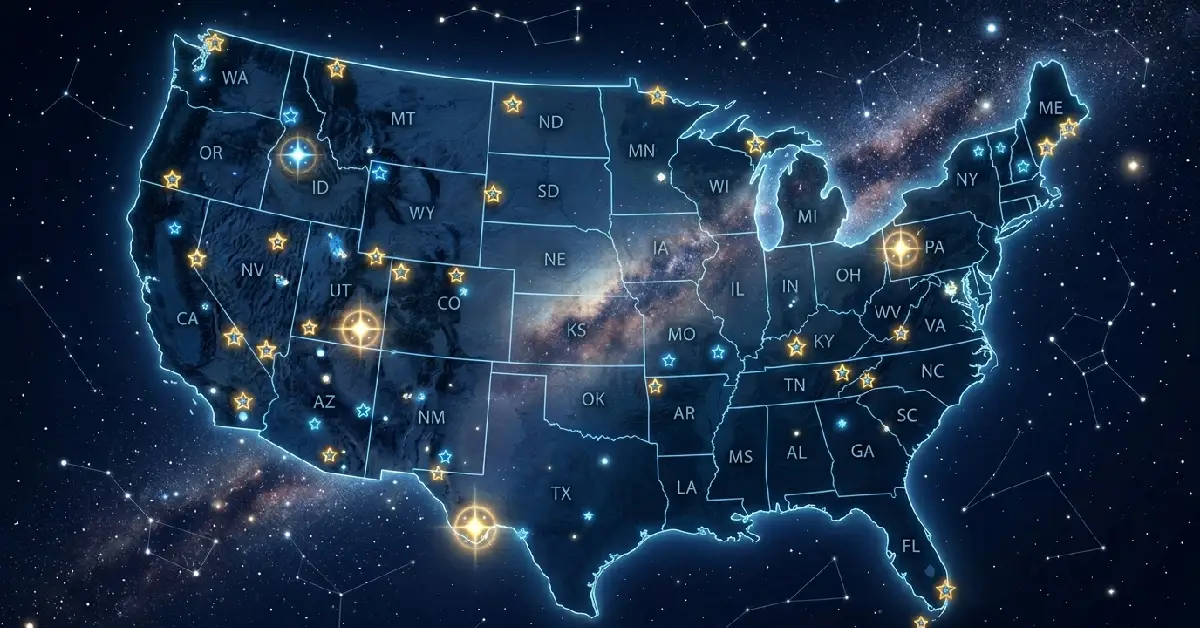
What makes dark sky parks in the united states so special? A few interrelated benefits stand out. First, unobstructed Milky Way visibility. You get this from late spring through early fall. Consequently, this gives you months of prime viewing. Second, meteor showers become events, not disappointments. At peak, you might see one hundred meteors per hour. As a result, that creates memories which last a lifetime. Third, astrophotographers can take longer exposures. No light domes ruin their shots. Thus, this saves hours of post processing frustration. Fourth, nocturnal wildlife thrives. Sea turtles, migratory birds, bats. They all need darkness to survive. Hence, protecting skies protects them too.
Must Read: New Mexico Tour Packages: Your Ultimate Guide to the Land of Enchantment
Top 15 top stargazing destinations in America
I have visited every site on this list. In fact, some I have returned to multiple times. A few I have explored with rangers after hours. The rankings below balance darkness measurements, accessibility, and amenities. Therefore, this helps you choose based on what actually matters to you. What works for a family with young kids might frustrate a serious astrophotographer. Consequently, I have called that out where it matters. Ultimately, these fifteen destinations represent the top stargazing destinations in America. across all experience levels.
1. Natural Bridges National Monument – Utah: A Top Best Dark Sky Location for Stargazing in America
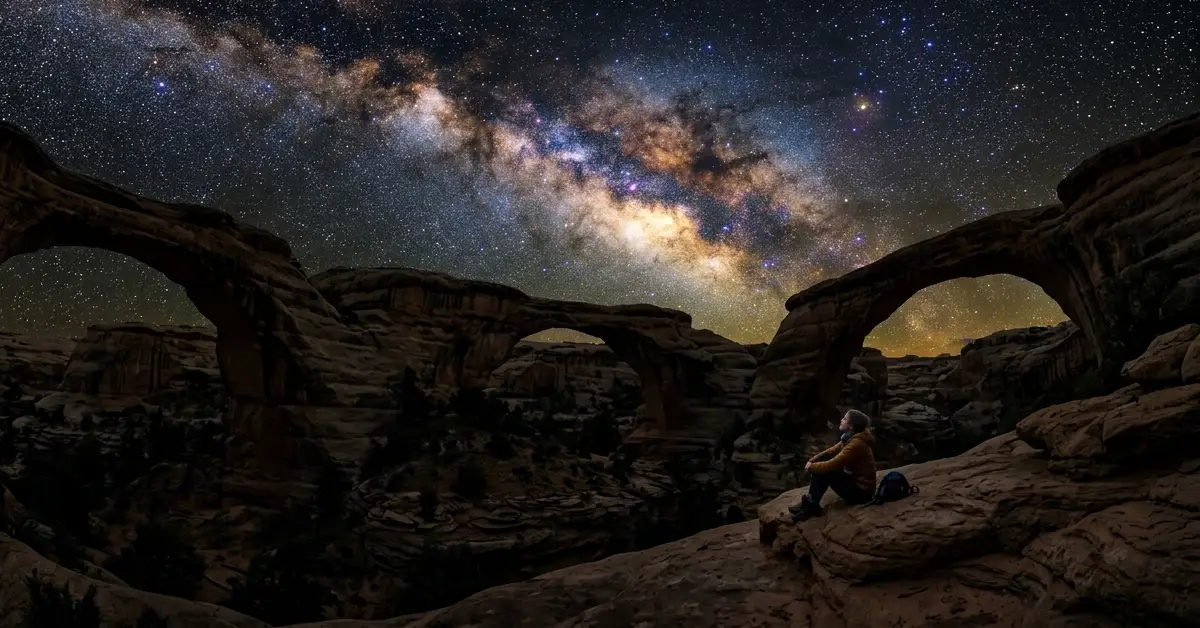
The world’s first International Dark Sky Park opened here in 2007. Specifically, southeast Utah’s canyon country does not mess around. Bortle class 2 skies let you see the Milky Way’s dust lanes with nothing but your own two eyes. No telescope required. The nearest city sits over 150 miles away. As a result, light domes simply do not exist here. Summer nights bring ranger led telescope programs. Thus, this makes the monument an excellent choice for beginners seeking best places for Milky Way viewing in the USA. Nevertheless, know that the gate closes at sunset. Therefore, overnight visitors need campsite reservations well in advance.
2. Cherry Springs State Park – Pennsylvania
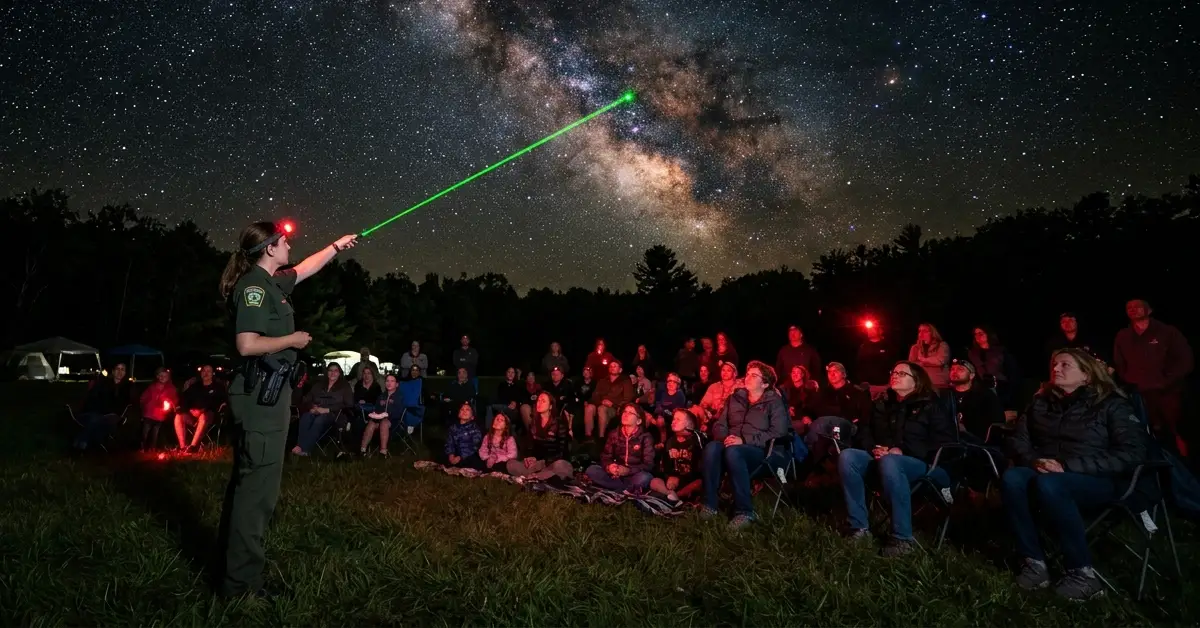
The East Coast has terrible light pollution. Just terrible. However, Cherry Springs is an anomaly. Bortle class 2 skies in Pennsylvania should not exist. Yet, here they are. Moreover, they offer East Coast residents a dark sky within driving distance. The park splits into two observation fields. One for casual visitors. One for serious observers. That second field, the Astronomy Observation Field, requires advance reservations. In addition, it enforces red light only rules. Break those rules, and they will ask you to leave. Fair enough. After all, preserving darkness for everyone depends on everyone’s cooperation. Summer weekends bring laser guided sky tours. So, do not skip these if you are a beginner. For current conditions, check the Cherry Springs clear sky chart.
3. Big Bend National Park – Texas
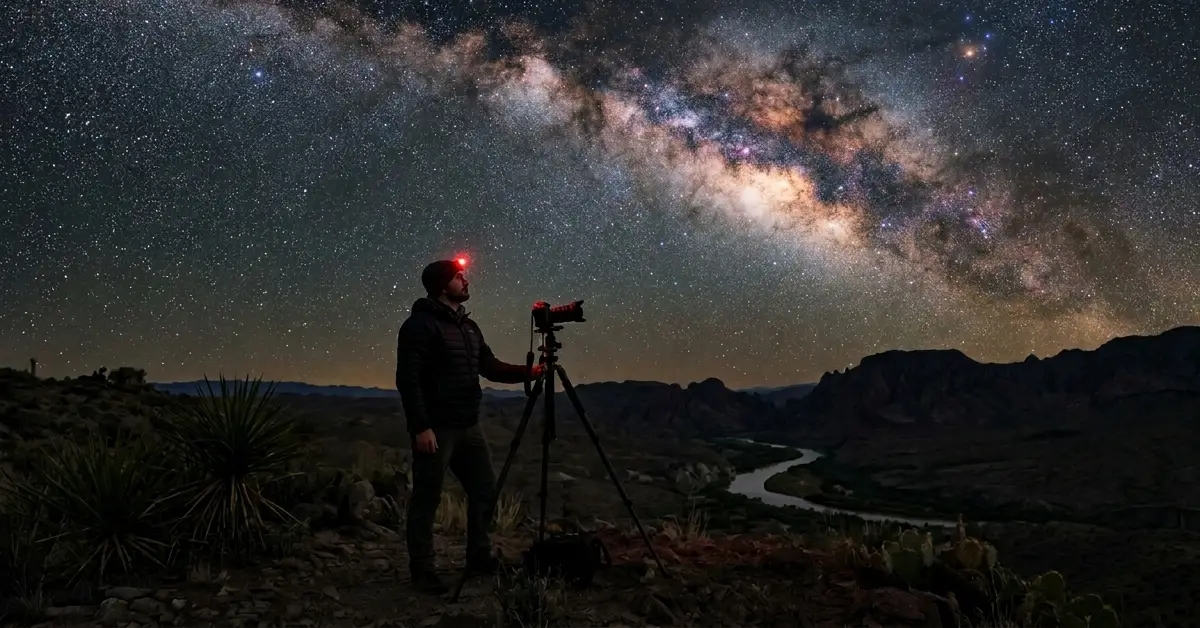
Big Bend sits along the Rio Grande in one of the most remote corners of Texas. Specifically, it holds Gold Tier IDA status with Bortle class 1 to 2 skies. Thus, this is among the least light polluted places in America. In fact, the views here rival anything in the continental United States. On moonless nights, the galactic core casts shadows. Yes, shadows from starlight alone. The Hot Springs historic trail offers unobstructed southern views. Consequently, it aligns perfectly with the Milky Way core between April and September. Summer days are brutal, often over 100 degrees Fahrenheit. Nevertheless, nights cool down fast. Therefore, pack layers even in July. Because of its remote location, many astronomers rank Big Bend among the top dark sky parks in the USA for serious observers.
4. Death Valley National Park – California/Nevada
Furnace Creek holds heat records for a reason. But at night Death Valley transforms. Cold. Clear. Quiet. It is a Gold Tier IDA park. Specifically, Badwater Basin gives you a 360 degree horizon. No trees or hills block your view in any direction. Winter inversions sometimes trap particulates below the valley floor. As a result, Bortle readings can push into class 1 territory. Beginners should start at the Harmony Borax Works boardwalk. It is a half mile paved loop. Thus, you will avoid the navigation challenges of backcountry sites. Meanwhile, advanced stargazers can hike deeper into the backcountry for even darker conditions.
5. Great Sand Dunes National Park – Colorado
Seven hundred foot sand dunes. A mountain range behind them. And above it all, a sky so dark you might cry. Specifically, Medano Creek’s drainage area hits Bortle class 2. Furthermore, hike deeper into the dune field, and ambient light drops even further. Thus, the effort rewards you with darker skies. Here is something interesting. Sand reflects starlight. The high albedo paradoxically helps you see the terrain without any artificial light. Consequently, night hiking becomes safer than you might expect. Pinon Flats Campground lies inside the designated dark zone. In addition, the Park Service bans interior vehicle lights after 10 PM from May through September. Therefore, darkness is preserved for everyone. Ultimately, this is one of the best camping spots for stargazing usa for both tent and RV users who seek best dark sky locations for stargazing in America.
Must Read: Best Restaurants in Koreatown NYC
6. Boundary Waters Canoe Area Wilderness – Minnesota
No roads. No electricity. Almost no light pollution. Thus, Boundary Waters is a remote stargazing location in America that demands effort. Moreover, the difficulty filters out casual visitors and preserves solitude. You need a canoe or a motorboat – You need navigational skills – You need to carry everything you bring. Therefore, this is not a family friendly stargazing destination usa for young children. Save it for when your kids are older. Alternatively, go with experienced paddlers. Nevertheless, experienced paddlers rank Boundary Waters among the darkest places they have ever visited. In fact, the silence alone is worth the trip. Consequently, the stars feel like a bonus rather than the main event. For trip planning, consult the Boundary Waters visitor information from Recreation.gov.
7. Mauna Kea – Hawaii
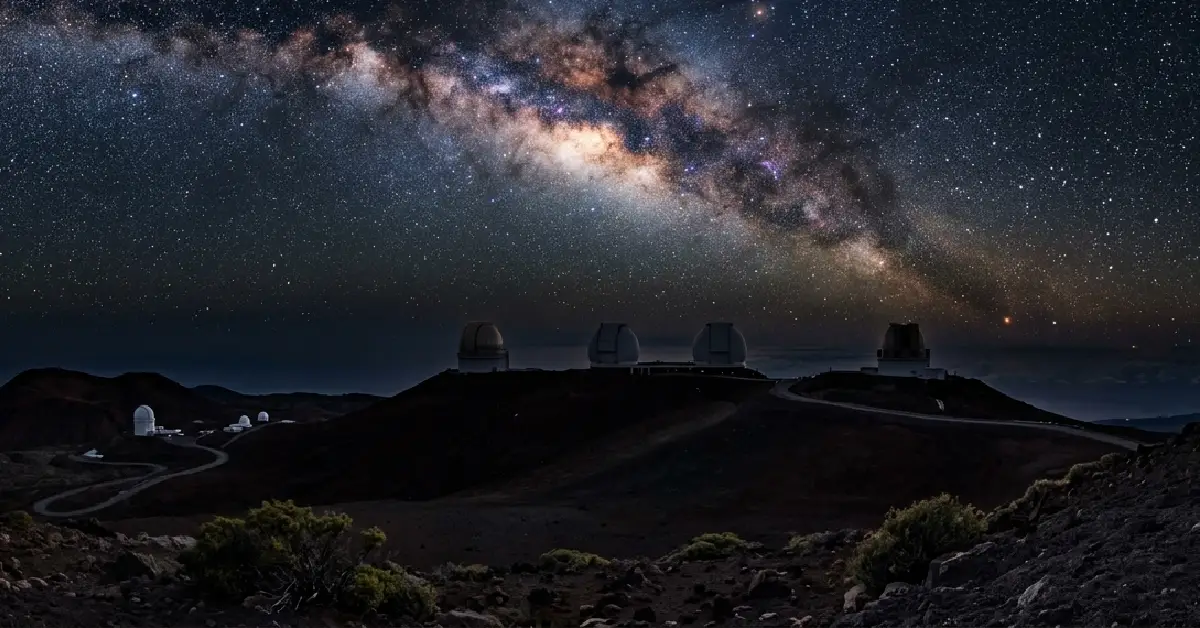
Thirteen thousand seven hundred ninety six feet. That is high enough to sit above forty percent of the atmosphere. Thus, you get clarity that sea level simply cannot provide. The visitor center sits at 9,200 feet. Moreover, it offers free stargazing nightly. You will see the Southern Cross. You will see both Magellanic Clouds. Specifically, these are celestial objects invisible from the mainland United States. Therefore, this is a unique opportunity. The summit holds world class observatories. Furthermore, they interlink with public education programs. As a result, science becomes accessible to visitors. Ultimately, this is one of the best top dark sky destinations in America. Nevertheless, know that it is far from everything else. Before visiting, review the Mauna Kea visitor guidelines.
8. Cosmic Campground – New Mexico
A hidden gem. Gold Tier status. Free to use. Open 24/7. Concrete pads for telescopes. The nearest town is Glenwood. Population under two hundred. It is thirty minutes away. On clear nights, skies register Bortle class 1. Thus, this places Cosmic Campground among the darkest sites in the country. In fact, genuine hidden stargazing spots in america do not get much better than this. However, there are no bathrooms. No water. No cell service. Therefore, bring absolutely everything you need. Furthermore, leave nothing behind. For these reasons, experienced stargazers often call it one of the most underrated best dark sky locations for stargazing in America.
9. Capitol Reef National Park – Utah
Zion gets the crowds. Bryce gets the Instagram posts. In contrast, Capitol Reef quietly offers Bortle class 1 skies along the Scenic Drive. Thus, you get darkness without the crowds. The historic orchards in Fruita provide dark sky camping with a pioneer era atmosphere. Consequently, you get a bit of history alongside your stargazing. Specifically, August brings the Perseids. Moreover, they appear especially vivid here. Therefore, this park ranks among the best places to watch meteor showers usa. As a result, many families choose Capitol Reef when searching for best dark sky locations for stargazing in America that offer both activities and dark skies.
10. Kissimmee Prairie Preserve – Florida
Florida’s only IDA Dark Sky Park sits on flat, open grassland. Surprisingly, it is quite dark for a southeastern state. Thus, the preserve offers a refuge from the Southeast’s generally poor conditions. Summer monsoons sometimes ruin the view. However, winter nights are crystal clear. In addition, the preserve runs tram tours that accommodate families. Therefore, this makes the park accessible for visitors with young kids or mobility concerns. Moreover, it is close to Everglades, about two hours south. Consequently, you can combine two very different park experiences. Ultimately, this is one of the better dark sky locations near national parks for families who want best dark sky locations for stargazing in America without traveling west.
Must Read: Plan the Perfect San Diego Zoo Safari Park Tours Package
11. Glacier National Park – Montana
Not fully IDA certified yet. Nevertheless, the east side regularly achieves Bortle class 1 to 2 conditions. St. Mary and Many Glacier specifically. Thus, the darkness rivals certified parks. In addition, northern latitude creates something special here. You might see the aurora borealis dancing alongside the Milky Way. Consequently, photographers chase this combination worldwide. If you capture it, you have something rare. However, summer nights are short. Therefore, you have to stay up late to get full darkness. Hence, plan for tired mornings after late nights. Regardless, it is worth it. For current aurora forecasts, check the NOAA Space Weather Prediction Center.
12. Central Idaho Dark Sky Reserve – Idaho
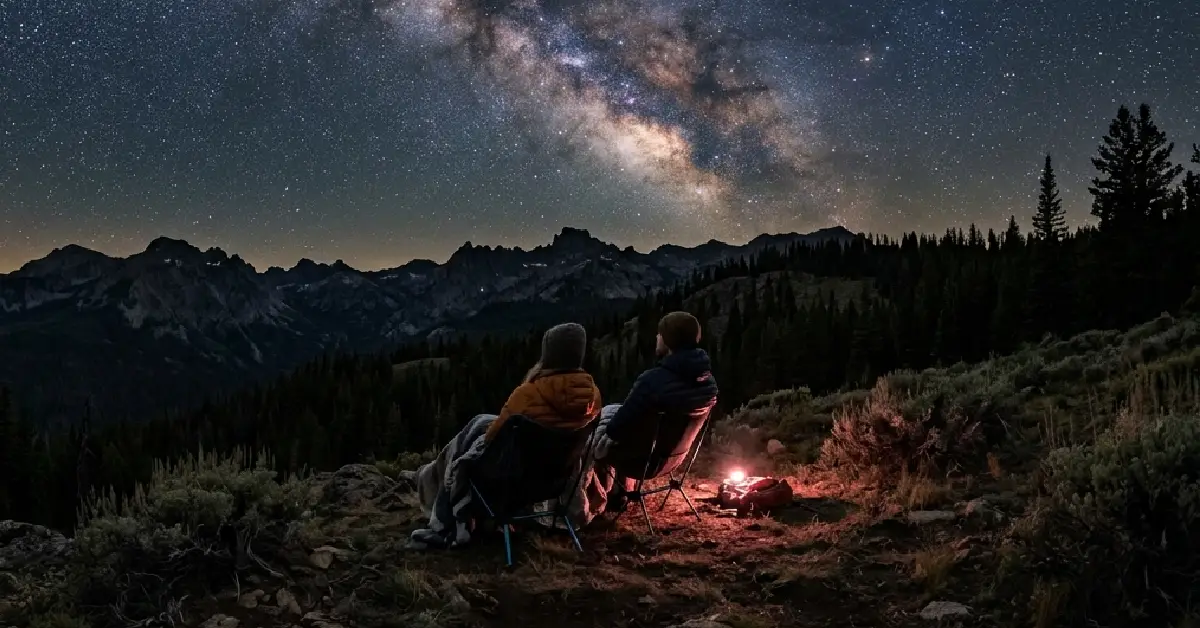
The first IDA Gold Tier reserve in the United States. Specifically, it covers 1,416 square miles. Thus, this makes it one of the largest continuous dark sky corridors in the lower forty eight. Stanley and Sun Valley serve as gateway towns. Therefore, you can eat at a restaurant and sleep in a hotel. Then, drive fifteen minutes to pristine skies. As a result, this is an ideal dark sky road trip destination america for people who want wilderness without sleeping on the ground. Moreover, it appeals to a wider range of travelers than more primitive sites. Accordingly, it has become one of the most accessible darkest sky locations in the United States for casual travelers.
13. Chaco Culture National Historical Park – New Mexico
Ancient Puebloan ruins. Ancient stars. Specifically, the two interlink here in powerful ways. Thus, the experience is both astronomical and historical. Bortle class 2 skies reveal the Milky Way above thousand year old great houses. Consequently, you are connected to the same sky the ancient Puebloans watched. In addition, the park’s cultural astronomy programs explain how indigenous peoples aligned their architecture with celestial events. Therefore, you leave with deeper understanding, not just pretty photos. As a result, this park offers a unique dimension among best night sky viewing spots in USA by combining archaeology with astronomy.
14. Enchanted Rockies Trail – Colorado
Not a single location. Rather, a scenic byway between Westcliffe and Silver Cliff. Multiple pullouts offer Bortle class 1 to 2 skies. Thus, you have options if one spot is crowded. Moreover, both towns have earned official Dark Sky Community designations. Therefore, they enforce lighting ordinances that benefit everyone. Specifically, RV users love the Bluff trailhead parking. As a result, this trail ranks among the best stargazing spots in usa for road trippers. Hence, if you are driving through Colorado, consider adding this route to your itinerary of best dark sky locations for stargazing in America.
15. Apostle Islands National Lakeshore – Wisconsin
Lake Superior’s vast surface reduces atmospheric turbulence. In addition, it blocks light pollution from southern cities. Thus, the viewing conditions are unusually stable. On clear winter nights, you might see the northern lights reflecting off sea caves. Specifically, the reflection creates mirror images of auroral curtains. In contrast, summer offers the Milky Way arching over dark waters. Therefore, each season brings something different. Ultimately, this is one of the more unique dark sky camping destinations america offers. For ferry schedules and camping permits, visit the National Park Service page for Apostle Islands.
Practical Tips for Finding the Best Dark Sky Locations for Stargazing in America
You have picked a location from our list of best astronomy locations in America. Now, let me walk you through what actually matters.
How to Choose the top dark sky parks in the USA Based on Moon Phase
Check the moon before you book anything. I cannot emphasize this enough. First, new moon week gives you optimal darkness. Thus, faint stars become visible. Consequently, you will see the most detail. Second, first or last quarter is decent. The moon sets by midnight. Therefore, you still get a few hours of darker skies. Third, full moon means you should skip it. Seriously. Otherwise, deep sky viewing is ruined. As a result, you will leave disappointed. Instead, use full moon nights for lunar observation. Thus, timing your visit during a new moon is essential when researching top dark sky parks in the USA.
Essential Gear for Visiting the best places for Milky Way viewing in the USA
Do not show up unprepared. Otherwise, you will have a miserable experience. I have seen too many families drive four hours only to freeze and leave by 9 PM. Therefore, learn from their mistakes.
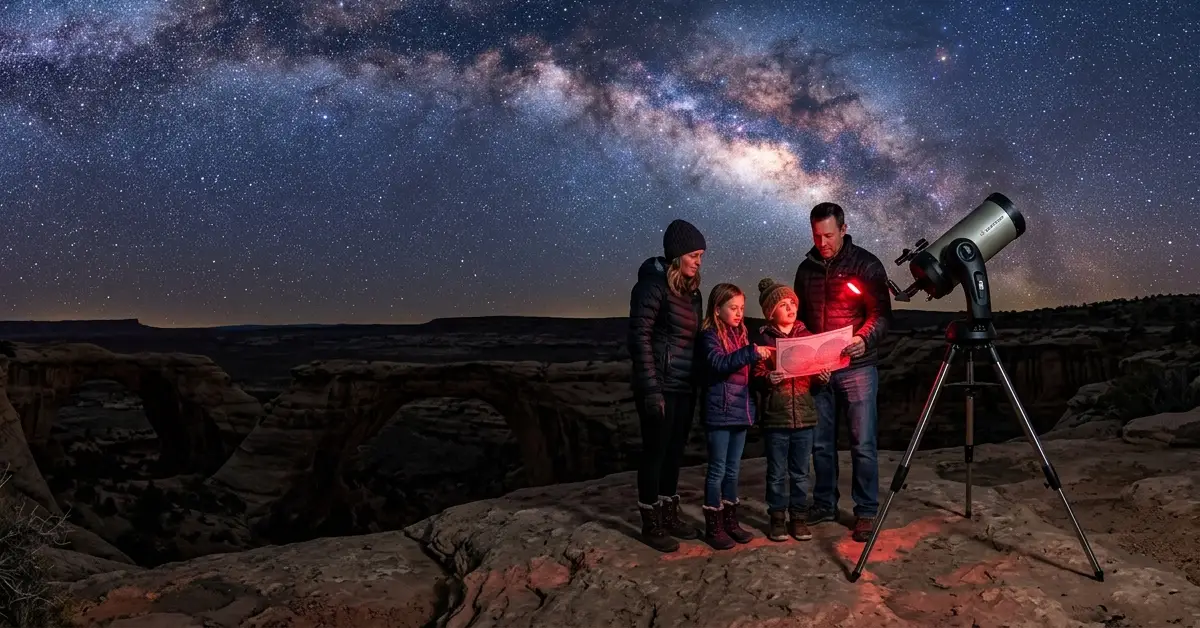
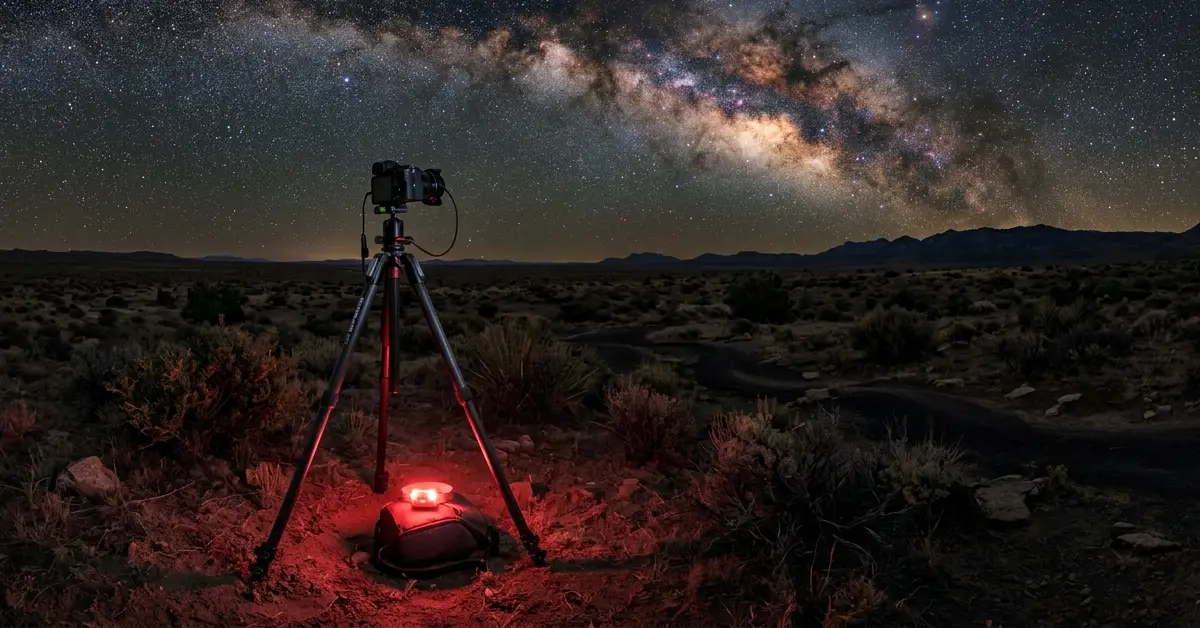
A red headlamp or red flashlight is essential. Specifically, this preserves night vision. Thus, your eyes can stay adapted. In contrast, white light resets your eyes for twenty minutes. Binoculars in 7×50 or 10×50 are ideal. However, cheap telescopes often disappoint. Therefore, good binoculars rarely do. So, start here. A star chart app like SkySafari or Stellarium helps enormously. Nevertheless, remember to enable red mode before you arrive. Thus, you will not ruin your night vision fumbling with settings. Warm layers are non negotiable. After all, deserts get cold at night. Really cold. Consequently, even summer trips need jackets and hats. Finally, a reclining camp chair saves your neck. Because after three hours of looking up, you will be grateful.
Must Read: The Honest Guide to Family Friendly Vacations in California (2026 Edition)
Best Times of Year to Visit Best Dark Sky Locations for Stargazing in America
| Target | Best months | Recommended locations |
|---|---|---|
| Milky Way core | April to September | Big Bend, Natural Bridges |
| Orion and winter stars | November to February | Death Valley, Cosmic Campground |
| Perseid meteor shower | August 11 to 13 | Cherry Springs, Kissimmee Prairie |
| Geminids meteor shower | December 13 to 14 | Central Idaho, Chaco Canyon |
Expert Opinion: What a Night Sky Guide Wants You to Know About the light pollution free places in America
I called Mike Simmons. He founded Astronomers Without Borders. Moreover, he has guided night sky programs for over twenty years. Thus, he has seen every mistake beginners make. Here is what he told me about finding the light pollution free places in America.
Most people destroy their night vision within ten minutes of arriving. Specifically, they check their phone. The screen flashes white. Consequently, twenty minutes of adaptation is gone. As a result, they spend the rest of the night wondering why they cannot see anything. Accordingly, he recommends waiting thirty minutes before doing any serious observing. Thus, sit in the dark. Let your eyes adjust. Furthermore, do not look at anything bright. Then, your pupils will dilate fully. Subsequently, your retinal photopigments will regenerate.
At Cherry Springs State Park, rangers logged something interesting. Specifically, seventy percent of first time visitors fail to see the Andromeda Galaxy. That galaxy is bright. In fact, it is visible to the naked eye under Bortle class 2 conditions. Yet, people rush. They pull out phones. They turn on white lights. Thus, they sabotage their own experience. Therefore, do not be that person. For more expert advice, read Astronomers Without Borders resources.
Hidden Gems: Underrated Best Dark Sky Locations for Stargazing in America
Not every remote stargazing location in america appears on official lists. In fact, some of the best sites fly under the radar. Thus, they offer solitude that popular parks cannot provide. Here are several hidden best stargazing spots in the United States worth discovering.
Steens Mountain in Oregon has Bortle class 1 skies. However, you need a high clearance vehicle. Thus, this filters out casual tourists. Consequently, the skies are left for those willing to work for them. Similarly, the Upper Peninsula of Michigan, specifically the Keweenaw Peninsula near Isle Royale, has very low population density. Therefore, very dark skies result. As a result, Midwesterners can rival western sites without the long drive. In another example, Medford, Oklahoma’s Salt Plains are flat, open, and almost completely unknown. Thus, you might have the place entirely to yourself. Finally, Black Gap Wildlife Management Area in Texas offers primitive camping with Bortle class 1 to 2 skies. Nevertheless, bring everything you need. Therefore, treat this like a backpacking trip rather than car camping.
These hidden stargazing spots in america demand more preparation. Specifically, no ranger stations. No bathrooms. No cell service. Thus, only go if you are self sufficient. In return, the reward is solitude and some of the darkest skies remaining in the contiguous states. Consequently, they represent the purest form of best stargazing spots in the United States.
Best places to see stars in the USA: Beginners vs. Advanced
USA dark sky tourism destinations for Beginners
Look for easy access and ranger programs. Thus, this reduces the learning curve. For example, Natural Bridges National Monument has ranger led telescope sessions. Similarly, Cherry Springs State Park’s public viewing area offers laser tours. In addition, Great Sand Dunes’ Pinon Flats Campground is a designated dark zone. Therefore, these are the ideal best places to see stars in the USA for first timers.
Top Stargazing Destinations in America for Advanced Stargazers
Seek primitive conditions. Thus, you will escape the last traces of human light. For instance, Boundary Waters Canoe Area Wilderness requires water navigation. Similarly, Cosmic Campground has no facilities. Bring everything. Likewise, Steens Mountain needs a high clearance vehicle. Accordingly, these top stargazing destinations in America reward self sufficiency with unparalleled darkness.
Family Friendly Darkest Sky Locations in the United States
Several family friendly stargazing destinations usa work well. Therefore, do not assume you have to leave the kids at home. For example, Kissimmee Prairie Preserve has tram tours that reduce walking. Thus, young legs are accommodated. Similarly, Death Valley runs junior ranger night programs. Consequently, children stay engaged. In addition, Chaco Culture offers storytelling nights that interlink astronomy with indigenous traditions. Thus, educational value is added. Ultimately, these are the darkest sky locations in the United States for multigenerational trips.
Must Read: 5 Essential Tips for Using a Travel Planner New York City
Photography Guide: Capturing the Milky Way at the best night sky viewing spots in USA
Aspiring astrophotographers always ask for the best places to photograph the milky way usa. I tell them to prioritize Bortle class 1 or 2 sites. Specifically, Big Bend, Natural Bridges, and Cosmic Campground. Thus, those are your best bets. Therefore, start your search there. Ultimately, these best night sky viewing spots in USA consistently produce stunning images.
Camera Settings for the best astronomy locations in America
Aperture should be f/2.8 or wider. Because you need maximum light collection. Thus, faster lenses perform better. ISO between 3200 and 6400 works well. Specifically, this balances sensitivity against digital noise. Nevertheless, some trial and error with your specific camera will be needed. Shutter speed around 20 to 25 seconds is standard. Therefore, follow the 500 rule. Specifically, divide 500 by your focal length. Thus, this avoids star trails. Finally, focus in manual mode. Set to infinity. Then, fine tune on a bright star. Hence, practice this during daylight to save frustration at night.
Composition Tips for the top dark sky parks in the USA
Include foreground silhouettes. For example, trees, dunes, ancient ruins, or tents. Thus, these add scale. Moreover, they tell a story rather than just showing stars. However, one mistake ruins more photos than anything else. Specifically, stray light. A distant headlight. A campfire. A phone screen. In fact, even brief exposure will destroy a long exposure shot. Therefore, talk to nearby campers before you start shooting. Consequently, most will happily redirect their lights.
Dark Sky Road Trip Itineraries Featuring
Southwest Dark Sky Circuit (7 Days)
Day 1: Fly into Las Vegas. Drive to Death Valley. This takes two hours.
Day 2: Shoot Badwater Basin at night. Thus, start with a classic location.
Day 3: Drive to Natural Bridges. This takes six hours. Admittedly, it is a long day. Therefore, leave early.
Day 4: Explore Natural Bridges and nearby Bears Ears. Thus, you will see two dark sky areas in one day.
Day 5: Drive to Capitol Reef. This takes two hours.
Day 6: Do night photography along Capitol Reef’s Scenic Drive. Consequently, you will end with some of the darkest skies on the circuit.
Day 7: Drive back to Las Vegas via scenic UT 12.
East Coast Dark Sky Escape (Long Weekend)
Day 1: Drive from NYC, DC, or Philadelphia to Cherry Springs. Thus, turn a long drive into a direct shot.
Day 2: Reserve the Astronomy Observation Field. Thus, guarantee your spot in the restricted area.
Day 3: Drive to Sinnemahoning State Park. It is lesser known but still dark. Therefore, a good backup if Cherry Springs is booked.
Day 4: Drive home.
Must Read: Crystal Crane Hot Springs: The Complete Oregon Guide
FAQ: Best Dark Sky Locations for Stargazing in America
What is the single best dark sky location for stargazing in America overall?
Natural Bridges National Monument in Utah gets my vote. Specifically, it has Gold Tier IDA status. Moreover, it has Bortle class 2 skies. In addition, it has ranger led programs. Thus, it works for beginners and experts alike. However, Big Bend has slightly darker class 1 skies. Therefore, astrophotographers might prefer it. Nevertheless, Natural Bridges offers easier access and more amenities. Thus, for most people, it is the best dark sky location for stargazing in America overall.
Can I see the Milky Way without a telescope
Yes. Absolutely. Specifically, any certified International Dark Sky Parks USA with Bortle class 3 or better will show you the Milky Way with naked eyes. Thus, you do not need expensive equipment. In fact, you will see a bright, textured band. The galactic core becomes visible from late spring through early fall. Therefore, plan your trip accordingly. Binoculars help, but you do not need them. Ultimately, this is the magic of the USA dark sky tourism destinations.
What are the least light polluted places in America for complete beginners?
Cherry Springs State Park in Pennsylvania. Great Sand Dunes National Park in Colorado. Specifically, both offer public viewing areas, restrooms, ranger programs, and camping. Thus, most logistical barriers are removed. Therefore, that is what beginners need. After all, not the absolute darkest site, but the one where they cannot accidentally ruin their own experience. Consequently, these are excellent best stargazing spots in the United States for newcomers.
Are there free dark sky locations near national parks?
Yes. Specifically, national forests and BLM lands adjacent to popular parks often allow free dispersed camping. Thus, this offers a budget friendly alternative to park campgrounds. For example, Dixie National Forest outside Bryce Canyon has Bortle class 2 zones at no cost. Therefore, you get darkness without the entrance fee. Nevertheless, check local fire restrictions first. Furthermore, pack out all waste. Thus, leave no trace. You can find more free camping options on FreeCampsites.net.
What is the best time of year to plan a trip
April through September offers the best Milky Way viewing. Thus, summer is the peak season. However, October and March give you cooler temperatures and darker early nights. Therefore, they are better for visitors who struggle with heat or late bedtimes. Nevertheless, the galactic core sits lower on the horizon then. Thus, visibility is reduced slightly. On the other hand, meteor shower fans should target August for the Perseids or December for the Geminids. Therefore, time your trip around specific celestial events.
Conclusion
Light pollution expands about two percent every year. Thus, dark skies are becoming rare. That is just a fact. Consequently, the window to see truly pristine nights is narrowing. However, the fifteen places I have described prove something important. Wild darkness still exists. Therefore, you just have to drive to it.
The best dark sky locations for stargazing in America are not secrets. Specifically, Natural Bridges, Cherry Springs, and Big Bend. These are documented, protected, and waiting. Thus, the only thing missing is your visit. Nevertheless, they require planning. Therefore, check the moon phase. Pack a red flashlight. Bring warm clothes. Give your eyes thirty minutes to adjust. As a result, you will set yourself up for success.
But here is the thing. The Milky Way has not disappeared. It is still up there every single night. However, it is hidden only by light that we chose to turn on. Therefore, go see it while you still can. These light pollution free places in America are not just travel destinations. In fact, they are vanishing natural resources. Thus, treat them with the care they deserve. Finally, bring someone you love. After all, some sights are better shared.