
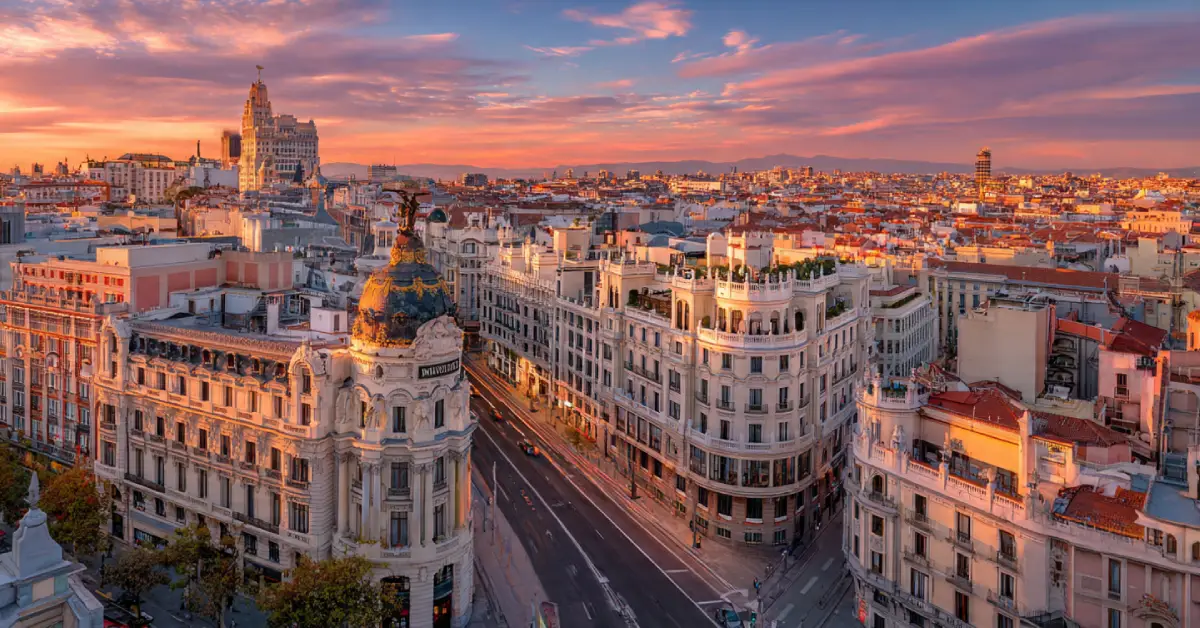
The top 25 must-see places in Madrid cover everything from 3,000-year-old Egyptian temples to some of the world’s finest art museums, all packed into one of Europe’s most walkable and vibrant capital cities. Madrid is a city that grabs you fast. The energy hits you the moment you step out of Atocha station: wide boulevards, golden-stone architecture, the smell of fresh churros drifting from corner cafés, and the sound of conversation spilling out of tapas bars at midnight.
Spain’s capital sits at the geographic center of the Iberian Peninsula at 650 meters above sea level, making it the highest capital city in the European Union. Home to 3.3 million people in the city proper and over 6.7 million in its metropolitan area, Madrid is a city of extraordinary cultural weight. It houses three UNESCO-listed world-class museums within walking distance of each other, a royal palace larger than Buckingham Palace, and more bars per capita than almost any city on earth.
Why Madrid Is One of Europe’s Top Travel Destinations
Madrid punches well above its weight for its size. Unlike Barcelona, which sells itself partly on beach appeal, Madrid earns its reputation purely on culture, food, nightlife, and architecture. The city hosted over 10 million international tourists in 2023, and that number keeps climbing.
What makes Madrid special is the authenticity. This is a city where locals actually live the way tourists dream about, long lunches, late dinners, Sunday markets, and neighborhood festivals that fill the streets with music. Madrid doesn’t perform its culture for visitors. It just lives it, and you get to join.
Best Time to Visit Madrid
Spring (March–May) and autumn (September–November) are the sweet spots. Temperatures hover between 15°C and 22°C, crowds are manageable, and the city’s parks and terraces are at their most beautiful.
Summer (June–August) is brutally hot, July temperatures regularly exceed 38°C. Many locals leave the city in August. If you visit then, embrace the early mornings and late evenings.
Winter (December–February) is cold but festive. Christmas markets, fewer tourists, and cheaper hotels make it a solid budget option.
How Many Days You Need to Explore Madrid Properly
- 3 days: Core landmarks, major museums, and one or two neighborhoods.
- 5 days: Everything above plus day trips to Toledo or Segovia.
- 7+ days: Full neighborhood immersion, food deep-dives, and complete museum coverage.
Most first-time visitors underestimate Madrid and book three nights. They almost always wish they’d booked five.
Top 25 Must-See Places in Madrid
This is the definitive list of the top 25 must-see places in Madrid, organized to help you understand what each place offers and why it earns its spot.
1. Royal Palace of Madrid (Palacio Real)
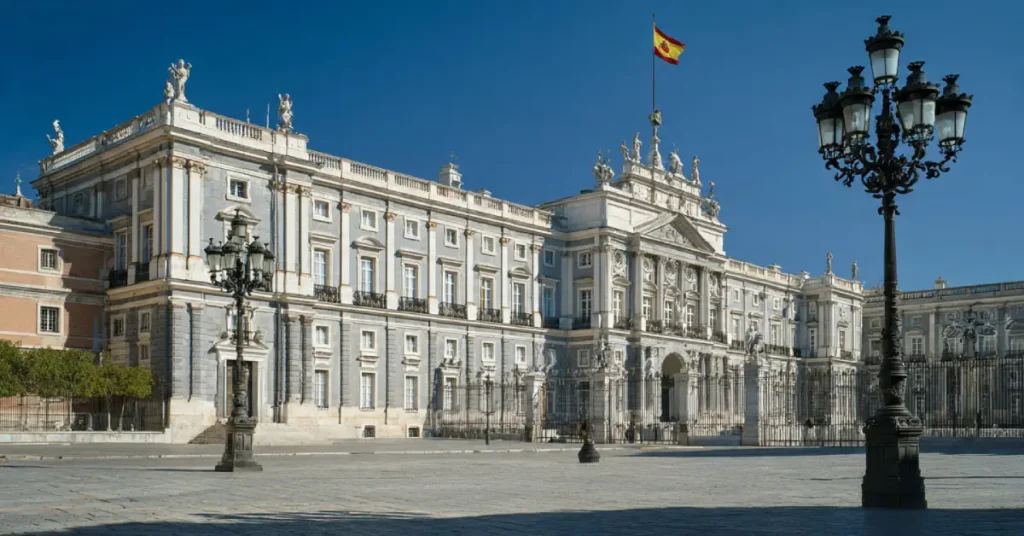
History and architecture: Built on the site of a 9th-century Moorish castle, the current palace was commissioned by Philip V after a fire destroyed the original Alcázar in 1734. Completed in 1755, it covers 135,000 square meters and contains 3,418 rooms, making it the largest royal palace by floor area in Europe.
Visitor highlights: Only around 50 rooms are open to the public, but what a 50 rooms they are. The Royal Armory houses one of Europe’s finest collections of medieval and Renaissance arms. The Throne Room is one of the most opulent interiors on the continent. Book online in advance, queues are long and the palace is enormously popular.
Practical tip: Free entry for EU citizens on certain days. Check the official website for schedules.
2. Prado Museum (Museo del Prado)
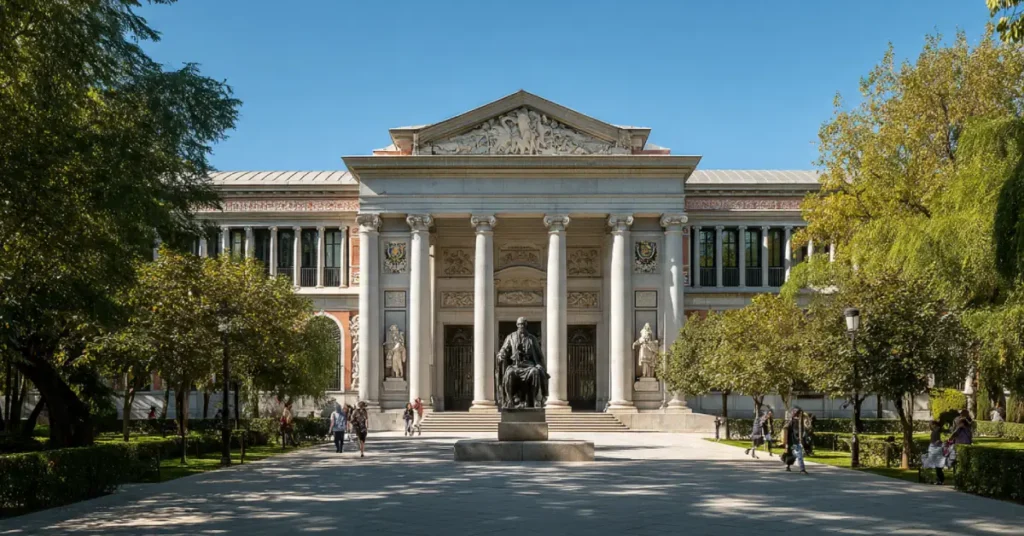
Famous art collections: The Prado is one of the world’s top five art museums, housing over 8,200 paintings, 700 sculptures, and 4,800 prints. Its collection spans the 12th to early 20th centuries, with an unparalleled focus on Spanish, Flemish, and Italian masters.
Must-see artworks:
- Las Meninas by Diego Velázquez (Room 12)
- The Garden of Earthly Delights by Hieronymus Bosch
- Saturn Devouring His Son by Francisco Goya
- The Third of May 1808 by Goya
Allow a minimum of three hours. Serious art lovers should plan a full day and split it across two visits.
3. Retiro Park (Parque del Retiro)
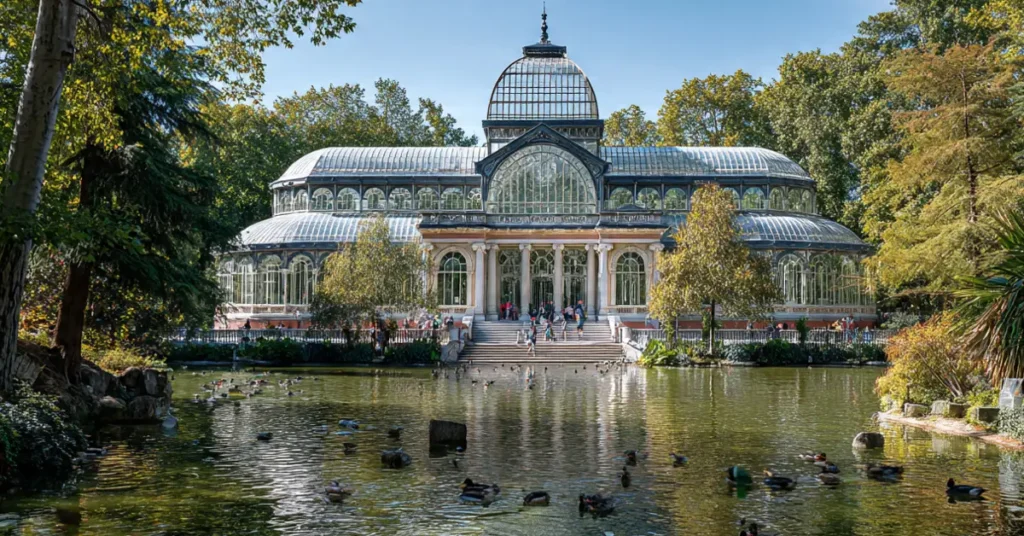
Boating, gardens, Crystal Palace: Retiro Park spans 125 hectares in the heart of Madrid. It was a royal garden until 1868 and was opened to the public in 1915. Today it’s the city’s lungs, a green haven used by joggers, families, and wedding parties every day of the week.
The Crystal Palace (Palacio de Cristal) is a stunning glass-and-iron pavilion built in 1887, now used for contemporary art exhibitions by the Reina Sofía Museum. The boating lake in the center of the park is a classic Madrid experience, rent a rowboat and drift for an hour.
Relaxation spot: Arrive on Sunday morning and watch the city come alive. Street performers, musicians, and painters set up along the main promenade.
4. Puerta del Sol
Central square of Madrid: Puerta del Sol is the absolute center of Madrid, and by extension, Spain. The famous “Kilómetro Cero” stone marker embedded in the pavement here marks the geographic origin from which all Spanish national road distances are measured.
Symbolic landmarks: The bronze bear and strawberry tree (El Oso y el Madroño) statue is the city’s most iconic symbol. The large clock on the Real Casa de Correos is where all of Spain watches the New Year’s Eve grape countdown (12 grapes at 12 chimes, a tradition since 1895).
5. Plaza Mayor
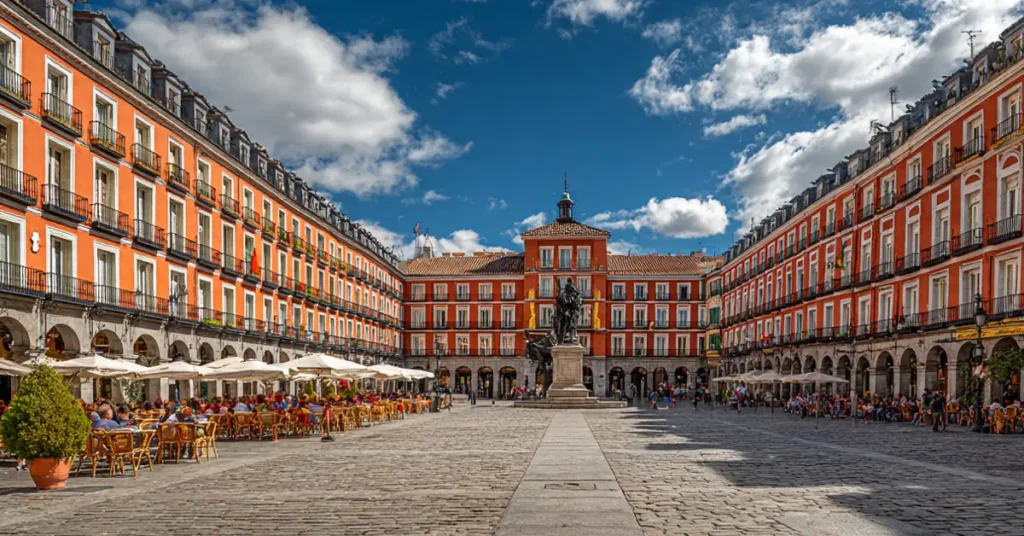
Historic square and cultural events: Built between 1617 and 1619 under Philip III, Plaza Mayor is a masterpiece of Castilian Baroque architecture. The square is 129 meters long by 94 meters wide, enclosed by uniform six-story facades with 237 balconies overlooking the central space.
It served as the setting for bullfights, royal celebrations, and the Spanish Inquisition’s public autos de fe. Today, it hosts a weekly stamp and coin market on Sundays and a famous Christmas market in December.
Cafés and street performances: Coffee at the surrounding cafés is tourist-priced, but the atmosphere is worth it. Explore the nine archways that lead out of the square into the surrounding La Latina streets.
6. Gran Vía
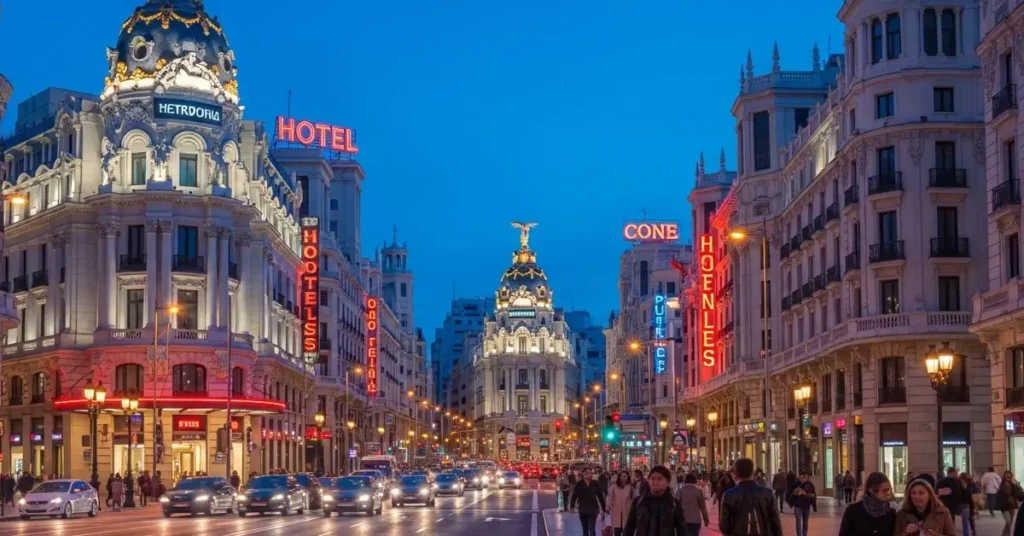
Shopping street and nightlife hub: Gran Vía is Madrid’s answer to Broadway, a grand, sweeping avenue lined with early 20th-century Beaux-Arts buildings that house cinemas, theaters, hotels, and shops. Construction began in 1910, requiring the demolition of 14 streets and displacing thousands of residents.
Today it’s one of the most pedestrianized major shopping streets in Europe. The Edificio Metrópolis building at the corner of Gran Vía and Alcalá, with its silver dome and winged victory statue, is one of the city’s most photographed buildings.
7. Thyssen-Bornemisza Museum
Art timeline from classic to modern: If the Prado focuses on Old Masters, the Thyssen-Bornemisza fills in the gaps, offering one of the world’s most comprehensive private art collections assembled by Baron Heinrich Thyssen-Bornemisza and his son Hans Heinrich. The 1,600-piece collection spans 700 years from the 13th century to the late 20th century.
Highlights include works by Caravaggio, El Greco, Rubens, Monet, Van Gogh, Hopper, and Pollock. It’s the most accessible of Madrid’s three main museums for visitors who aren’t deep art specialists.
8. Reina Sofía Museum (Museo Reina Sofía)
Home of Picasso’s “Guernica”: The Reina Sofía is Spain’s national museum of 20th-century and contemporary art. Its permanent collection is extraordinary, but it is anchored by one work above all others: Pablo Picasso’s Guernica (1937), the massive, monochrome anti-war painting commissioned after the Nazi bombing of the Basque town of Guernica during the Spanish Civil War.
Standing in front of Guernica in person is a profoundly different experience from seeing it in reproduction. The painting measures 3.49 meters tall and 7.77 meters wide. It fills the room. It is one of the most important works of art in human history.
The museum also houses major works by Salvador Dalí and Joan Miró.
9. Temple of Debod (Templo de Debod)
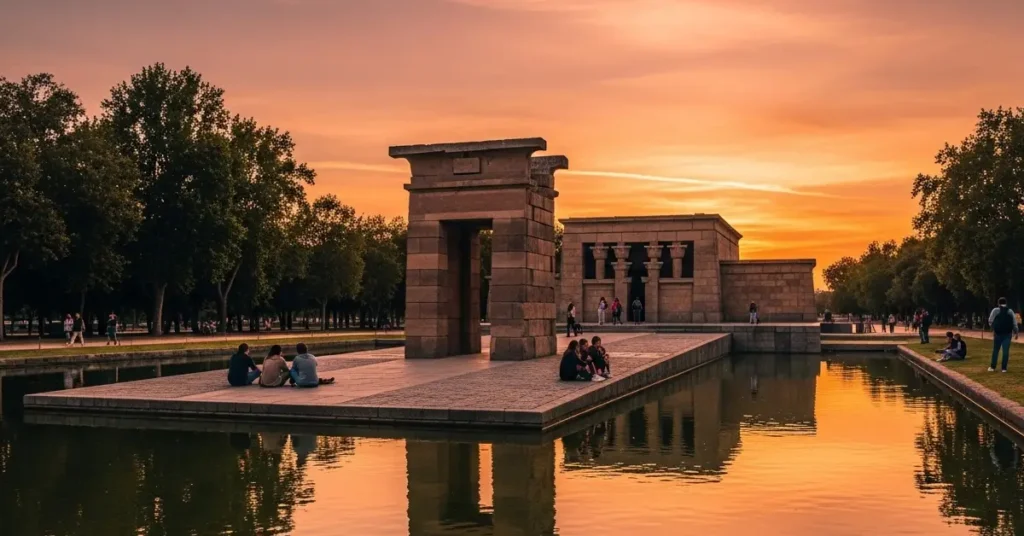
Ancient Egyptian temple in Madrid: One of Madrid’s most unexpected landmarks, the Temple of Debod is a genuine ancient Egyptian temple, built in the 2nd century BC in southern Egypt near Aswan. When the Aswan High Dam was constructed in the 1960s and threatened to submerge the temple, Egypt gifted it to Spain in 1968 as thanks for Spanish assistance in saving Nubian monuments. It was rebuilt stone by stone in Parque del Oeste.
Sunset viewpoint: The area around the temple offers one of the finest sunset views in the city, looking west over the Casa de Campo with the mountains of the Sierra de Guadarrama in the background. Arrive 30–40 minutes before sunset and secure a position on the terrace. It fills up fast.
10. Santiago Bernabéu Stadium
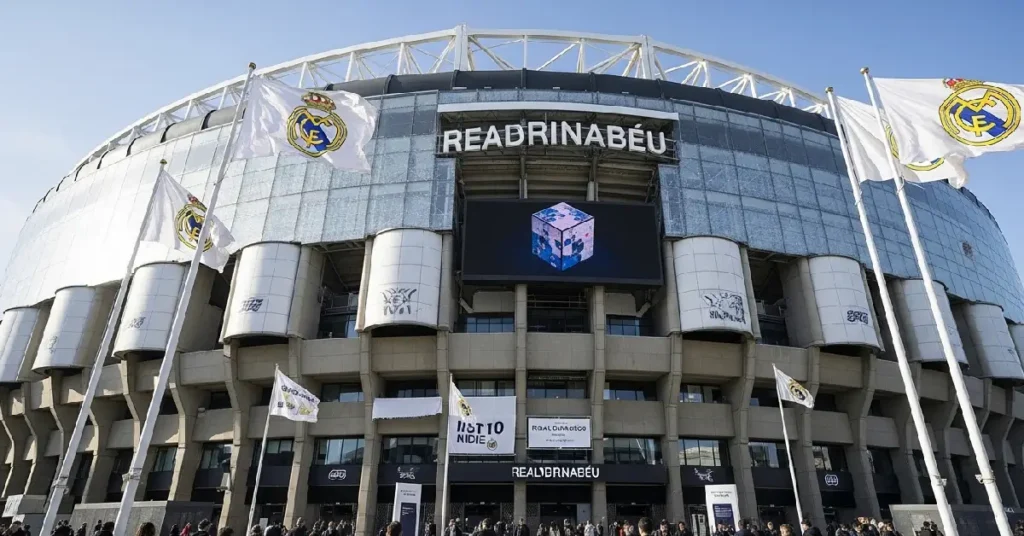
Home of Real Madrid football club: The Bernabéu is one of the world’s most iconic football stadiums. Home to Real Madrid, the most decorated club in UEFA Champions League history, it completed a landmark €900 million renovation project in 2023, transforming it into one of the most technologically advanced stadiums on earth with a retractable roof, a video-cube scoreboard, and a 360-degree LED façade.
Even if you don’t follow football, the stadium tour is genuinely impressive. You walk through the dressing rooms, stand in the tunnel, and sit in the presidential box overlooking the pitch.
11. Mercado de San Miguel
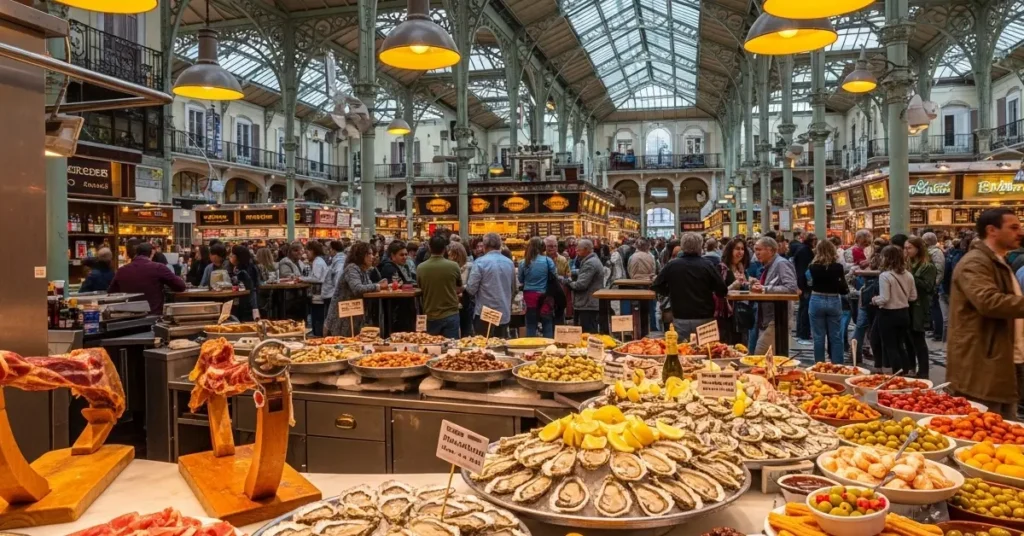
Famous food market experience: Located just steps from Plaza Mayor, Mercado de San Miguel is Madrid’s premier gourmet food market, housed in a beautiful 1916 cast-iron structure. Unlike El Rastro (a flea market) or a traditional covered market, San Miguel is entirely focused on high-quality food and drink consumed on the spot.
Expect Iberian ham, fresh oysters, vermouth, craft beer, traditional croquetas, olives marinated 30 ways, and an atmosphere that reaches its peak on Saturday afternoons. It’s not a budget option, plan around €15–25 per person.
12. Plaza de Cibeles
Iconic fountain and city hall: The Fuente de Cibeles, a neoclassical fountain depicting the goddess Cybele on a chariot drawn by lions, sits at the intersection of Paseo del Prado and Calle de Alcalá. It’s been a city icon since 1782.
The Palacio de Cibeles (formerly the central post office, now Madrid’s city hall) looms behind it in white stone and is one of the most beautiful civic buildings in Spain. Head to the rooftop bar for panoramic city views with a glass of wine.
13. Malasaña District
Hipster culture and nightlife: Malasaña was Madrid’s counterculture heartland during the movida madrileña, the creative explosion that followed Spain’s transition to democracy after Franco’s death in 1975. Today it remains one of the city’s most creative and youthful neighborhoods.
Calle del Pez, Calle Velarde, and Plaza del Dos de Mayo are the social epicenter, lined with independent record shops, vintage clothing stores, third-wave coffee shops, and bars that don’t get interesting until midnight.
14. Chueca Neighborhood
LGBTQ+ friendly area, vibrant nightlife: Chueca is Madrid’s LGBTQ+ neighborhood and one of the most welcoming, energetic, and colorful areas in the city. The annual Madrid Pride (Orgullo) festival in late June is one of the largest Pride events in Europe, drawing over 2 million people to the streets.
Beyond Pride, Chueca is simply a brilliant neighborhood, excellent restaurants, designer boutiques, rooftop bars, and a social energy that’s hard to find anywhere else in the city.
15. La Latina
Tapas bars and old Madrid charm: La Latina is where old Madrid still breathes. The neighborhood around Calle de la Cava Baja is home to Madrid’s most famous tapas bar crawl. On Sunday afternoons after El Rastro market, the streets overflow with locals doing the vermut (vermouth) ritual before lunch.
Key stops: Taberna Tempranillo, El Almendro, and Juana la Loca (famous for their tortilla de patatas). Don’t rush. This is Madrid at its most authentically itself.
16. Lavapiés
Multicultural district and street art: Lavapiés is Madrid’s most culturally diverse neighborhood, home to communities from South Asia, North Africa, Sub-Saharan Africa, and Latin America. The mix produces one of the city’s most vibrant food scenes, excellent Indian, Bangladeshi, and Ethiopian restaurants alongside traditional Spanish taverns.
The neighborhood is also home to some of Madrid’s most interesting street art, the Tabacalera cultural center (in a former tobacco factory), and a growing creative scene that’s reshaping its reputation.
17. Sorolla Museum (Museo Sorolla)
Impressionist Spanish art: This is one of Madrid’s most underrated cultural gems. The Sorolla Museum is the former home and studio of Joaquín Sorolla (1863–1923), Valencia’s master Impressionist painter, often called “the painter of light.” The museum preserves the beautiful Andalusian-style garden house exactly as Sorolla left it, with his studio, personal collection, and major paintings on display.
If you know Sorolla, this is a pilgrimage. If you don’t, this is the perfect introduction.
18. Madrid Río Park
Modern riverside recreation zone: Madrid Río is the stunning result of burying the M-30 ring road underground along the Manzanares River. The 10km riverside park that replaced the highway, opened in 2011, is a triumph of urban design, with cycle paths, playgrounds, fountains, beach volleyball courts, and stunning bridges.
The Matadero Madrid arts complex sits within the park, a former 20th-century slaughterhouse converted into one of Europe’s most interesting contemporary arts venues.
19. Las Ventas Bullring (Plaza de Toros de Las Ventas)
Bullfighting history and tours: Las Ventas is the world’s most prestigious bullring, seating 23,798 spectators and hosting the most important bullfights in the Spanish calendar, including the San Isidro Festival in May and June, when fights take place daily for nearly a month.
Whatever your position on the spectacle itself, the building’s Neo-Mudéjar architecture (finished in 1931) is magnificent, and the Bullfighting Museum inside is a genuinely fascinating cultural document.
20. Atocha Train Station (Estación de Atocha)
Tropical indoor garden: Madrid’s main train station is a destination in its own right. The original 19th-century iron-and-glass terminal hall, no longer used for trains, has been transformed into a 4,000 square meter tropical garden containing over 500 plant species, turtles, and a small pond. It’s one of the most surreal and beautiful public spaces in any train station in the world.
21. El Rastro Market
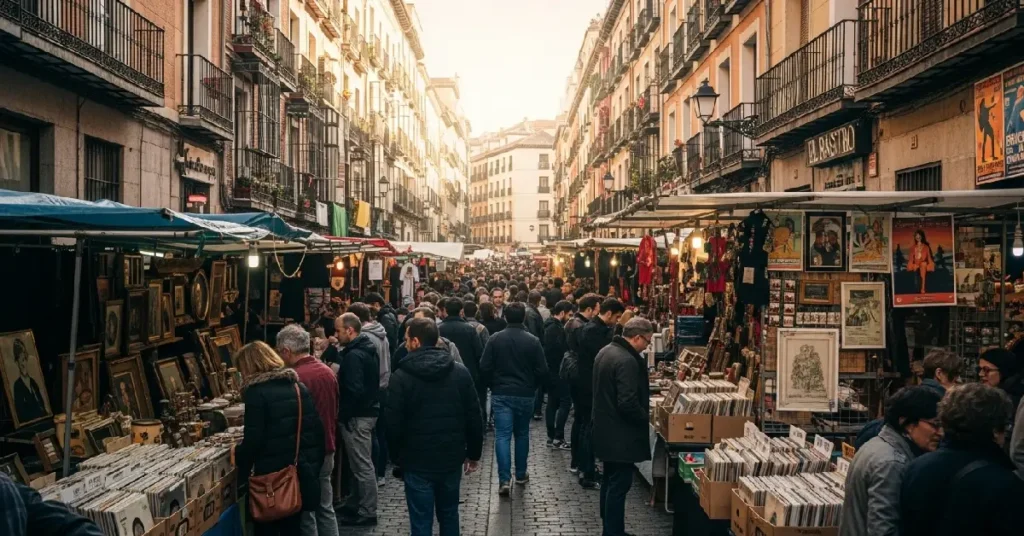
Famous Sunday flea market: Every Sunday morning (and public holidays), Madrid’s La Latina neighborhood transforms into the city’s largest open-air flea market. Hundreds of stalls spread across Calle de la Ribera de Curtidores and the surrounding streets, selling antiques, second-hand clothes, vinyl records, vintage posters, handmade jewelry, and genuine junk in equal measure.
Arrive before 10am to beat the crowds. Keep your bag close, pickpockets are active. And don’t miss the post-market vermouth session in La Latina afterward.
22. Almudena Cathedral (Catedral de la Almudena)
Royal church beside the palace: Madrid’s cathedral stands directly opposite the Royal Palace, the two most important buildings in the city face each other across the Plaza de la Armería. The cathedral was begun in 1879 but not consecrated until 1993 when Pope John Paul II visited Madrid.
The interior is strikingly modern compared to most European cathedrals, with colorful Neo-Gothic vaulting and contemporary stained glass. Climb to the dome for 360-degree city views.
23. Temple of Debod Sunset Viewpoint (Parque del Oeste)
Best photography spot: The western face of the Temple of Debod reflects the setting sun, creating a mirror effect in the surrounding moat that is genuinely spectacular. This spot consistently ranks among the top photography locations in Madrid and the wider Parque del Oeste walking paths offer some of the city’s finest views of the Royal Palace across the Manzanares valley.
24. Casa de Campo
Largest park in Madrid: Casa de Campo is Madrid’s largest public park at 1,722 hectares, roughly four times the size of New York’s Central Park. Originally a royal hunting ground dating from the 16th century, it was opened to the public in 1931 during the Second Spanish Republic.
Today it contains Madrid’s zoo, an amusement park, an open-air swimming pool, tennis courts, cycling trails, and a large lake with rowing boats for hire. The teleférico (cable car) from Parque del Oeste offers an unforgettable aerial crossing.
Suggested 3–5 Day Madrid Itinerary
Day 1: Historic Core
Morning: Royal Palace + Almudena Cathedral → Lunch: Mercado de San Miguel → Afternoon: Plaza Mayor + Puerta del Sol → Evening: La Latina tapas crawl
Day 2: The Golden Triangle of Art
Morning: Prado Museum (book in advance) → Lunch: Near Retiro → Afternoon: Retiro Park + Crystal Palace → Evening: Reina Sofía Museum (open until 9pm Tuesday–Saturday, free after 7pm)
Day 3: Modern Madrid + Viewpoints
Morning: Thyssen-Bornemisza Museum → Afternoon: Gran Vía + Malasaña → Sunset: Temple of Debod → Evening: Chueca neighborhood
Day 4: Neighborhoods + Markets
Morning: El Rastro (Sunday only) → Afternoon: Sorolla Museum + Lavapiés → Evening: Madrid Río Park + Matadero
Day 5: Sports + Outer Parks
Morning: Bernabéu Stadium Tour → Afternoon: Casa de Campo by teleférico → Evening: Rooftop bar at Palacio de Cibeles
Madrid Famous Neighborhoods: Your Ultimate Guide to the City’s Iconic Barrios
Travel Tips for Madrid Visitors
Public Transport Guide
Madrid’s metro is efficient, inexpensive, and covers all major attractions. A 10-journey card (Tarjeta Multi) costs around €12.20 for Zone A and is the best value for most visitors.
Metro tips:
- Line 1 (light blue) connects Atocha, Sol, and Gran Vía.
- Line 10 connects the airport to the city center (with an airport supplement).
- The Metro Turístico pass offers 1, 2, 3, 5, or 7-day unlimited travel from €8.40.
Safety and Scams to Avoid
Madrid is a safe city, but tourist areas attract opportunistic thieves:
- Puerta del Sol, El Rastro, and Gran Vía are the highest-risk areas for pickpockets.
- The “friendship bracelet” scam operates near the Prado and major churches, walk away firmly.
- The shell game (trile) appears around tourist areas, it’s always rigged.
- Use a crossbody bag and keep phones in front pockets.
Budget Travel Tips
- Free museum hours: Prado (free last 2 hours daily and all day Monday), Reina Sofía (free after 7pm Tuesday–Saturday), Thyssen-Bornemisza (free Monday 12–4pm).
- Free tapas: Some traditional bars in La Latina still serve free tapas with drinks.
- Picnics: Mercadona and Lidl near major neighborhoods offer excellent, cheap Spanish produce for Retiro Park picnics.
- A typical daily budget for a mid-range traveler is €80–120 per day (accommodation extra).
Where to Stay in Madrid
Best Areas for Tourists
| Area | Character | Best For |
|---|---|---|
| Sol / Centro | Central, busy, tourist-heavy | First-time visitors |
| Salamanca | Upscale, designer shops | Luxury travelers |
| Malasaña | Young, creative, nightlife | Under-35 travelers |
| Lavapiés | Diverse, artistic, emerging | Budget travelers |
| Chamberí | Residential, authentic | Repeat visitors |
Luxury vs Budget Options
Luxury: The Mandarin Oriental Ritz (from €500/night), Hotel Urso, Hotel Orfila, all in the Salamanca or Alonso Martínez area.
Boutique mid-range: Room Mate hotels, Only YOU Hotels, excellent value in the €100–180 range.
Budget: Hostels in Malasaña and Sol from €18–35 per night. Generator Hostel near Atocha is consistently well-reviewed.
Food Guide in Madrid
Must-Try Spanish Dishes in Madrid
- Cocido madrileño: Madrid’s iconic slow-cooked chickpea, meat, and vegetable stew; served in three courses in traditional restaurants.
- Bocadillo de calamares: a simple fried squid sandwich, sold everywhere in Sol and Plaza Mayor; an iconic Madrid street food.
- Tortilla de patatas: Spanish potato omelette; try Bar Nestor in La Latina for what many consider the definitive version.
- Jamón ibérico: Iberian cured ham; buy it sliced fresh from Mercado de San Miguel or any traditional delicatessen.
- Churros con chocolate: at Chocolatería San Ginés (open 24 hours, near Puerta del Sol since 1894).
Best Tapas Experiences
Madrid’s tapas culture is best experienced as a social crawl, two drinks and a snack at each bar, then move on. The circuit:
- La Latina: Calle de la Cava Baja (most concentrated tapas street in Madrid)
- Malasana: Calle del Pez area for modern riffs on traditional tapas
- Lavapiés: El Bar Melo’s for zapatilla (giant ham sandwich)
Local Food Markets
- Mercado de San Miguel: gourmet; best for grazing
- Mercado de Antón Martín: local, authentic, less touristy; excellent fresh produce and inexpensive lunch bars inside
- Mercado de Maravillas: largest covered market in Madrid; primarily residential shopping
FAQs About Visiting Madrid
How many days are enough in Madrid?
Three days covers the essential museums and central landmarks, but five days allows you to explore neighborhoods like Malasaña and La Latina properly and add a day trip to Toledo (45 minutes by high-speed train). Seven days is ideal for a genuinely immersive visit.
Is Madrid expensive for tourists?
Madrid is significantly more affordable than London, Paris, or Amsterdam. A good restaurant meal costs €12–20 per person for lunch (menú del día). Museum entry averages €10–18. A metro journey costs around €1.50–2.00. Compared to most Western European capitals, Madrid offers exceptional value.
What is the best time to visit Madrid?
April to June and September to October offer the best combination of good weather, manageable crowds, and lower hotel prices. July and August are hot (35–40°C is common) and many locals leave the city. Late December is festive and popular for Christmas markets.
Is Madrid safe for solo travelers?
Yes. Madrid consistently ranks among Europe’s safer major cities for solo travelers. The Metro operates until 1:30am (2am on weekends), taxis are metered and reliable, and the streets in tourist and residential areas are well-lit and populated late into the night. Standard urban caution applies in any crowded tourist area.
Can you walk between the major attractions in Madrid?
Many of the top 25 must-see places in Madrid are within walking distance of each other. The Royal Palace to the Prado Museum is roughly 25 minutes on foot, passing through the city center. Retiro Park to the Reina Sofía is under 10 minutes. For areas like Casa de Campo or Bernabéu, the metro is more practical.
Conclusion
Madrid is one of those cities that rewards effort. The more time you spend, the more layers you discover, from the cathedral crypt that doubles as an archaeological museum to the rooftop bars that materialize at sunset above Gran Via.
The top 25 must-see places in Madrid in this guide aren’t just tourist checkboxes. They’re a genuine cross-section of what makes this city one of the most extraordinary in the world: world-class art, layered history, an obsessive food culture, warm people, and a pace of life that teaches every visitor how to slow down and actually enjoy being somewhere.
Madrid doesn’t rush. It never has. That’s exactly what makes it unforgettable.
Go for five days. Stay for a week. Come back the following year.
Disclaimer: This Madrid travel guide is for informational purposes only. All information regarding opening hours, ticket prices, free entry days, and availability of attractions is subject to change without notice. Readers are strongly advised to check official websites for the most current information before planning their visit. The author and publisher assume no responsibility for any losses, injuries, or inconveniences sustained as a result of using this guide. All images described are for illustrative purposes and may not represent exact current conditions. Travel during peak seasons may require advance bookings. This guide contains general recommendations and individual preferences may vary.