
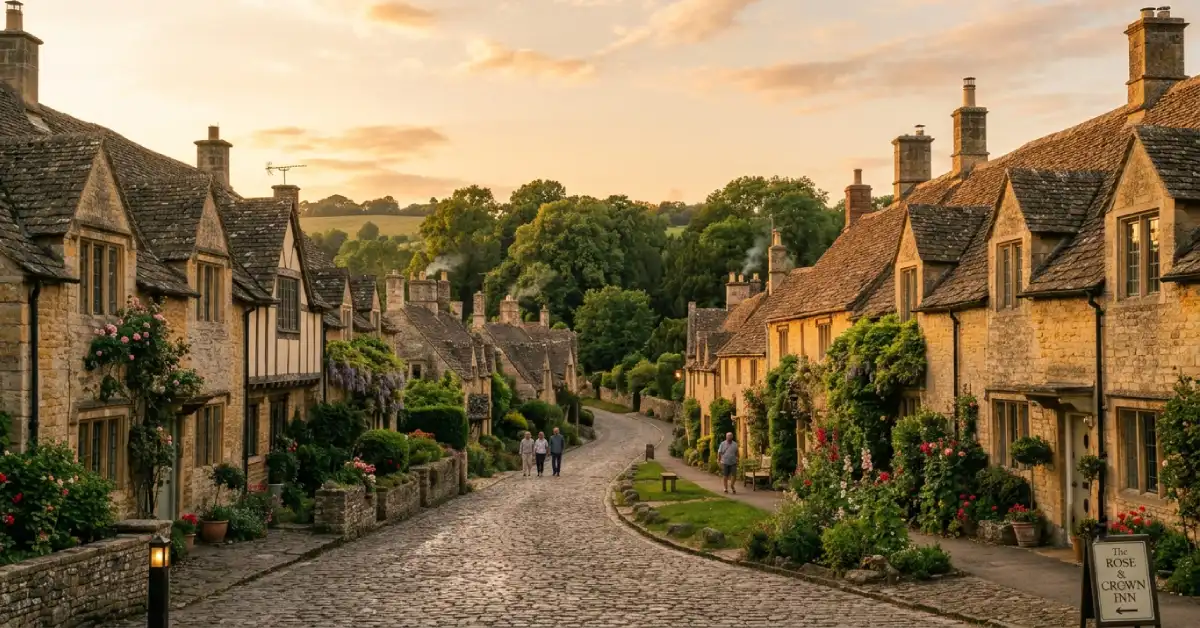
Ask ten people to name the best villages UK has going for it, and honestly, you’ll get ten different lists. That’s kind of the point. I’ve spent years pottering around Britain’s back roads – the golden lanes of the Cotswolds, the fells above Grasmere, the cliff paths near Whitby – and it’s almost always the smallest stop that I remember months later, not the big city I flew into. This guide pulls together the villages in the UK I think genuinely earn a detour, plus the practical stuff you’d want to know before setting off.
There are thousands of tiny settlements scattered across the English countryside, and most of them will never show up on a standard tourist itinerary. A handful got famous off a single Shakespeare connection. Others earned their name more quietly – a bend in a river, a market square that’s barely changed in three hundred years. What follows is my rundown of the best small towns UK has tucked into its countryside and up near the Scottish border, why each one made the cut, and how to actually put a trip together around them.
Why Villages UK Travel Keeps Growing
City breaks just keep getting pricier, and more crowded to boot. A small village uk stop tends to flip both of those problems – cheaper, and running at a pace London can’t fake.
Three reasons this pull is real:
- You can walk the whole thing. Most rural english villages fit into a few hours on foot, no car needed once you’ve parked.
- The history isn’t roped off. Wander through many english countryside villages and you’re literally standing inside a Tudor or medieval building, not reading about one behind glass.
- Your budget stretches further. Rooms and meals in countryside towns england offers usually run 30–50% below what you’d pay in London or Edinburgh.
Given all that, I’d cap it at two or three villages a day. Try to cram in more, and rushing through rural england towns kind of defeats the whole reason you came.
The Best Villages in England To Start With
Bibury, Gloucestershire
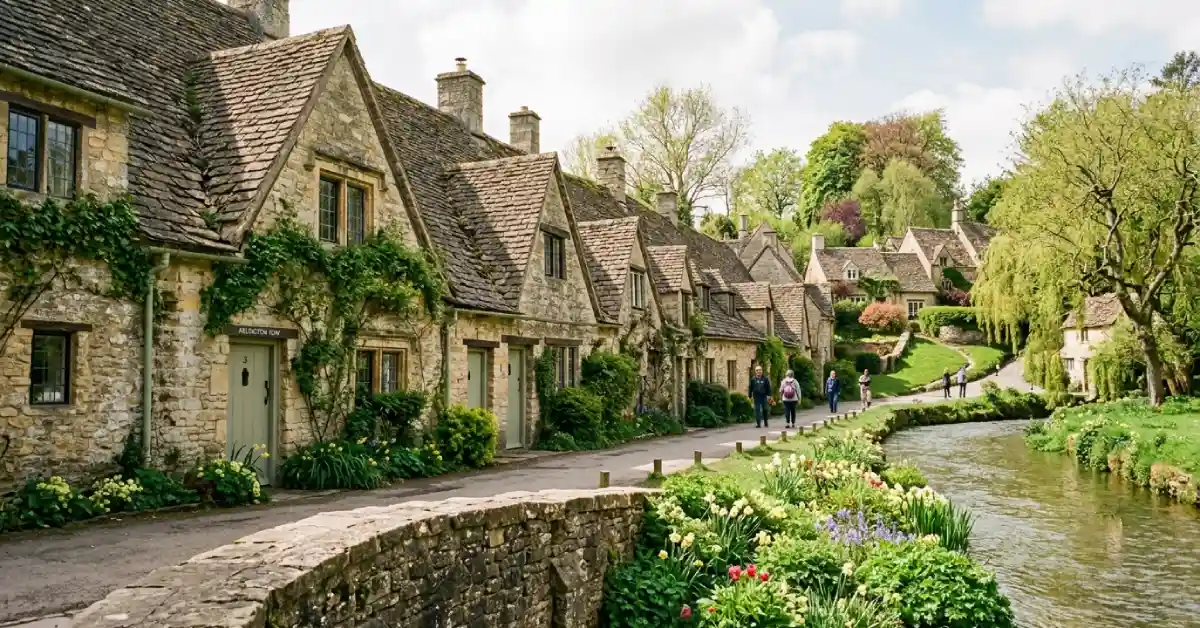
One street basically built Bibury’s reputation as the most picturesque village in england. Arlington Row – a stretch of 17th-century weavers’ cottages – has ended up on calendars and Instagram feeds for decades now. William Morris supposedly called it the most beautiful village in England, and honestly, nobody’s really argued the point since. Go first thing in the morning, or wait until evening. Coach tours flood the street by mid-morning in summer and don’t really thin out until dusk.
Local tip: Don’t bother with the high street. Park at the Trout Farm car park instead – spaces along Arlington Row belong to residents, and the wardens actually do enforce it.
Must Read: Eastern Europe Travel Advisory 2026: Safety, Costs & Real Tips
Castle Combe, Wiltshire
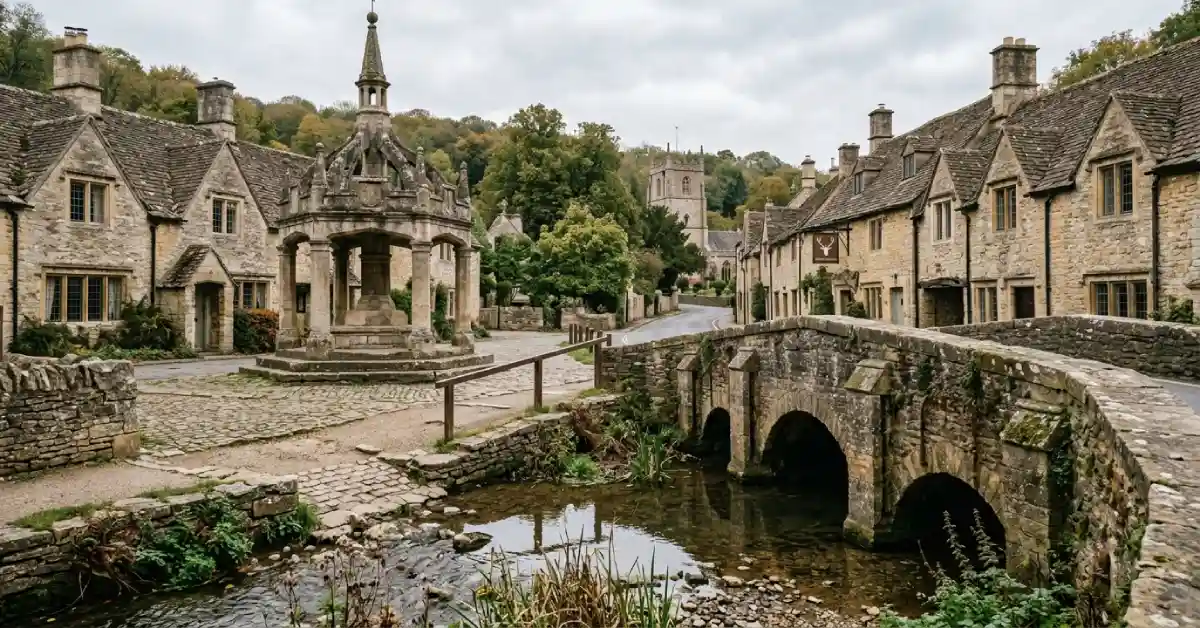
Bring up the prettiest village in england with anyone who travels a lot, and Castle Combe usually comes up fast. Film crews keep coming back – War Horse, Downton Abbey – mostly because nothing modern gets in the shot: a market cross, a 13th-century church, a stream cutting straight through the middle of the village. No satellite dishes anywhere. No painted lines on the road. Nothing else really breaks the spell either.
Bourton-on-the-Water, Gloucestershire
Locals call it the “Venice of the Cotswolds,” and yeah, it fits. Shallow stone bridges cross the River Windrush right through town, and that setup – plus a model village, a motor museum, and paths flat enough for a stroller – makes it one of the best villages in england if you’re traveling with kids.
Grasmere, Cumbria
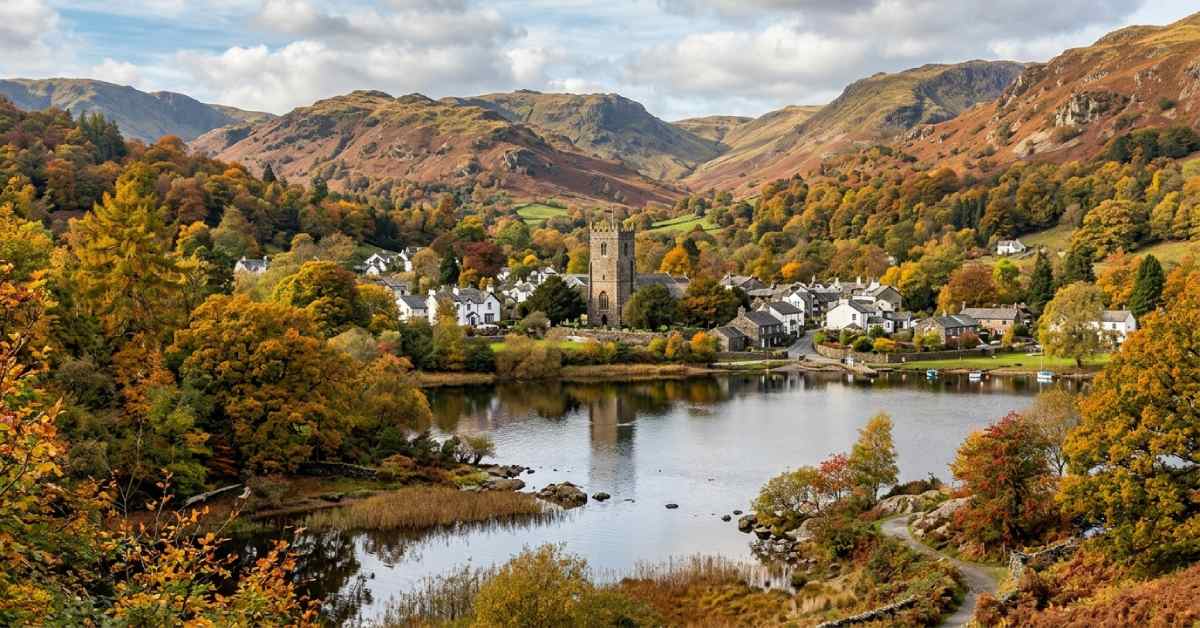
William Wordsworth lived here for over a decade, and it’s still on nearly every list of the most beautiful villages in uk you’ll find. Stand by the lake with the fells behind a gingerbread shop that’s been baking since 1854, and you’ll get why. One day never quite feels like enough here. This is one of those small english villages where staying overnight beats rushing through by a wide margin.
Lacock, Wiltshire
The National Trust owns almost the whole village, and you can tell immediately – no modern signage, no overhead wires, no satellite dishes anywhere. That’s exactly why Lacock keeps getting used for Pride and Prejudice, Cranford, and a handful of Harry Potter scenes. Consistency like that doesn’t just happen. It takes constant upkeep, and small villages england looks after this carefully are proof of it.
Best Small Towns UK: Looking Past the Cotswolds
The Cotswolds soak up most of the attention, sure. But there are plenty of legitimate contenders for best village in uk sitting well outside that region.
Ludlow, Shropshire
Ludlow sits on the River Teme, close to the Welsh border, inside a designated Area of Outstanding Natural Beauty. Its market is still a real working market – not something dressed up for tourists. The food scene, meanwhile, has been strong enough that the town once held multiple Michelin stars at the same time. Add a row of Elizabethan black-and-white buildings, and Ludlow turns into one of the best english villages if you want a weekend built around good food as much as views.
Robin Hood’s Bay, North Yorkshire
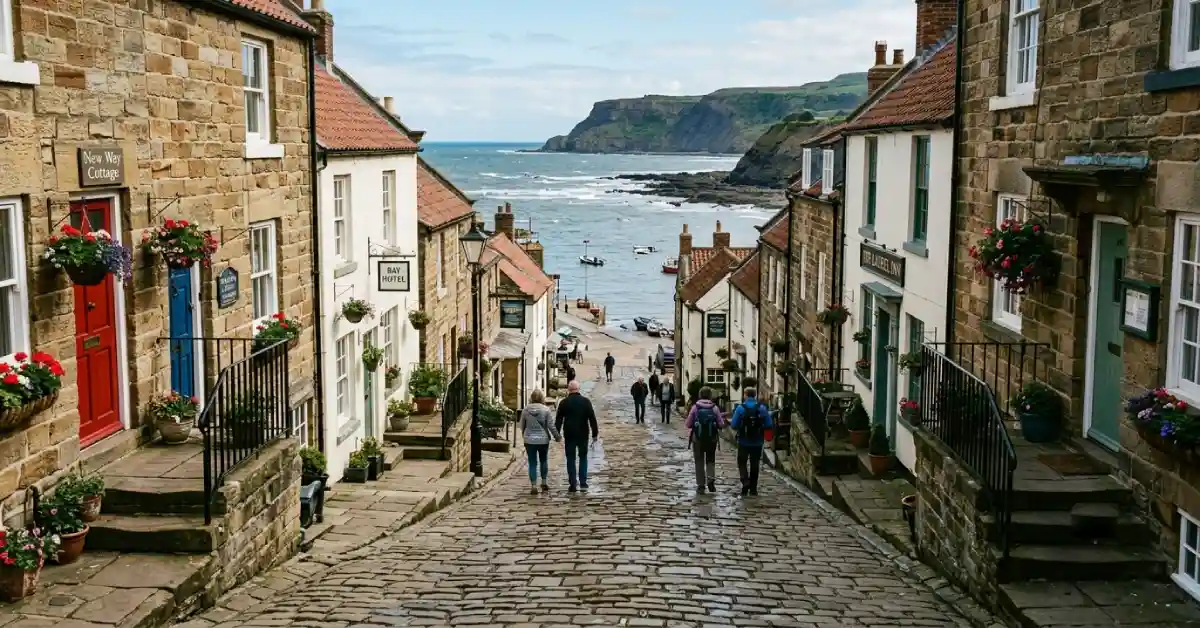
Smuggling is basically how this place got started. It still hangs onto a steep bit of Yorkshire coastline, and the cobbled lanes are too tight for most cars to squeeze through. Local legend says a network of tunnels once linked the cellars beneath the village, used to shift contraband past customs officers back in the 1700s. True or not, it’s a decent story to think about on the walk down. Robin Hood’s Bay counts among the best british villages for coastal walking, full stop, and it’s also where the 192-mile Coast to Coast trail ends.
Rye, East Sussex
Steep, cobbled, lined with timber-framed houses going back to the 1420s – Mermaid Street in Rye is one of the best-preserved medieval streets in the south of England. There’s a literary side to it too. Novelist Henry James lived and worked at Lamb House in Rye for close to twenty years.
Heddon-on-the-Wall, Northumberland
Sitting right along Hadrian’s Wall, this small village uk travelers often blow past in five minutes actually deserves longer. Work on the wall started back in AD 122, marking the northern edge of the Roman Empire, and a stretch of it still runs past the village today. Walk even a short section, and you’ll come away understanding Roman Britain better than most museum exhibits ever manage.
Villages in Britain vs. Small Towns: Is There Actually a Difference?
People throw around “village” and “small town” pretty loosely most of the time. Once you’re actually mapping out a route, though, the distinction starts to matter.
| Feature | Village | Small Town |
|---|---|---|
| Typical population | Under 2,500 | 2,500–20,000 |
| Core amenities | Church, pub, small shop | Market, several shops, train station |
| Visit length | 1–3 hours | Half day to overnight |
| Example | Castle Combe | Ludlow |
Both terms turn up constantly in “best small towns england” searches. When you’re short on time, villages usually give you more per hour. Small towns give you more to fill a longer stay.
Practical Tips for Visiting Rural English Villages
- Show up early, or catch the train. A lot of rural places in england run on single-lane roads with barely any parking, so getting there before 10 a.m. dodges both the traffic and the crowds.
- Book Cotswold rooms early. Most best villages UK lists lean hard toward the Cotswolds, so rooms in Bibury or Castle Combe fill up fast on summer weekends – sometimes months out.
- Don’t count on pubs staying open all day. Village pubs often shut mid-afternoon before reopening for dinner.
- Bring a layer regardless of the forecast. English weather flips fast no matter the season, so a light waterproof jacket is always worth packing.
- Spend money where you actually are. Shops in an english countryside village are usually run independently, and they lean heavily on tourist spending outside the summer rush.
For more on how these villages actually took shape, the Historic England register is a solid place to start. Its listed-building database gets into real detail on why certain villages have stayed so architecturally consistent over time. The National Trust covers similar ground, managing several villages on this list and publishing visitor info directly if you’re curious what’s formally protected and why.
Expert Take: What Actually Makes a Village “The Best”
Ask ten travel writers to rank the best villages in britain, and you’ll get ten different answers back. Even so, the strongest picks tend to share three things: architecture that stays consistent without modern intrusions, a local economy that doesn’t lean entirely on tourism, and at least one genuine historical or literary detail that gives the visit some context beyond a nice photo.
Bibury and Castle Combe win on architecture. Ludlow and Rye win on real local commerce. Grasmere and Heddon-on-the-Wall win on historical depth. If you’ve only got room for one trip, pick based on whichever of those three matters most to you – chasing whatever’s trending hardest on social media usually just lands you in a crowd rather than an actual experience.
The Ordnance Survey also has free interactive maps worth using when you’re plotting multi-village routes without relying entirely on GPS.
Conclusion – Villages UK
None of the villages UK has to offer are really interchangeable. Each one earns its place through a different mix of history, architecture, and local character – Bibury’s honey-colored cottages, Grasmere’s literary past, Ludlow’s food scene. Whichever one pulls you in, the real trick is slowing down enough to actually experience it, not just photograph it and move on. Pick two or three villages from this list. Give yourself more time than feels strictly necessary. You’ll walk away with a far better sense of rural England than a single day in London could ever give you.