
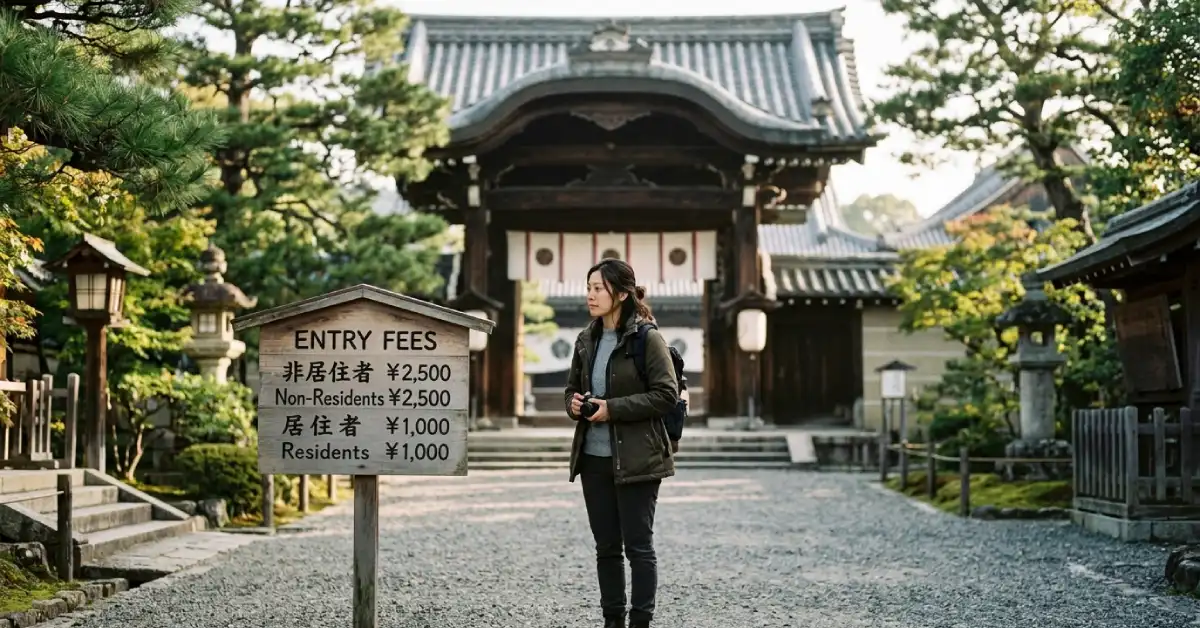
Japan two-tier pricing has officially moved from a controversial idea to a concrete reality. If you are planning a trip, you need to know that the cost of visiting some of the country’s most iconic landmarks is about to change depending on your residency status. Japan’s Tourism Agency has confirmed it will publish formal guidelines by March 2027, but the system is already spreading rapidly .
The reason is simple: a weak yen and record-breaking tourism numbers. In the first three months of 2026 alone, Japan welcomed over 10.6 million visitors . While this is great for the economy, the sheer volume of travelers is putting a massive strain on ancient infrastructure and public services. To preserve historical sites and fight overtourism, officials are charging non-residents significantly higher admission fees.
We have analyzed the official announcements, looked at the real-world examples already in effect, and broken down exactly how this affects your budget. If you want to travel smart and avoid sticker shock, here is everything you need to know.
Table of Contents
ToggleThe Himeji Castle Blueprint: A Case Study in Success
The poster child for Japan two-tier pricing is the magnificent Himeji Castle. In March 2026, the city ditched the flat-rate entry fee .
Here is the current breakdown:
-
Non-Residents: ¥2,500 (approximately $17 USD)
-
Local Residents: ¥1,000 (approximately $7 USD)
Initially, critics worried that charging foreigners more would scare people away. The opposite happened. While the number of visitors dipped slightly, the facility’s ticket revenue nearly doubled . The higher fees didn’t just fill the city’s coffers; they funded urgent repairs and crowd control measures that actually improved the experience for everyone.
This success has turned Himeji into a model that other municipalities are racing to copy. Officials realized that tourists are generally willing to pay a premium to maintain the sites they have traveled thousands of miles to see.
Where Will You Encounter Dual Pricing?
Japan two-tier pricing is not just a government policy; it is being adopted by the private sector too. You can expect to see it in four key areas.
1. Historical Landmarks & Museums
The central government is pushing national museums to adopt residency-based fees. The Tokyo National Museum, Kyoto National Museum, and Nara National Museum are expected to restructure their entry fees by 2031, potentially charging foreigners two to three times the local rate . This follows the global norm—places like the Louvre in Paris and the Taj Mahal in India have operated on similar principles for years .
2. Theme Parks
The Jungle Park (Junglia) in Okinawa was one of the first major parks to differentiate prices. A one-day pass for a non-resident costs ¥8,800, while a Japanese resident pays around ¥6,930 . You typically need to use a Japanese-language website or provide a local address to access the discounted rate.
3. Dining & Restaurants
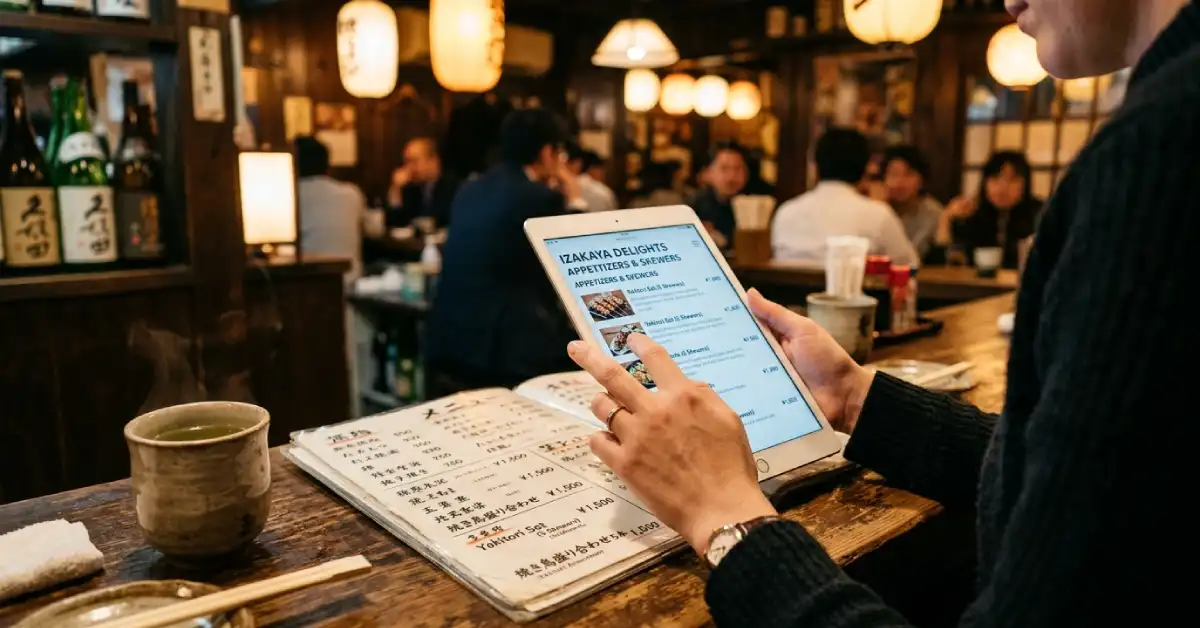
This is the most controversial area. Several restaurants, including a high-profile seafood eatery in Shibuya, sparked viral backlash for charging tourists higher fees . The justification often involves “higher labor costs for serving foreigners,” but the execution can be murky. Some spots verify residency by asking for a residence card or checking language ability, a practice that has drawn complaints from long-term foreign residents who feel unfairly “profiled” .
4. Public Transportation
Kyoto, a city struggling with overwhelmed bus routes, is planning a “citizen-first” fare system as early as 2027. Under that plan, tourists might pay ¥400 for a bus ride that costs locals ¥200 . The goal is to discourage tourists from using packed commuter buses for short sightseeing hops.
The Thin Line Between Fiscal Logic and Discrimination
It is crucial to distinguish between transparent, residency-based policies and arbitrary pricing. The Tokyo Weekender recently highlighted that the mechanism of charging visitors more is not inherently scandalous—it’s the global standard .
The logic is solid: local taxpayers fund the upkeep of public spaces through their annual contributions. Tourists do not. Therefore, visitors make up the difference at the gate.
However, the debate gets heated when businesses fail to define who counts as a “resident.” A foreigner who has lived in Japan for twenty years, pays taxes, and raises a family there is not a tourist. If a restaurant tries to charge them an “inbound rate” based on their appearance or language, it creates a serious reputational problem . The government’s upcoming guidelines will need to establish clear documentation rules—like requiring a My Number card or residence card for discounts—to separate policy from simple prejudice.
Must Read: Best Second Hand Kimono Shops in Tokyo Japan
How to Navigate the Changes: 4 Essential Tips
An international trip to Japan remains an amazing value due to the historically weak yen, but you can avoid overpaying with these strategies.
1. Book Tickets Online in Advance
Many attractions that implement Japan two-tier pricing will ask for proof of residency only at the physical ticket window. By purchasing digital passes through third-party travel platforms before you arrive, you might bypass the complex residency verification process, albeit often at a slightly higher baseline price than the local rate.
2. Use Tax-Free Shopping as an Offset
Don’t forget that while you pay more for some attractions, you still catch a break in stores. The consumption tax exemption for tourists saves you 10% on large purchases . However, note that the system will shift to a refund-based model at airports by late 2026, so you’ll need to allot time for customs verification before your flight home .
3. Double-Check Multi-Language Menus
When dining out, be aware that digital ordering pads or English menus might display higher prices than the Japanese menu. This sometimes reflects a different “premium” offering, but not always . If a price seems unusually high, politely asking if a local menu is available can clarify the situation, though restaurants have the right to set their own fees.
4. Explore Off-the-Beaten-Path Regions
Dual pricing is most common in the “Golden Route” cities—Tokyo, Kyoto, and Osaka. By venturing to lesser-known prefectures, you’ll encounter fewer crowds and, often, uniform pricing. You also get a more authentic look at daily Japanese life away from the tourist pressure points .
Why This Is Actually a Positive Step
It sounds counterintuitive to celebrate paying more, but for the conscious traveler, Japan two-tier pricing supports sustainable tourism. The alternative to dual pricing is often total degradation. Kyoto’s historic geisha district, Gion, for example, recently banned tourists from private alleys entirely because of bad behavior.
Paying a few hundred extra yen ensures that the bamboo groves, temples, and castles you are flying across the world to photograph will actually be there in good condition for the next visitor. It funds the multilingual staff, trash collection, and structural repairs that 36 million annual visitors necessitate.
As the government rolls out its formal guidelines by 2027, transparency will improve . Until then, the best approach is to stay informed, be respectful, and view the surcharge not as a penalty, but as an active contribution to preserving Japanese heritage.
Frequently Asked Questions
1. Does Japan two-tier pricing apply to all foreign passport holders?
Not exactly. Most systems are residency-based, not passport-based. If you hold a foreign passport but possess a valid Japanese residence card (Zairyu card), you usually qualify for the “local” price. The distinction is designed to separate short-term visitors from tax-paying residents .
2. Is it legal to charge tourists more than locals?
Yes. Japan’s authorities are actively encouraging it. The Japan Tourism Agency is setting up expert panels specifically to write the guidelines for how businesses can legally and fairly implement this, confirming it does not violate anti-discrimination laws when properly executed .
3. Will I be charged more if I look foreign but live in Japan?
Unfortunately, this is a current pain point. Some small, independent restaurants have tried to identify “tourists” by sight, which leads to long-term foreign residents being misidentified. Official guidelines expected by 2027 aim to establish clear documentation checks to stop this subjective judgment .
4. Is the JR Rail Pass part of the two-tier pricing system?
No, the JR Pass actually works on an opposite, pro-tourist model. It has always been a dual-pricing system that favors the temporary visitor, as only foreigners on a tourist visa can purchase the full unrestricted pass . Its recent price hikes have been across the board, not specifically targeted at non-residents.
5. Can I get a refund on the tourist surcharge?
No. The higher entrance fees at places like Himeji Castle or National Museums are standard admission rates for non-residents and are not refundable . Think of it as a “maintenance contribution” necessary to access the facility.