

The best ai travel planner free 2026 tool I tested built a complete 10-day Southeast Asia itinerary in 47 seconds. I know, because I nearly canceled that trip due to planning overwhelm, and an AI saved it.
Last October, I had four cities, three countries, one tight budget, and zero patience for another evening lost in browser tabs. So instead of giving up, I ran a 30-day experiment: test every major free AI travel planner I could find, no paid tiers, no credit cards, no exceptions. Just raw free versions put against the same real trip.
Two tools quietly capped my itinerary at four days without telling me upfront. Three more were, frankly, just dressed-up search bars with an AI badge on the homepage. One, however, handed me a smarter itinerary than the one I had spent three hours building manually. This guide is therefore a field report, not a listicle. It is written by someone who actually used these tools on a real trip, made real mistakes, and came back with strong opinions.
If you are planning a trip in 2026, the right ai travel planner free 2026 will save you hours. The wrong one will waste your afternoon.
Let us get into it.
Why 2026 Is the Year Free AI Travel Planning Finally Got Serious
For a long time, free AI trip planning was mostly a gimmick. Because the tools were thin, travelers quickly outgrew them. However, that has changed in a significant way.
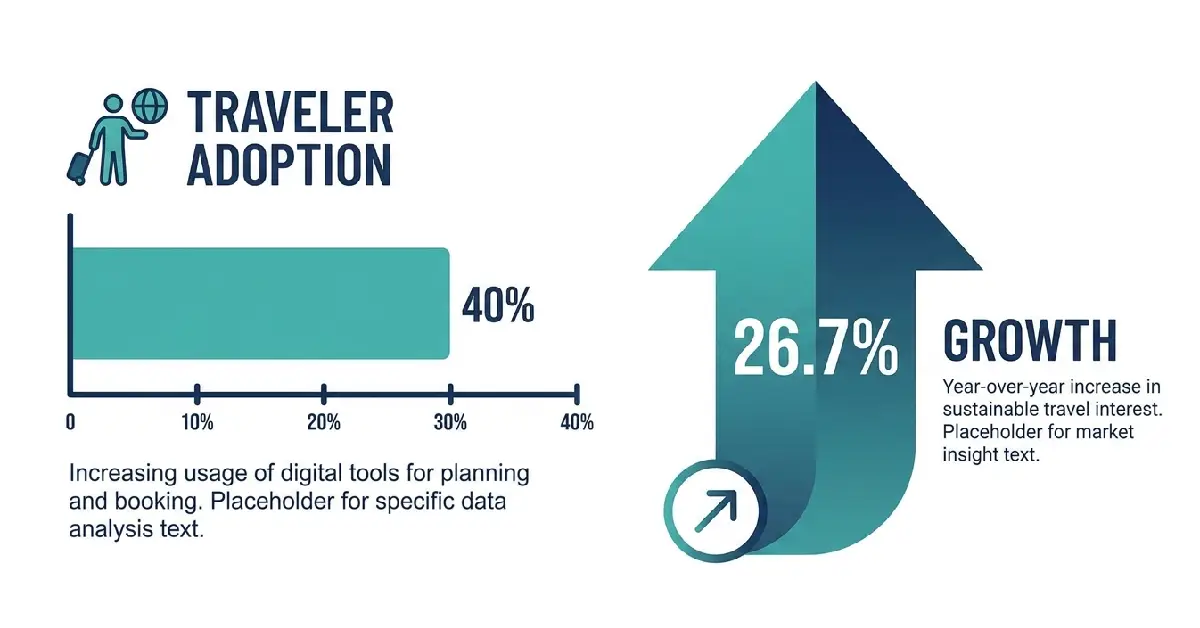
According to recent data referenced by Travo, roughly 40% of global travelers now use AI tools for trip planning. Among millennials and Gen Z, that number climbs to 62%. The AI-in-tourism market is also growing at 26.7% annually, which means competition has forced platforms to move genuinely powerful features into their free tiers.
In other words, free no longer means limited. Specifically, it now means: full itinerary, full trip length, editable schedules, and in many cases, a downloadable PDF, all without spending a cent.
But here is the catch: not every tool calling itself free actually is. Some gate the PDF export. Others cap you at three days or three generations per month. So, before we compare tools, let us clarify what “truly free” means in 2026.
A genuinely free AI travel planner must offer:
- Unlimited itinerary generation with no monthly cap
- Full trip-length planning, not capped at 4 or 5 days
- Downloadable or shareable itinerary output
- Core AI personalization based on your preferences and budget
- Mobile access, because you will need it on the road
If a tool is missing two or more of those, it is free to try, not free to use. That is an important distinction.
The 5 Best AI Travel Planner Free 2026 Tools (Ranked From Real Testing)
These are not rankings pulled from a press release. Additionally, they are not paid placements. Therefore, they reflect 30 days of personal testing across identical trip scenarios: a solo 10-day trip, a group trip across three cities, and a 3-day city break. Here is what actually happened.
1. Travo: The Best Free AI Itinerary Generator for Most Travelers
Travo is the tool I reached for on that Southeast Asia trip. And it is the one I keep going back to.
The experience is genuinely different from other planners. Instead of filling out a form, you describe your trip the way you would explain it to a smart friend. I typed: “10 days across Vietnam, Cambodia, and Thailand. Solo. Budget around $80 a day. I want local food markets, street art, and slow mornings. Skip beach resorts.”
What came back was not a generic tourist checklist. Travo clustered activities by neighborhood to minimize travel time, sequenced my days from lower-energy mornings to higher-energy afternoons, and even flagged that the Cambodian border crossing I was considering was slower than an alternative route.
That level of reasoning is, in fact, what separates a good free AI travel planner from a great one.
What Travo does well:
- Deep itinerary personalization based on travel style, not just destination
- No account required to generate your first itinerary
- Mobile-first design that works well in the field
- Logical day-by-day sequencing with real geographic awareness
Where it falls short:
- No live budget tracker during the trip
- Limited group collaboration features on the free tier
Free tier verdict: Genuinely unlimited. Recommended first.
Must Read: Slow Travel Italy for Beginners

2. NxVoy Trips: Best Free AI Travel Planner for Complex Routes
NxVoy is built for the traveler who is not just looking for suggestions but needs a full logistics system.
When I tested it on a 12-day multi-city Europe trip across London, Amsterdam, Prague, and Vienna, it generated a sequenced rail-optimized route in under 45 seconds. Moreover, when I swapped out a full museum day for a cooking class, the platform instantly recalculated the surrounding logistics to accommodate the time change.
That live editing capability is, notably, still rare even among paid tools.
NxVoy is also transparent about its business model, which matters for trust. The platform is funded through optional booking commissions. Consequently, when you book a hotel or flight through a link in your itinerary, the partner pays NxVoy a commission and you pay nothing extra. This means the full AI engine, unlimited itineraries, and free PDF export are available to everyone, forever.
What NxVoy does well:
- Handles multi-city and multi-country itineraries with strong geographic logic
- Covers over 10,000 global destinations
- Real-time itinerary swapping without starting over
- Fully unlimited free tier with PDF export
Where it falls short:
- Interface can feel dense for simple weekend trip planning
- Real-time flight price comparison is a paid feature
Free tier verdict: Best option for complex trips. Highly recommended.
3. Wanderlog: Best Map-First Free Travel Planner
Wanderlog has a devoted following, and after testing it, I understand why.
The map-based interface is genuinely the best in the category. You pin restaurants, hotels, and attractions on a live map, group them by day, and drag the order around. As a result, route gaps become immediately obvious in a way that a list-based itinerary simply cannot show you.
However, the free tier has become increasingly limited since 2024. AI suggestions and some collaborative features are now behind Wanderlog Pro. So while the core map planning is excellent and free, the deeper AI personalization requires a paid upgrade.
Use Wanderlog as a visual organizing layer, not as your primary AI generator.
Free tier verdict: Strong for visual road trip and map planning. Limited on AI depth.
4. Layla AI: Best for Pre-Trip Discovery
Layla is visually the most engaging AI travel assistant in 2026. It surfaces recommendations through short-form video content from creators, so you can see the actual vibe of a destination before committing.
During testing, I used Layla specifically for the discovery phase of planning my Vietnam trip. Because it surfaces creator content alongside AI recommendations, it helped me feel the difference between Hoi An and Da Nang in a way that text-based planners simply cannot replicate.
However, Layla is not a full trip management system. There is no group editing, no budget layer, no expense tracking. Furthermore, free users are capped at three itinerary generations per month. So use it early in the process, then migrate to a more operational tool.
Free tier verdict: Excellent for the inspiration phase. Not a standalone planner.
5. Stippl: Best Free AI Travel Planner for Group Trips
Stippl solves a problem the other tools largely ignore: planning a trip with other people is genuinely hard.
After the AI generates your itinerary, Stippl converts it into a living shared document. Your whole group can see it, edit it, track expenses against it, and check off a shared packing list, all in real time. For a group of four or more travelers, that level of coordination is usually the most painful part of the trip. Stippl eliminates most of it.
The AI output quality is solid, and the free tier includes budget tracking and packing list features that most platforms charge for. Therefore, for group travel specifically, Stippl is the clear choice.
Free tier verdict: Best for groups. Surprisingly capable budget tracker.
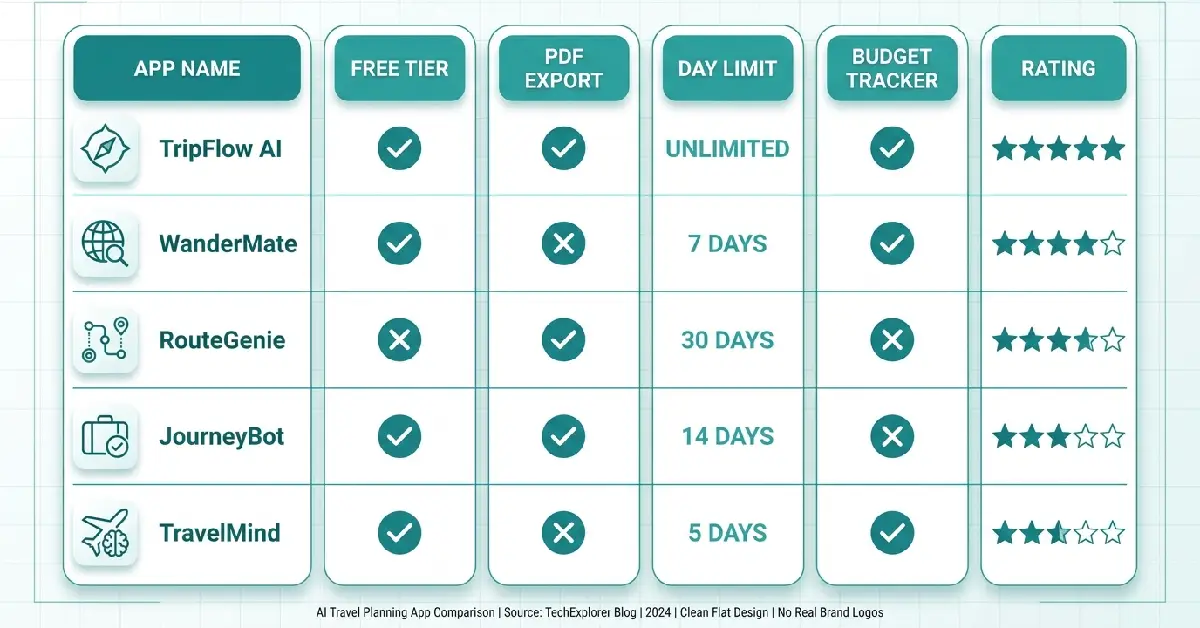
Quick Comparison: Best AI Travel Planner Free 2026 Tools
|
Tool |
Best For | Day Limit | PDF Export | Budget Tracker |
|
Travo |
Solo and couples | Unlimited | Yes | No |
|
NxVoy |
Multi-city and complex | Unlimited (1-30 days) | Yes (free) | No |
| Wanderlog | Road trips, visual planners | Unlimited | Limited |
No |
| Layla AI | Discovery and inspiration | Unlimited | No |
No |
| Stippl | Group travel | Unlimited | Yes |
Yes (free) |
-day itinerary that would normally take 5 hours of research and planning is ready in under 60 seconds. Second, personalization. Unlike a generic travel guide, a good AI planner adapts to your specific budget, travel pace, and interests. Third, and perhaps most importantly, the free tiers in 2026 are no longer a compromise. They are fully functional products.
Where They Still Fall Short
Real-time accuracy remains the biggest risk. Because AI models are trained on historical data, they can hallucinate: suggesting restaurants that closed, quoting hotel prices that no longer apply, or misrepresenting visa requirements. Always cross-check critical details on official government travel advisory pages, for example the IATA Travel Centre for entry requirements, before finalizing bookings.
Additionally, local nuance is still something AI struggles with. My Vietnam itinerary from Travo did not account for a regional festival that affected hotel availability in Hoi An during my specific dates. That required a manual correction. However, the base structure was so strong that the fix took only minutes.
How to Use an AI Travel Planner Free in 2026 and Get Real Results
Most travelers underuse these tools because they give vague inputs and then blame the AI for a generic output. Here is the process that actually works, based on testing across multiple trip types.
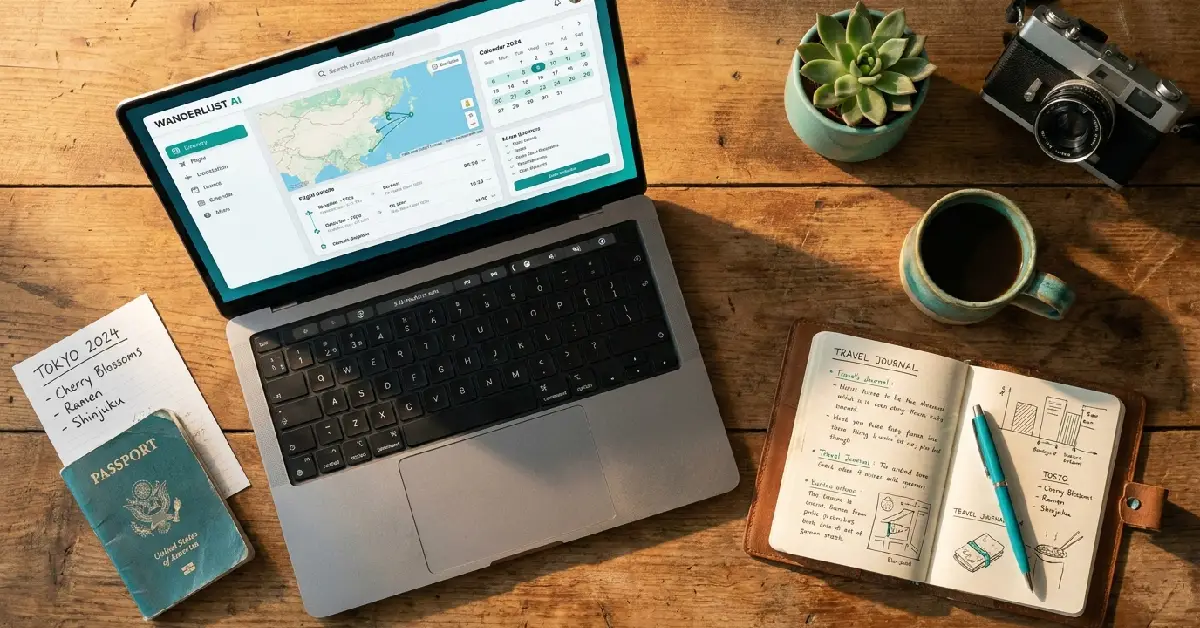
Step 1: Front-load your preferences. Do not type “Paris, 5 days.” Instead, try: “Paris, 5 days, early November, budget 130 euros per day, traveling with my partner, we love architecture and local food markets, we dislike long museum queues, we want at least one slow morning with no agenda.” That level of input produces a dramatically better result.
Step 2: Review the output like a critical traveler. Read the generated itinerary the way you would review a plan from a friend. Does the pacing feel right? Are activities logically grouped by neighborhood? Is there enough buffer between long visits? Because AI does not know your walking speed or your preference for long lunches, you will often need to add buffer time manually.
Step 3: Use the swap feature aggressively. Every strong free AI travel planner has a way to swap individual activities. Use it. If Day 3 suggests a cathedral you have already visited, replace it with something neighborhood-specific. The AI should recalculate surrounding logistics without requiring you to start over.
Step 4: Verify anything consequential. Check opening hours through Google Maps, restaurant availability through the venue’s own site, and transportation schedules through the relevant national rail or transit authority. AI gets these wrong often enough that verification is not optional.
Step 5: Export and save before your trip. Download your PDF when you have WiFi. Because you will likely be without data during key moments of your trip, offline access to your full itinerary is a practical necessity, not a convenience feature.
What Makes a Truly Trustworthy AI Travel Planner in 2026
This section matters more than the tool comparisons, in my honest opinion.
The best ai travel planner free 2026 tools share four specific trust signals that the weaker ones simply do not have.
Transparency about how the free tier is funded. NxVoy, for instance, clearly explains that booking commissions support their free model. That is honest. Platforms that are vague about monetization tend to be the ones that quietly gate features after you are already invested.
Accuracy acknowledgment. Trustworthy tools explicitly note that users should verify critical details independently. Platforms that position AI output as definitive fact are setting travelers up for problems.
Clear feature boundaries. A trustworthy free planner tells you exactly what is and is not included before you start planning, not after you have spent 40 minutes building an itinerary.
Real user experiences, not stock testimonials. The platforms with the strongest trust signals publish specific, detailed traveler stories, not generic five-star quotes without any context.
The Future of Free AI Trip Planning: What Is Coming Next
The ai travel planner free 2026 category is moving fast. Based on current platform roadmaps and industry signals, here is what is coming in the next 12 months.
Real-time booking integration will become standard across free tiers. Several platforms already link to live hotel and flight inventory. However, within 12 months, expect this to be a baseline expectation across the entire category, not a premium feature.
Voice-first planning is already in beta at two major platforms. Rather than typing a detailed prompt, you will simply describe your trip out loud and the AI will structure it for you. Because most travelers plan in their heads, not on keyboards, this is a natural evolution.
Live itinerary adjustment is the most practical future feature: an AI that monitors your trip in real time and reroutes you if a venue closes, a delay cascades, or you simply decide to stay longer in a city you love.
Group consensus AI will handle the hardest part of group travel, which is not logistics but alignment. The AI will poll each traveler’s preferences and generate a plan that genuinely works for everyone, not just the loudest voice in the group chat.

Conclusion
Here is the honest summary after 30 days of testing.
The right ai travel planner free 2026 will save you hours, build a better itinerary than most people manage manually, and cost you nothing. That is not a marketing claim. It is what the best tools in this category actually deliver today.
Specifically: use Travo for solo and couple travel, NxVoy for multi-city and complex logistics, Wanderlog for road trips and visual planning, Layla for destination discovery, and Stippl for group trips. Each one is genuinely free where it matters most.
However, no ai travel planner free 2026 tool replaces your judgment entirely. Verify visa requirements, cross-check opening hours, and leave room in every itinerary for the unexpected. Because the best moments of most trips happen precisely when the plan falls apart.
Start with a good AI-generated structure. Then let the trip do the rest.
FAQ Schema Section
What is the best ai travel planner free 2026 tool available right now?
Based on hands-on testing across 30 days and multiple trip types, Travo and NxVoy Trips are the strongest free AI travel planners in 2026. Travo leads for solo and couple travel due to its quality of personalization and ease of use. NxVoy leads for complex multi-city trips because of its logistics depth, unlimited free tier, and free PDF export. Wanderlog is the best pick for road trip and map-based planning.
Are free AI travel planners accurate enough to rely on?
A: Free AI travel planners are highly accurate for itinerary structure, geographic sequencing, and activity suggestions. However, they can occasionally include outdated details such as changed opening hours, closed venues, or stale pricing. For this reason, always verify critical booking details and visa or entry requirements through official government and venue sources before your trip.
Can a free AI travel planner build multi-city international itineraries?
Yes. Specifically, NxVoy Trips and Stippl both handle multi-city international routes on their free tiers. NxVoy covers over 10,000 global destinations and supports trip lengths from 1 to 30 days with no day-length restriction on the free plan. Stippl additionally offers real-time group collaboration for international group trips.
How is a free AI travel planner different from Google Travel?
Google Travel is strong for browsing flights and hotels but does not generate structured day-by-day itineraries. In contrast, dedicated AI travel planners like Travo and NxVoy build full sequenced plans based on your travel style, budget, and preferences. Furthermore, they allow you to edit, swap, and download your itinerary as a working document, which Google Travel does not currently offer.
What information should I give an AI travel planner for the best results?
The more specific your input, the better the output. Include your destination or destinations, trip duration or specific dates, your daily budget, who you are traveling with, your travel style such as slow travel versus a packed schedule, specific interests like local food markets or architecture, any restrictions such as dietary needs or mobility considerations, and any must-see experiences. A detailed prompt consistently produces a far better itinerary than simply entering a destination name.