
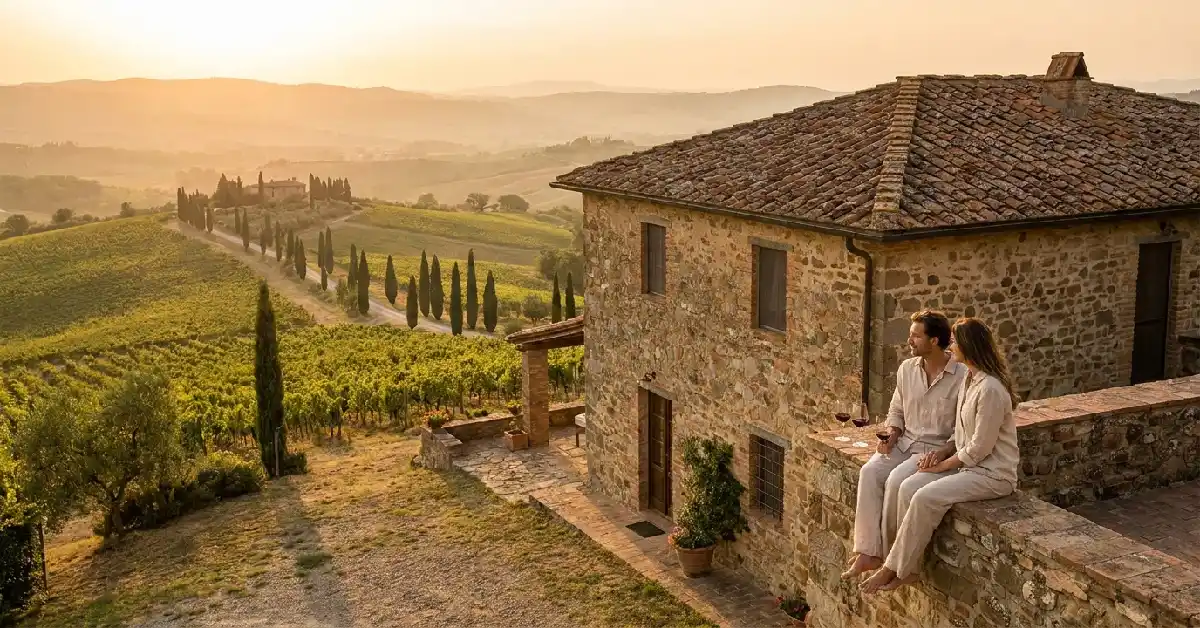
Most people come back from Italy exhausted. They spent two days in Rome, one in Florence, and queued ninety minutes for the Uffizi, and yet, somehow, they feel like they missed the whole thing. If that sounds familiar, slow travel Italy for beginners is exactly what you need to understand before you book your next trip. It is not a travel style reserved for retirees with unlimited time. It is, however, a deliberate decision to go deeper instead of wider, to stay in one place long enough for it to actually reveal itself to you.
I’ve spent parts of seven years travelling slowly across Italy. Weeks inside a Cilento farmhouse. A month renting an apartment above a butcher shop in Puglia. Solo cycling through the Garfagnana with no fixed plan. What follows is not a listicle. It’s what I actually learned, including the parts most travel guides leave out.
What Slow Travel Italy for Beginners Actually Means
First, let’s clear up the misconceptions, because this concept gets misread constantly.
Slow travel doesn’t mean doing nothing. It is not a rejection of famous sites, and it has nothing to do with being morally superior to people who book whirlwind tours. In fact, the definition is simpler than most people expect.
It means one thing: stay longer in fewer places.
One base, seven to fourteen nights. Maybe two bases if your trip is longer. Not five cities in twelve days, that’s just logistics with occasional beauty. When you genuinely stay somewhere, the layers begin to show. The neighbourhood baker learns your order by day three. You figure out which trattoria closes on Wednesdays. You stop opening Google Maps because you already know which alley leads to the piazza with the good evening light.
None of that happens in 48 hours. However, all of it happens, reliably in ten days.
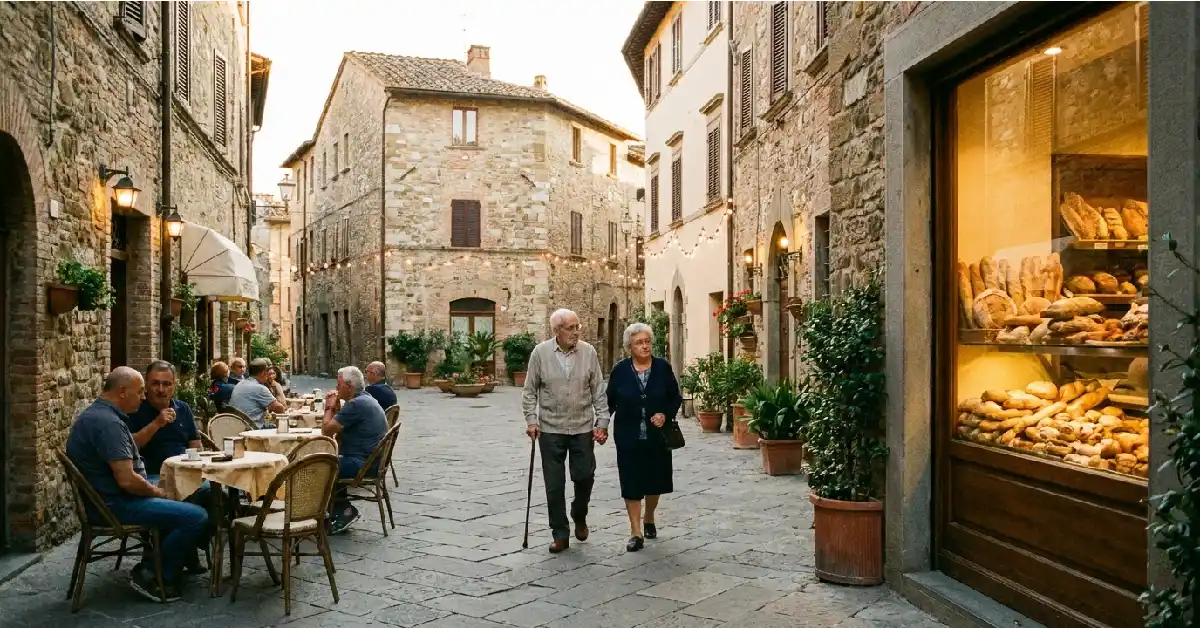
Beyond personal experience, slow tourism in Italy also carries a practical ethical dimension. Mass tourism is currently damaging parts of the country. Venice, the Amalfi Coast, and Cinque Terre in July are being overwhelmed by day-trippers. As a result, residents are being priced out and entire neighbourhoods hollowed into performance spaces. Slow travellers, by contrast, spread money into small family businesses, agriturismi, local guides, and village restaurants. The economics, and the experience, are genuinely different.
Why Italy Is the Best Country to Start Slow Travel
You could begin this in Portugal. France works too. Nevertheless, Italy has specific qualities that make slow travel not just possible but almost inevitable once you stop rushing.
The regional diversity is extreme. Italy’s 20 regions are not cosmetic differences. They are completely separate food cultures, dialects, landscapes, and ways of life. Piedmont and Sicily share a flag and essentially nothing else. Consequently, you can return to Italy every year for a decade, never revisit a region, and still be surprised every single time.
The borghi are still alive. Medieval villages across Umbria, Basilicata, Calabria, and Abruzzo are genuinely lived in, not restored for tourism. Old women hang laundry from windows. Doors stay open on warm afternoons. This is not manufactured authenticity. It’s just Tuesday.
The food demands time. You cannot experience Italian food properly in a hurry. A real Sunday lunch in Emilia-Romagna begins at 1pm and ends when someone finally, reluctantly, puts the grappa away. Moreover, a sagra, a local festival celebrating one ingredient, chestnuts or white truffles or anchovies, might run for three days. You can’t drive past and consider it experienced.
Italians respond differently when you slow down. This surprised me the first time. When you sit in the same café two mornings running, when you attempt Italian even badly, when you’re not photographing every plate before you eat it, people approach you differently. Conversations start. Invitations happen. The country opens.
The Best Regions for Slow Travel Italy for Beginners
Choosing the right region is the most important decision you’ll make. Not every part of Italy suits beginners equally. Some are logistically complicated. Others are too tourist-saturated for genuine immersion. Here, therefore, are four regions that consistently deliver, ranked by how forgiving they are for a first attempt.
Tuscany: The Best Starting Point for Slow Travel Italy Beginners
Tuscany is not the most adventurous choice. It is, however, the most reliable one.
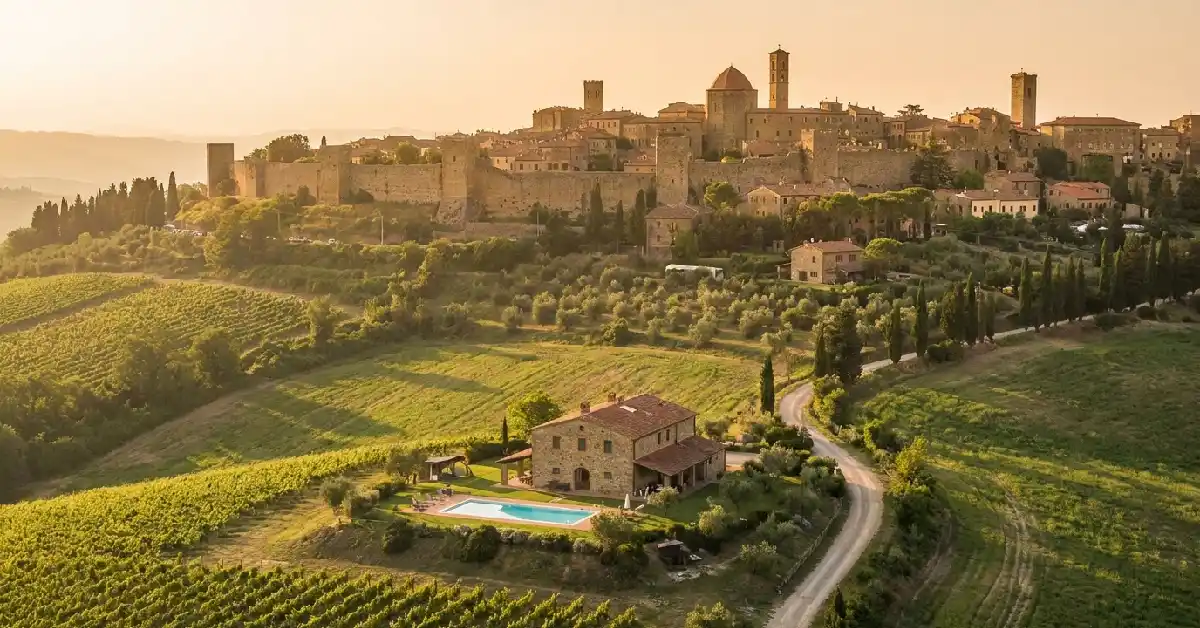
The infrastructure is solid. English is spoken widely enough that language barriers don’t derail your first week. Furthermore, the slow travel ecosystem is already embedded into how the region functions, agriturismi, weekly markets, enoteca culture, and medieval hill towns where the afternoons genuinely have nothing pressing in them.
That said, pick your base carefully. Not Florence. Not Siena. Instead, try Volterra, Etruscan walls, almost no crowds, four genuinely excellent restaurants where tourists are the minority and the wild boar pappardelle looks like the chef made it for themselves. Or Sorano in the far south, carved into volcanic tuff, population 3,600, so quiet that you hear your own thinking. Alternatively, try Barga in the Garfagnana mountains, a compact medieval city with a serious summer opera festival and the best lardo di Colonnata you’ll eat in this country.
Minimum stay: 10 nights. Best accommodation: Agriturismo for the full sensory experience, dinner from the garden, breakfast on a terrace above the vineyard, the farmer’s dog wandering through your room uninvited. Beginner advantage: You’re flowing with the current, not against it.
Puglia: Where Slow Travel Italy Clicks Emotionally
The first time I drove into the Valle d’Itria and saw the trulli, those ancient conical limestone rooftops scattered across every hillside, I pulled over and sat on the hood of the car for twenty minutes. Not to photograph it.
I just needed to look.
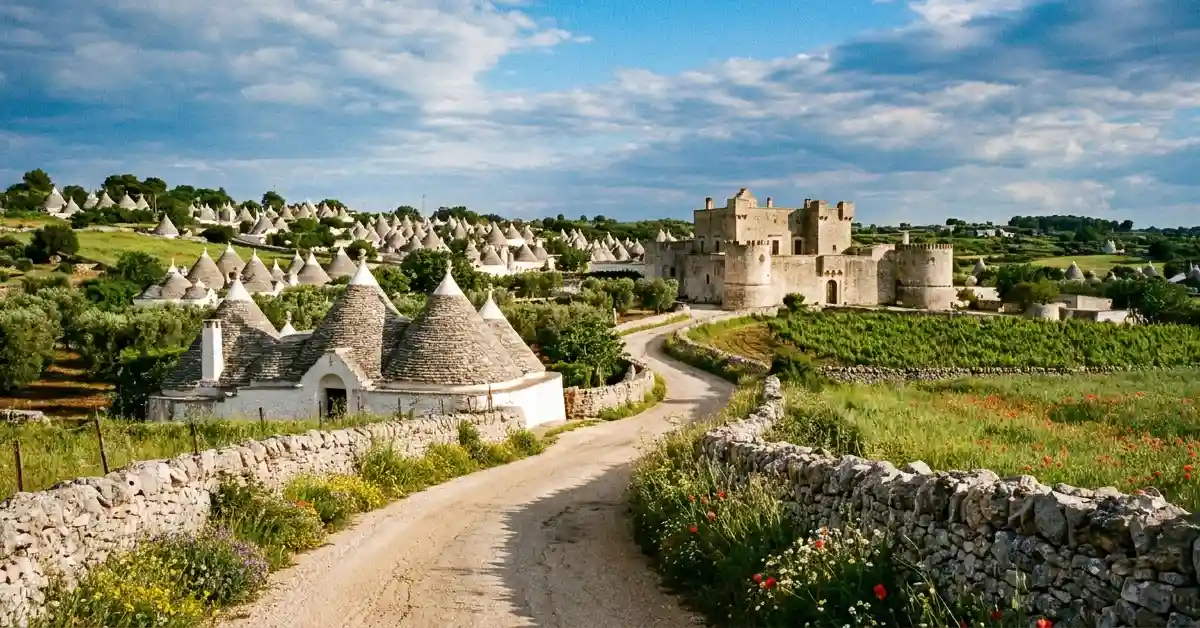
Puglia converts the most reluctant slow travellers. It’s warmer, looser, less manicured than Tuscany. The food is extraordinary, burrata made this morning, octopus pulled from the harbour at 5am, orecchiette with cime di rapa that takes forty-five minutes to prepare and thirty seconds to eat. Meanwhile, the coastline is dramatic in ways the Amalfi Coast no longer manages, because Puglia’s best beaches still require a dirt road and some determination to reach.
For living like a local in Italy, Puglia rewards the slow traveller more than almost anywhere. The barese, people from Bari, are famously generous. Sit in the right bar at the right hour and food will arrive that you didn’t order. Conversations will begin in Italian you don’t fully follow. A glass of something will be placed in front of you without explanation.
Best slow bases: Ostuni for aesthetics. Lecce for urban energy and baroque architecture you’ll walk past every day without tiring of it. Monopoli for the coastal balance. A masseria in the countryside if you want full immersion and silence.
One non-negotiable: Rent a car. The best of Puglia does not run on a train line.
Cilento: The Off-the-Beaten-Path Italy Option
South of Salerno, past the Amalfi crowds, past Paestum with its Greek temples standing improbably intact in a flat coastal plain, there is a national park that most Italian tourists have never visited.
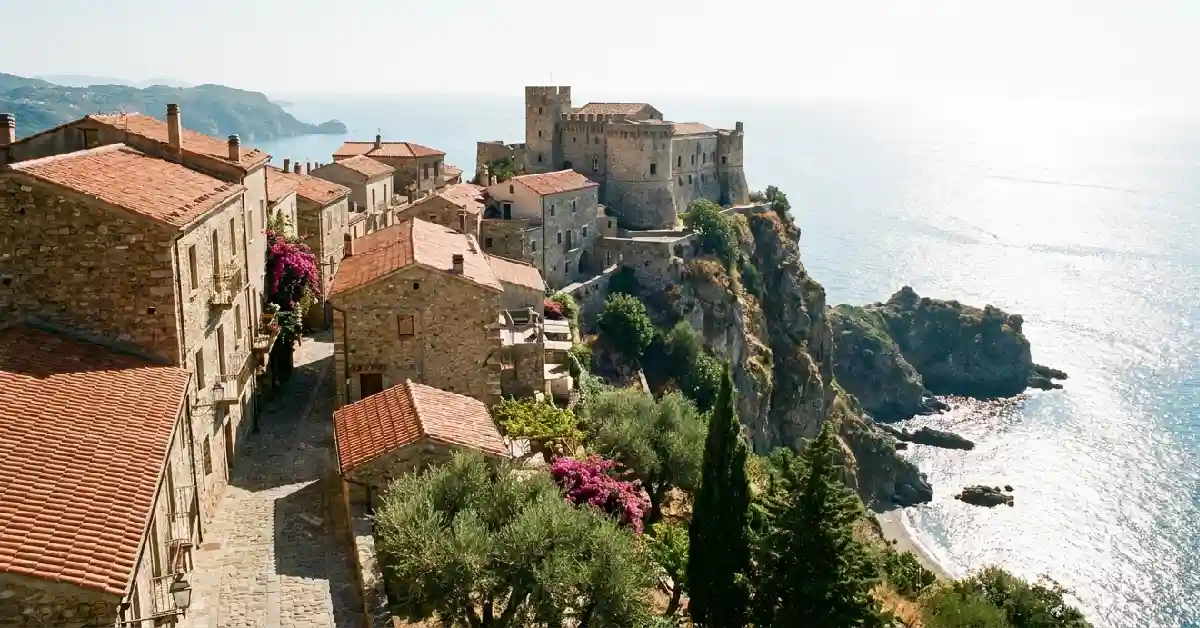
A UNESCO World Heritage site. The place where the American physiologist Ancel Keys came in the 1950s to investigate why people in these villages were living to extraordinary ages with almost no cardiovascular disease. He eventually concluded it was the olive oil, the vegetables, the legumes, what we now call the Mediterranean diet. However, any honest reading of his research also suggests he believed the unhurriedness of the life itself was a contributing factor.
That atmosphere still exists. Small coastal towns like Castellabate and Acciaroli. Hilltop villages like Stio and Laureana Cilento, where the restaurant has twelve seats and the menu doesn’t exist because the owner tells you what she made today. This is off the beaten path Italy in a structural sense, not in the way travel writers use that phrase to mean “slightly less popular,” but genuinely, intentionally removed from mass tourism.
You need to be prepared for quiet. The kind of quiet that feels uncomfortable for the first two days and then, around day three, becomes the thing you’d been looking for all along.
Emilia-Romagna: For Food-Focused Slow Travel Italy Beginners
Bologna is called La Grassa, the fat one. The name is affectionate. It is also accurate.
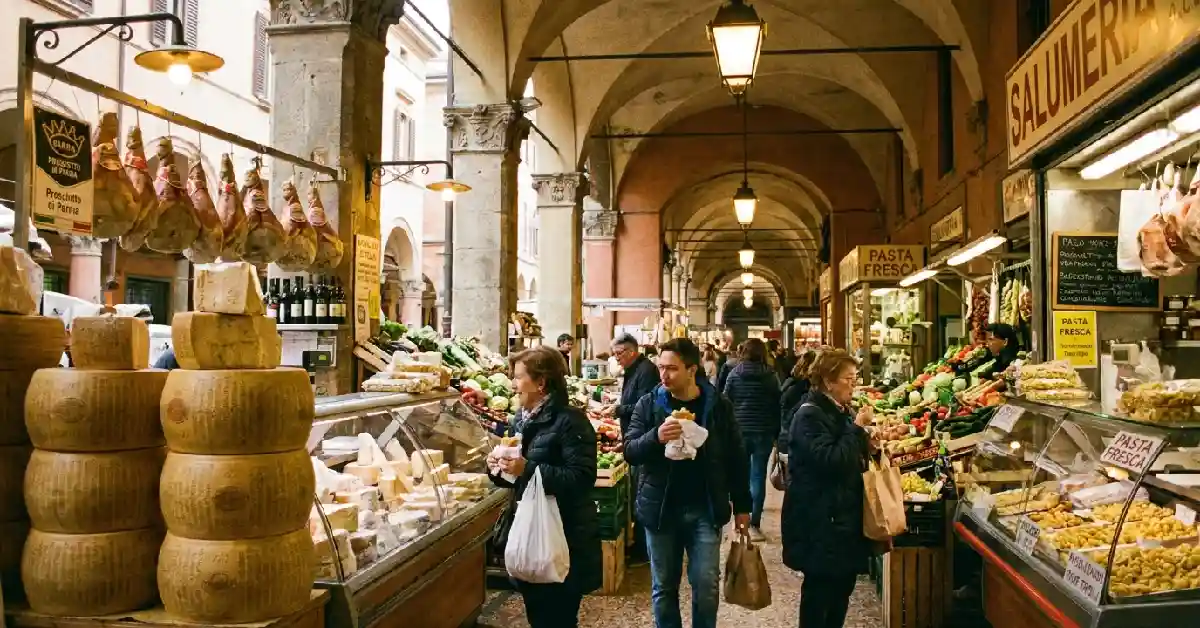
This region invented ragù alla bolognese, mortadella, Parmigiano-Reggiano, prosciutto di Parma, tortellini, and aceto balsamico tradizionale. Not as a marketing exercise, as daily, completely unremarkable life. For Italy travel for first-timers who are food-driven above everything else, Emilia-Romagna is therefore the answer.
You could spend two weeks visiting nothing except producers. The Parmigiano-Reggiano cooperative in Reggio Emilia, where 500-kilogram wheels age in humidity-controlled warehouses for a minimum of 24 months, each one stamped with its birth date. The balsamic vinegar acetaia in Modena, where a family has been moving their vinegar between progressively smaller barrels, mulberry, cherry, juniper, oak, chestnut, for five generations. That process takes twelve years minimum for the real thing.
Moreover, Bologna itself is a superb slow base. A working university city, architecturally extraordinary, with 38 kilometres of covered porticoes that let you walk everywhere in any weather. The Mercato di Mezzo makes the strongest case I know of for simply staying put.
How to Plan Slow Travel Italy for Beginners: 6 Practical Steps
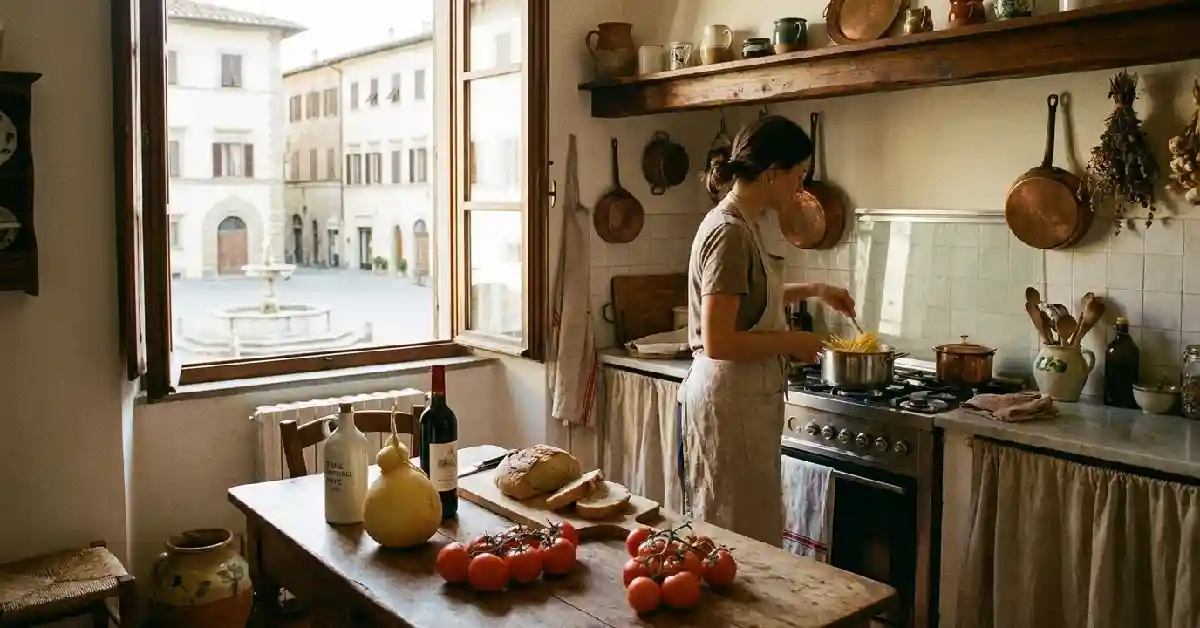
Step 1: Commit to one region before anything else
Write down every place in Italy you want to visit. Then cross off everything outside one region. Pick your base town, not the most famous, not the biggest. The one with a weekly market, a piazza worth sitting in, a bar that opens at 7am, and accommodation that feels like somewhere a person actually lives. Crucially, commit before you start second-guessing.
Step 2: Book accommodation built for staying, not passing through
The weekly apartment rental is the practical engine of slow travel Italy. On a per-night basis, a well-located apartment in a small Italian town costs 30–50% less than a hotel room, and, additionally, it gives you a kitchen. That kitchen means shopping at the local market, cooking with regional ingredients, and understanding the food culture from the inside out. It changes everything about how you relate to a place.
Agriturismo Italy is the experiential upgrade. Working farms offering rooms or apartments, usually with dinner included, built from what the farm itself produces. According to Italy’s national tourism board (ENIT), agriturismo stays have grown by over 20% year-on-year as travellers actively seek authentic rural experiences. I’ve had dinners at agriturismi in Puglia and Tuscany that I still think about years later. Not because they were fancy. Because they were completely, uncomplicatedly real.
Step 3: Anchor two things per week, then leave the rest genuinely open
Book one or two things that need advance reservation, a cooking class, a winery visit, a guided hike with a local naturalist. These give your week a skeleton. Everything around them, however, stays open. That open space is not wasted time. It’s where slow travel Italy actually happens.
Step 4: Learn 20 Italian phrases before you land
Not for politeness. For access.
Buongiorno. Un caffè, per favore. Dov’è il mercato? Che cosa mi consiglia? Il conto, per favore. Parla inglese? Vorrei prenotare un tavolo.
Every time I’ve stumbled through Italian, stumbled, not performed, something has opened. A recommendation not on any platform. An invitation to Sunday lunch. A farmer pointing me down an unmarked track to a beach I’d never have found. The effort is noticed. Always. And furthermore, it is always rewarded in some form.
Step 5: Cut your sightseeing list in half – then cut it again
The biggest obstacle for slow travel Italy beginners is FOMO. You will not see everything, and that is the choice you’re making. Depth costs breadth. Accept that actively, before you arrive, so you don’t spend your trip grieving experiences you deliberately chose not to have.
Practical rule: If reaching a sight requires more than 90 minutes of driving on an unscheduled day, let it go for this trip.
Step 6: Schedule at least two fully unscheduled days per week
Not “free time” where you’ll improvise a full agenda. Actually nothing. Wake up, have coffee, walk without a destination. This is where the best memories come from, consistently, without exception. The bakery you stumble into at 7am. The retired fisherman who teaches you briscola over wine you didn’t plan to drink. The afternoon that became an evening that became the story you still tell five years later.
Must Read: The Best Things to Do in Madrid Spain with Family
Real Costs of Slow Travel in Italy (2026 Figures)
This surprises most beginners: slow travel Italy tends to cost less than conventional tourism.
| Item | Low | High |
|---|---|---|
| Weekly apartment rental (per night) | €55 | €90 |
| Bar breakfast ×2 (coffee + cornetto) | €3 | €6 |
| Lunch at local trattoria | €20 | €38 |
| Dinner, local restaurant with wine | €38 | €65 |
| Groceries (cooking 2–3 nights/week) | €15 | €28 |
| Fuel and local transport | €8 | €20 |
| Daily total for two | €80 | €145 |
By comparison, a mid-range hotel in Rome or Florence in summer runs €160–€220 per night before food. Restaurant prices near major attractions are typically 30–50% higher than neighbourhood equivalents. As a result, the slow approach wins both financially and experientially.
Pros and Cons: The Honest Breakdown
What genuinely works:
- You rest. Actually rest, you sleep well, you stop waking up with that 5am travel-anxiety.
- Food quality rises and food budget drops simultaneously. This sounds paradoxical, but it’s consistently true.
- You notice things you’d have walked past at speed: light on stone at a specific hour, the way a village sounds before the shutters open.
- You develop a real relationship with somewhere. That is rarer in modern travel than anyone admits, and therefore more valuable.
What’s genuinely hard, especially at first:
- FOMO is persistent and powerful for the first two or three days. It eases. Push through it.
- August is complicated in smaller villages, many local businesses close because Italians take their own holidays in August. Shoulder seasons are the answer: May, June, September, October.
- Choosing a base with poor transport links and no rental car leads to cabin fever faster than you expect.
- Not every beautiful Italian village rewards slow travel equally. Some are quiet for reasons unrelated to authenticity.
Ten Days in Cilento: What Slow Travel Italy Looked Like in Practice
To make this concrete, because travel writing gets abstract in ways that don’t help you plan anything, here is a specific account.
I stayed in Castellabate, a castle village perched 280 metres above the Tyrrhenian Sea, for ten nights in late September. I rented through a local agency rather than an international platform. The owner, Maria, left a bottle of her family’s olive oil and a jar of homemade fig jam on the kitchen table. No instruction manual. She handed me the key and said, in Italian, that the alimentari down the hill opened at 7am and closed at 1pm sharp, and that, she implied, was the important information.
Day 1.
Arrived. Walked to the sea. Ate at a restaurant where the fish was caught that morning and the menu was explained verbally. There was no English version.
Day 2.
Found the weekly market in Santa Maria di Castellabate below. Bought tomatoes, local caciocavallo, wine from a man who produced it in his cantina. Cooked dinner. Ate on the terrace.
Day 3.
Drove inland to Stio, a village of 700 people in the Alburni mountains. Had lunch at the one trattoria. The signora was visibly annoyed that we arrived at 1:45pm but, nevertheless, fed us. Wild boar ragù, handmade pasta, wine from an unlabelled bottle. €14 per person.
Day 5.
Nothing planned. Sat in the castle square and read for three hours. Walked down to a beach below the village with no name on any map app. Swam. Stayed until the light went pink.
Day 7.
A retired fisherman named Enzo, who occupied the same bar table every morning, finally asked where we were from. Subsequently, we talked for two hours, him in Italian, me in approximate Italian, about the changes in Cilento across sixty years, his three daughters, the correct way to cook alici (anchovies), and why he had never once wanted to live anywhere else.
I didn’t see the Amalfi Coast that trip, I didn’t see Pompeii, which was forty minutes away. I don’t regret either decision. That week sits inside me differently from most travel I’ve done, and that asymmetry is the entire argument for slow travel Italy for beginners.
Conclusion: Give Italy the Time It Has Always Deserved
Ultimately, slow travel Italy for beginners asks one thing before it gives everything back: patience.
Not the patience of a queue. The patience of staying put long enough for a place to stop performing and start being itself. Italy does this faster than most countries, it is, in that sense, generous with people who give it time.
Pick your region. Book a minimum of seven nights, preferably ten or fourteen. Rent something with a kitchen and a terrace. Learn to say buongiorno like you mean it. Leave two or three days in your week completely open.
Then stop planning, and start living there.
Around day four or five of actually staying somewhere, something shifts. The bakery owner greets you by name. You have a regular table. You know which street catches the evening light. You’ve stopped being a tourist passing through and started, briefly and genuinely, to live in Italy.
That is what you were missing on every other trip.
FAQ
What is slow travel Italy for beginners
Slow travel Italy for beginners means choosing one region or base town and staying for at least 7 to 14 nights, rather than moving between multiple cities every day or two. Instead of ticking off highlights, you live in the destination, shopping at local markets, eating where residents eat, exploring by foot or bicycle, and building a genuine connection with one place rather than photographing twenty.
How long should I stay in one place for slow travel in Italy?
A minimum of seven nights is the practical threshold for slow travel Italy for beginners. Anything less and you don’t have time to find your rhythm, to discover your regular bar, learn the market schedule, or begin having real conversations. Ten to fourteen nights is the ideal range for a first slow travel experience in Italy.
Which regions are best for slow travel Italy for beginners?
Tuscany is the most beginner-friendly, with excellent infrastructure and a well-developed agriturismo culture. Puglia is ideal for authentic Southern Italian immersion without the Amalfi Coast crowds. Cilento in Campania offers the most genuine off-the-beaten-path experience. Emilia-Romagna suits food-focused slow travellers who want direct access to Italy’s greatest food producers.
Is slow travel in Italy more expensive than regular tourism?
Slow travel Italy is typically less expensive than conventional tourism. Weekly apartment rentals cost significantly less per night than hotels. Cooking some meals with local market produce, eating at neighbourhood restaurants rather than tourist-adjacent ones, and spending on experiences rather than paid attractions all reduce costs. In 2026, a couple can travel slowly in rural Puglia or Cilento for approximately €80–€145 per day, including accommodation, food, and transport.
Do I need to speak Italian for slow travel in Italy?
Fluency is not required, but learning 15 to 20 basic Italian phrases significantly improves the slow travel Italy experience. In major cities and tourist areas, English is widely spoken. However, in the smaller villages and rural regions where slow travel is most rewarding, Italian is essential for basic interactions. The effort to speak Italian, even imperfectly, is consistently noticed and rewarded by locals with recommendations, invitations, and conversations that simply don’t happen otherwise.