
You step off the plane in Mexico City, and the altitude hits you before the chaos does, 7,200 feet above sea level. The air feels thinner than you’d expect. The light looks somehow sharper. The popular tourist attractions in Mexico are not just checkboxes on a list. They are living, breathing collisions of pre-Hispanic engineering and contemporary obsession. I moved here six years ago intending to stay three months. The ground itself has a way of holding you. It’s literal sinking ground, since the city descends about 20 inches a year into the ancient lakebed. That instability is the perfect metaphor for travel here. Nothing sits still long enough to get boring. Let’s cut through the noise and get into what actually matters for your trip.
What Makes Mexico’s Attractions Unlike Anywhere Else
There are pyramids older than Rome. Markets where you can eat insects one stall over from a vendor selling 16th-century remedies exist here. Art galleries housed in former mansions dot the neighborhoods. Their floors creak in the exact same spots Diego Rivera’s footsteps creaked them. The popular tourist attractions in Mexico succeed because they refuse to separate the sacred from the everyday. You can stand inside a cathedral built from the stones of a destroyed Aztec temple. A taco made from a recipe that predates European contact waits 15 minutes east. The country doesn’t so much preserve history as it metabolizes it. It spits out something alive, hybrid, and absolutely specific.
Key Insight: Most travelers overpack their itineraries and miss the in-between moments. The real attraction is the friction between old and new. Leave gaps. Let the city interrupt your plans.
Best Things to Do in Mexico City for First Time Visitors
If this is your first round with CDMX, start with the anchors but approach them sideways. Instead of rushing through the Zócalo, book a morning slot at the Templo Mayor archaeological site next door. The excavation is still active. You can watch archaeologists pull 500-year-old conch shells from the earth. Cathedral bells ring overhead. That’s not a metaphor. That’s Tuesday.
Then walk east toward La Merced market. Not the sanitized part, the deep part. Here the chiles change color under tarps. Women hand-pat tortillas on comals that have been in their families for four generations. You’ll want a book street food tour Mexico City for this zone specifically. The labyrinth of stalls is impenetrable to outsiders. A guide who knows which pozole stand has been running since 1964 is worth the $45–60 USD you’ll spend. They’ll also know which one opened last month with a suspiciously clean floor. First-timers often gravitate toward Roma and Condesa, and rightly so. Those neighborhoods are the beautiful, tree-lined entry point, not the whole story.
Mexico City 3 Day Travel Itinerary with Must Visit Places
Three days is brutally tight. Treat it as a concentrated shot of the city’s energy. It will cover the best neighborhoods to stay in Mexico City for tourists and the unmissable cultural anchors. Here’s how to structure it without burning out.
Day 1: The Historic Core and Urban Pulse
Start at the Zócalo by 8:00 AM. The crowds haven’t thickened yet. Visit the Metropolitan Cathedral, then descend into the Templo Mayor ruins. Walk west along Avenida Madero to the Palacio de Bellas Artes. Rivera, Siqueiros, and Orozco’s murals are inside. You cannot understand modern Mexico without standing in front of them. For lunch, head to La Alameda and grab tortas from a street vendor. Spend your afternoon at the Museo Nacional de Antropología. It is one of the best museums to visit in Mexico City for a travel guide recommendation. You need at least three hours there. The Aztec sun stone alone justifies the trip.
Day 2: Pyramids and Perspective
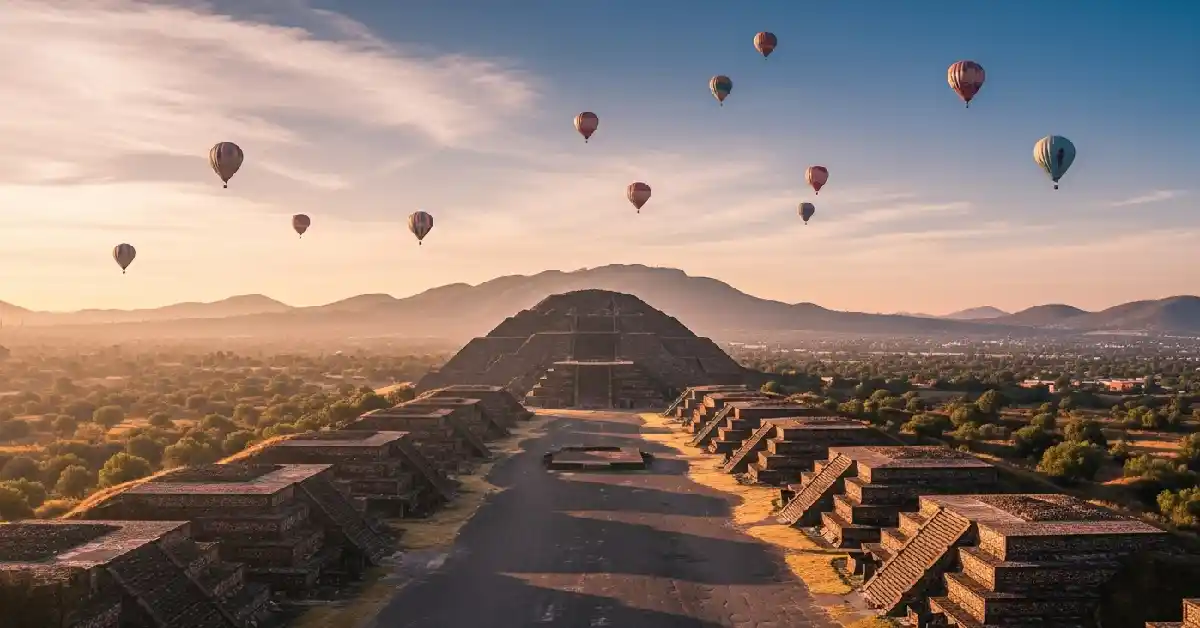
Book a Mexico City pyramid tour with transport and leave by 7:00 AM. You want to reach Teotihuacan before the sun turns the Avenue of the Dead into an oven. Climbing the Pyramid of the Sun is not for the faint of fitness. The view across the valley rearranges your sense of scale. Hot air balloons drift at dawn. Skip the overpriced restaurants near the gates and bring water and snacks. You’ll be back in the city by early afternoon. Spend the evening exploring the best rooftop bars in Mexico City with skyline views. Supra in Roma offers a sharp view of the city spreading toward the volcanoes at sunset.
Day 3: Green Spaces and Creative Quarters
Chapultepec Park doubles the size of New York’s Central Park. It contains a castle that briefly housed an emperor. For a full breakdown, see Chapultepec Park things to do and travel tips. Rent a paddleboat. Visit the botanical garden. Don’t skip the Tamayo contemporary art museum. Afternoon takes you to San Miguel Chapultepec’s galleries. Some of the most compelling Mexico City art galleries and cultural spots guide material lives on Avenida Mazatlán and its side streets. Dinner happens in Condesa. A slow crawl through the bars on Avenida Amsterdam follows.
Top Street Food to Try in Mexico City CDMX
Tacos al pastor are the gateway drug. The real test is a tlacoyo stuffed with requesón and topped with nopales. Eat it standing up outside a metro station while your fingers burn. The best street food is territorial. Find the churros in Centro that fill the air with sugar and hot oil after dark. Seek out the elotes in Coyoacán dripping with crema and chili. Don’t sleep on the tamales at dawn near Mercado de Medellín.
For those watching their intake, vegan street food options in Mexico City CDMX have exploded. Plant-based versions of suadero tacos appear at stalls like Por Siempre Vegana. They’re made from seitan and fried on the same planchas. Even lifelong carnivores don’t complain. The moringa and hibiscus-based drinks are worth seeking out too.
How to Visit Teotihuacan Pyramids from Mexico City
The simplest route: take an Uber or taxi to the Terminal Central de Autobuses del Norte. Find the counter for Autobuses Teotihuacan. Pay about 60 pesos each way. The bus drops you at Gate 1. Aim for Wednesday or Thursday mornings, weekends are punishing. If you book a Mexico City pyramid tour with transport, budget $35–55 USD. You gain context from an archaeologist-trained guide. They can explain why the Temple of the Feathered Serpent was deliberately buried by its own builders. You want that context. Without it, you’re just looking at piles of rock.
Budget Note: The site entrance fee is 90 pesos. Bring cash; the card machines are unreliable. Wear a hat, and understand that the sun here doesn’t forgive.
Mexico City Cable Car Routes Experience and Tips
The Cablebús isn’t a tourist attraction in the traditional sense. It was built as public transit for underserved neighborhoods in the hills. The Mexico City cable car routes experience and tips I’m sharing come from using Line 1 above Indios Verdes and Line 2 through Iztapalapa. For travelers, Line 1 offers the most dramatic views. The cars soar over concrete sprawl with the Guadalupe Basilica visible in the distance. They glide silently above neighborhoods that tourists rarely see. The perspective you gain on the city’s true scale is worth the 7-peso fare. Go midday, avoid rush hour, and don’t flash expensive gear.
Best Museums to Visit in Mexico City Travel Guide
The anthropology museum gets the glory. The lesser-known Museo de Arte Popular deserves your attention. A ten-minute walk from Bellas Artes, it holds a collection of fantastical alebrijes and Day of the Dead figures. It explains Mexican folk art’s hold on the imagination better than any book. The Museo Soumaya in Polanco is free every day. It houses Rodin sculptures and a collection of pre-Hispanic goldwork few visitors bother to find. Include the Museo Casa Estudio Diego Rivera y Frida Kahlo in San Ángel. Fewer crowds appear here than at the Blue House. The architectural significance runs deeper.
Museum Pros & Cons:
-
Anthropology: Unmatched scale, exhausting without breaks.
-
Soumaya: Free entry, odd building layout.
-
Arte Popular: Intimate, weak on English signage.
-
Casa Estudio: Architectural gem, limited hours.
Best Parks in Mexico City for Relaxation and Sightseeing
Chapultepec Park things to do and travel tips are extensive. The key is dividing it into sections. The first section holds the castle and lake. The second features the amusement park and major museums. The third bleeds into the wealthy neighborhood of Lomas and remains largely undeveloped. It’s ideal if you need silence. Parque México in Condesa is for people-watching and spontaneous dog encounters. Viveros de Coyoacán, a former tree nursery, fills with runners in the morning. Families take over in the afternoon. The smell of earth and pine there is a reset button for overstimulated brains.
Mexico City Coffee Shops for Digital Nomads & Remote Work
The Roma Norte and Condesa corridor has become a hub for remote workers. The infrastructure is better than most realize. Best cafes in Roma Norte and Condesa Mexico City that accommodate laptops include Blend Station on Avenida Tamaulipas. It has fast wifi, excellent Veracruz-sourced coffee, and a back room designed for quiet work. Cardinal Casa de Café in Roma Norte opens early and fills slowly. Stake out the communal table by 9:00 AM. In Condesa, Quentin Café on Mazatlán offers reliable outlets and a shaded patio.
For those needing structured environments, check out Mexico City coworking and coliving spaces. Selina, Homework, and WeWork’s multiple locations provide day passes from $15 USD. Selina’s CDMX coliving setup includes shared kitchens and rooftop coworking terraces. They pull in a mostly international crowd.
Expert Tip: Mobile data here is inexpensive. A Telcel SIM with 3GB of data costs around 200 pesos. Coverage reaches even into Teotihuacan. Never rely solely on café wifi.
Must Read: Cultural Exploration in Morocco: A Family Travel Experience You’ll Never Forget
Best Neighborhoods to Stay in Mexico City for Tourists
Where you stay shapes your entire trip. The best neighborhoods to stay in Mexico City tourists rely on depends on your travel personality. Roma Norte is the obvious choice. It’s central, beautiful, packed with restaurants and bars. Condesa offers a slightly calmer, greener version of Roma with excellent park access. Juárez, east of Roma, is rougher around the edges but more authentically Mexican and cheaper. Coyoacán, far to the south, feels like a village that the city swallowed. It’s best if you want a slower pace and don’t mind commuting. Polanco is global luxury, with designer stores and embassy-level security.
Affordable stays in Mexico City for travelers exist in Centro Histórico. Hostels like Massiosare and Selina Downtown offer beds from 12USDanight.Budgethotelshoverat40 USD for a private room. Airbnb in Juárez or Santa María la Ribera can land under $35 USD nightly for entire apartments.
Where to stay in Mexico City for remote work requires wifi reliability and proximity to coworking. Roma Norte and Condesa win here. Juárez is the value alternative within walking distance.
Best Rooftop Bars in Mexico City with Skyline Views
Sundown in CDMX, and the rooftops activate. Best rooftop bars in Mexico City with skyline views include Supra. The Palacio de Bellas Artes glows gold across the horizon from there. Cityzen at the Barceló Reforma offers a more polished, pricier experience. Cocktails cost $18 USD, but you get a 360-degree view capturing Chapultepec Castle and the Torre Latinoamericana. For something dirtier in the best way, head to Terraza Catedral. It sits directly across from the Metropolitan Cathedral. The bar itself is unremarkable. The building’s rooftop stares the cathedral towers square in the face.
Mexico City Bar Crawl and Cocktail Experience Guide
A proper Mexico City bar crawl and cocktail experience guide route starts at Licorería Limantour. Routinely ranked among the world’s top bars, it offers a corn-smoke-infused cocktail around 7:00 PM. Walk ten minutes to Baltra for minimalist, mezcal-focused drinks. End at Handshake Speakeasy, hidden behind an unmarked door on Colima. The bartenders wear suspenders. The ice programs are obsessive. Total damage: roughly $45 USD per person for three rounds of world-class drinks.
Mexico City Nightlife Guide for Tourists 2026
The 2026 update is this: Zona Rosa’s club scene leans harder into electronic and reggaeton. Colonia Juárez has become the spot for curated, lower-volume nights. Natural wine and vinyl DJ sets dominate there. Departamento, a multi-level warehouse-style space in Roma, books credible techno acts. The Mexico City nightlife guide for tourists 2026 notes that things start late. Don’t arrive before midnight for clubs. Dress codes are looser than in Guadalajara or Monterrey. The energy holds until 4:00 AM. Street tacos outside the clubs at that hour are a sacred, life-affirming ritual.
Vegan Street Food Options in Mexico City CDMX & More
Vegetables matter here more than the taco-centric reputation suggests. The weekend food stalls at Mercado de Medellín in Roma Sur serve cactus salads and mushroom quesadillas. Request no cheese for a plant-based version. The vegan street food options in Mexico City CDMX scene concentrates in Roma and Condesa. Los Loosers offers plant-based ramen. Tortas al Fuego turns seared portobellos into something approaching transcendence.
Hidden Gems in Mexico City Travel Guide
My personal hidden gems in Mexico City travel guide starts with the Biblioteca Vasconcelos. The library’s architecture feels like floating inside an M.C. Escher drawing. Diego Rivera murals inside the Secretaría de Educación Pública cover three floors of courtyard walls. They’re completely free and nearly empty on weekdays. The artist builds his visual argument for a socialist Mexico there. Santa María la Ribera’s Kiosco Morisco anchors a plaza of chess players and teen flirtations. It’s a wrought-iron pavilion designed for a 19th-century world’s fair. None of these crack the top 20 TripAdvisor lists. All three alter your understanding of the city.
Mexico City Cultural Experiences and Local Life Guide
To find the real charge beneath the tourist layer, wake early. Walk through any public market between 7:00 and 9:00 AM. Mercado de San Juan specializes in exotic proteins. It also contains Paxia, a food stall run by a chef who trained at Pujol. They offer 150-peso tasting menus. A Mexico City cultural experiences and local life guide must include Sunday morning in Coyoacán. Dancers, artists, and families fill the plaza. They eat nieves, water-based ice creams in guanábana and prickly pear flavors. Tuesday or Friday nights mean Lucha Libre at Arena México. The masked violence is cathartic. Watch 85-year-old grandmothers scream at the villains. Buy tickets the day of at the box office. That avoids scalper markups.
Mexico City Travel Insurance Tips
Petty theft and stomach issues are the two realistic threats. My Mexico City travel insurance tips are straightforward. Standard comprehensive plans from World Nomads or SafetyWing cover the basics. Make sure your policy includes adventure activities if you plan to hike the volcanoes. Hospital Ángeles in Roma accepts most international insurance. Its emergency room operates in English. Some premium credit cards include travel protection. Verify whether yours covers medical evacuation. Mexico City’s traffic can turn a transfer into a logistical nightmare.
Best Tours in Mexico City for Tourists & Budget Planning
Best tours in Mexico City for tourists include Eat Like a Local’s street food walks through Centro. They cost 55USD. 85+, they are genuinely intellectual. For pyramids, Amigo Tours has the best transport-to-cost ratio. You can book street food tour Mexico City or pyramid options through their sites directly. That gets you better rates than Viator’s markup.
Mexico City travel cost per day breaks down for a mid-range traveler in 2026:
-
Accommodation: $40–80 USD (private room/economy boutique)
-
Food: $15–30 USD (street food to one sit-down)
-
Transport: $5–15 USD (Uber/microbus)
-
Activities: $10–40 USD (museum entries, tours)
-
Total: 70–165USDperday,comfortableaverage100.
Mexico City budget travel tips and itinerary:
Visiting Mexico’s popular attractions isn’t about conquering a checklist. It’s about allowing the density of the place to rewire your sense of what a city can be. The pyramids stand in the same air carrying the smell of frying masa and diesel. Bartenders study cocktail chemistry in speakeasies while mariachi bands in Garibaldi charge 150 pesos a song.
They’ve done so for decades. You’ll leave with chile dust on your shoes and a set of coordinates rearranged internally. The country doesn’t do nostalgia the way museums do. It does persistence. Come hungry, leave room, and let the morning light over the volcanoes decide your next move.
Frequently Asked Questions
1. What is the number one popular tourist attraction in Mexico?
The Teotihuacan pyramids draw over 4 million visitors annually. Located 50 kilometers northeast of Mexico City, the site features the Pyramid of the Sun, the Pyramid of the Moon, and the Avenue of the Dead. It remains one of the most significant pre-Columbian cities in the Americas.
2. How many days do I really need to see Mexico City’s main sights?
Five to six days provides a manageable pace. Major sites like the Historic Center, Chapultepec, and Teotihuacan are doable in three days. Additional days allow for neighborhoods like Coyoacán, Xochimilco’s canals, and discoveries most visitors miss.
3. Is Mexico City safe for tourists in 2026?
Yes, particularly in Roma Norte, Condesa, Polanco, and Centro Histórico. Standard urban precautions apply. Use registered taxis or rideshares at night. Avoid displaying expensive jewelry. Stay aware of your surroundings. The tourist corridor sees regular police patrols.
4. What is the best neighborhood to stay in Mexico City as a first-timer?
Roma Norte offers the strongest combination of walkability, food density, and central location. It sits beautifully between the Historic Center and Chapultepec Park. Condesa is an excellent, slightly quieter alternative two blocks west.
5. Do I need to book Teotihuacan tours in advance?
Booking 48 hours ahead is recommended during the dry season (November–April). Walk-up bus tickets from Terminal del Norte remain available. Guided tours with transport often sell out, especially early-morning departures that include hot air balloon experiences.