
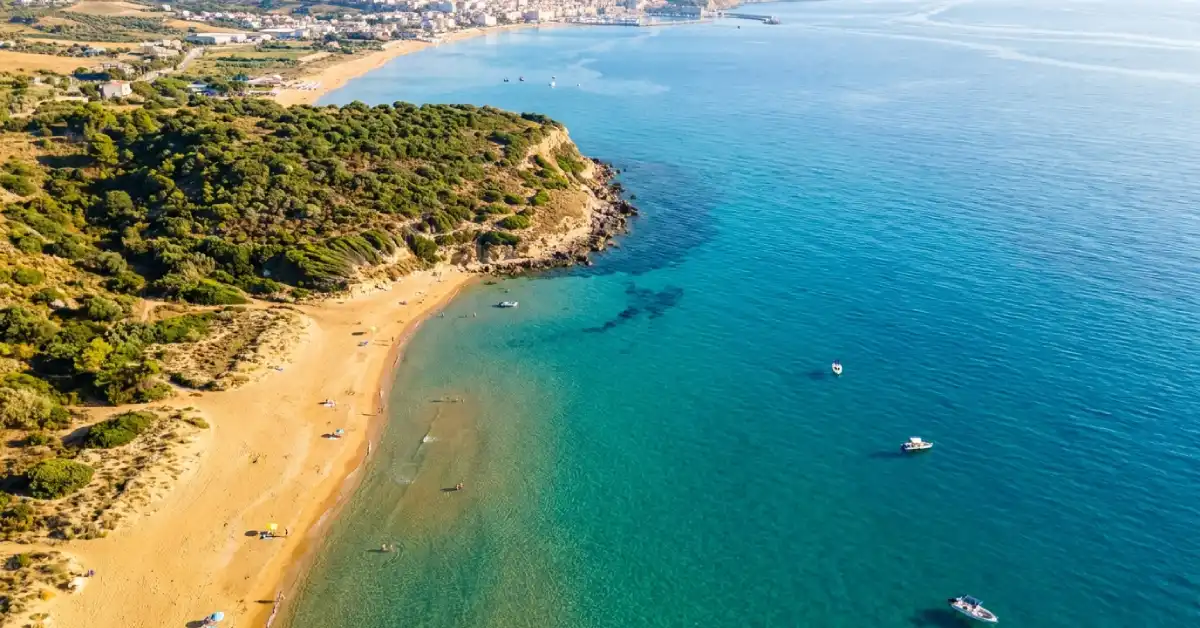
I almost didn’t go to Sciacca beach, Italy. That would have been a serious mistake.
A friend who splits her time between Palermo and the Agrigento coast said four words that changed my Sicily itinerary completely: “You’ll regret skipping Sciacca.” I’d been planning the standard tourist loop, Palermo, Cefalù, Taormina, done. She called it the conveyor belt. She wasn’t wrong.
So I rerouted. Drove southwest along the SS115, arrived in Sciacca on a Thursday morning in late September, and spent four days on a stretch of coastline that most international travellers drive past without realising what they’re missing. What I found on those Sciacca Italy beaches, the water clarity, the variety, the complete lack of performance, reshaped what I thought a Sicilian beach trip could be.
This is the guide I wish I’d had before I went.
Why Sciacca Beach Italy Is Different From Every Other Sicilian Coast Town
Most Sicilian beach towns sell you a polished version of themselves. Cefalù sells its Norman cathedral and golden arc of sand. Taormina sells the view. They’re real, those things, but those towns have been shaped, over decades, by the business of being visited.
Sciacca beach Italy hasn’t fully made that trade yet. The port still operates as a working fish dock, primary income, not background scenery for tourists. The ceramic workshops on Via Licata are making pieces for people who actually buy ceramics, not holiday hunters after a souvenir. The fish market opens at dawn because the boats go out at night and come back needing to sell, not because it’s a charming morning activity on a tour itinerary.
That tension, a town being discovered but not yet consumed by it, is precisely what makes the beaches here feel different. Fewer services. More character. The kind of coast that rewards deliberate planning over following the algorithm.
Geographically, Sciacca sits on Sicily’s southwestern coast in the Agrigento province. Its name comes from Arabic as-saqah, meaning water, the Arabs reshaped this port in 840 AD, and the Romans before them called it Thermae Salinuntinae for the thermal springs on Monte Cronio that still work today. That 2,000-year relationship with water sits underneath everything here, including every beach on this list.
The Best Beaches in Sciacca Italy: Real Talk, No Filler
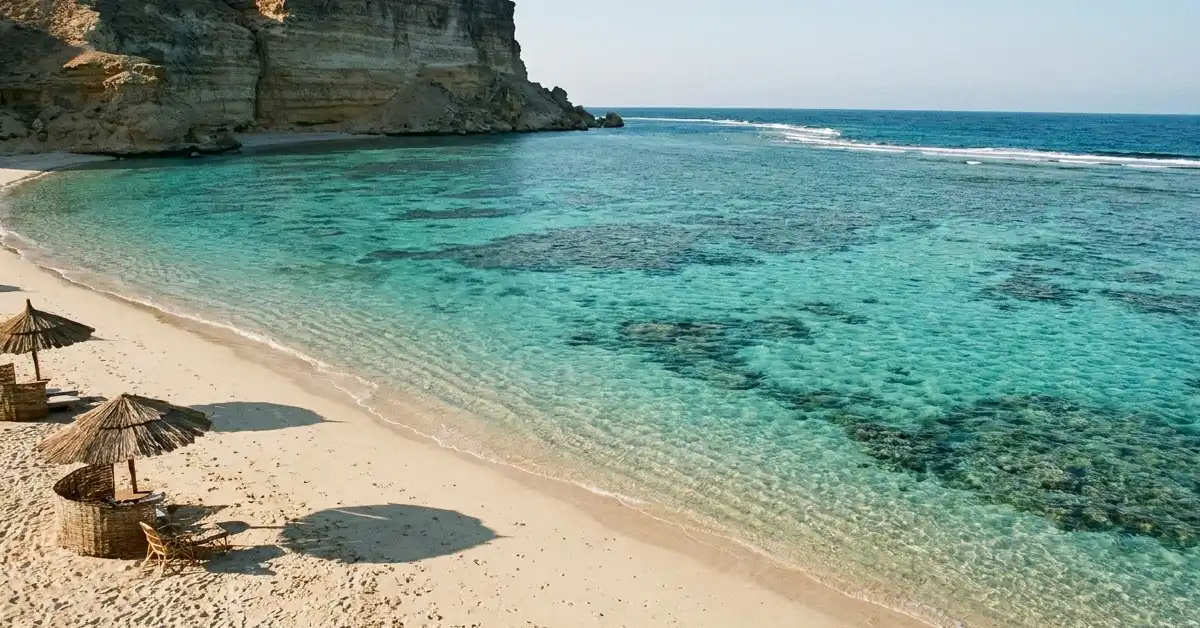
Capo San Marco – The Sciacca Beach Experience at Its Peak
I arrived at Capo San Marco before 9am on a Friday in late September. There were maybe fifteen people on the sand. By 11am, a hundred. By 1pm, I completely understood why locals say July is a different story entirely.
The sand is fine, yellow, almost powdery near the cliff base. The water, and this is what photographs consistently fail to capture, is not merely clear. It’s layered clear. You can see through five metres of depth and watch your hand’s shadow move across the sand below. The reef system further out is dense enough that scuba divers specifically route Sicily trips around this beach. Furthermore, sea turtles appear here regularly. Not occasionally. Regularly.
There are free beach sections alongside paid lidos with sun loungers, umbrellas, and a snack bar. The headland frames the whole bay, Capo Bianco visible east, Capo Granitola west. Directly behind the beach, the Riserva Naturale San Marco begins, where kayaking and coastal hiking extend the day well beyond beach hours.
One strong recommendation: bring a snorkel mask even if you think you won’t use it. You will.
Lido di Tonnara – The Sciacca Italy Beach Locals Choose for Their Kids
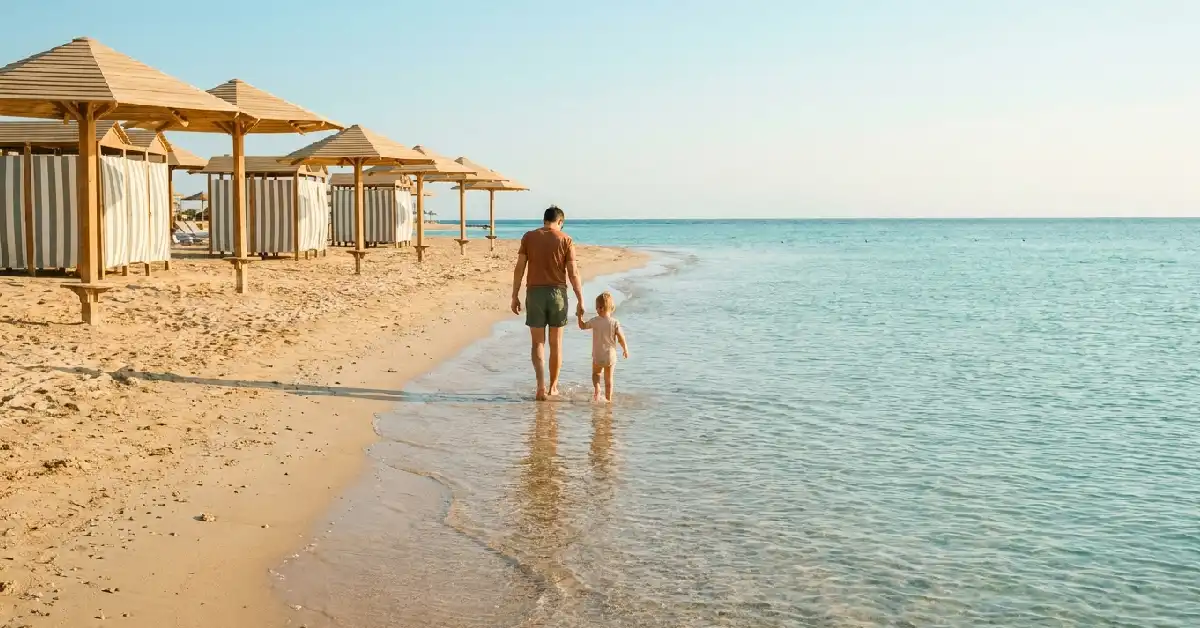
There’s a particular intelligence in choosing a beach based on who actually goes there rather than which travel magazine ranked it highest.
Lido di Tonnara is where Sciacca families spend their beach days. Sandy bottom. The slope into the water is so gradual that children walk out twenty metres and remain chest-deep. No sudden drops, no aggressive waves, no sharp rock formations to navigate around. Facilities are solid, umbrella and lounger hire, changing rooms, without being a full resort operation that inflates prices and crowds.
Moreover, the walk from central Sciacca takes roughly fifteen minutes. Being able to walk back for lunch and return in the afternoon removes the logistical friction that ruins family beach days more often than anyone admits. Because of this, Lido di Tonnara consistently ranks as the most practical Sciacca beach Italy option for families with young children.
Torre Salsa Beach – The Sciacca Beach Purists Choose
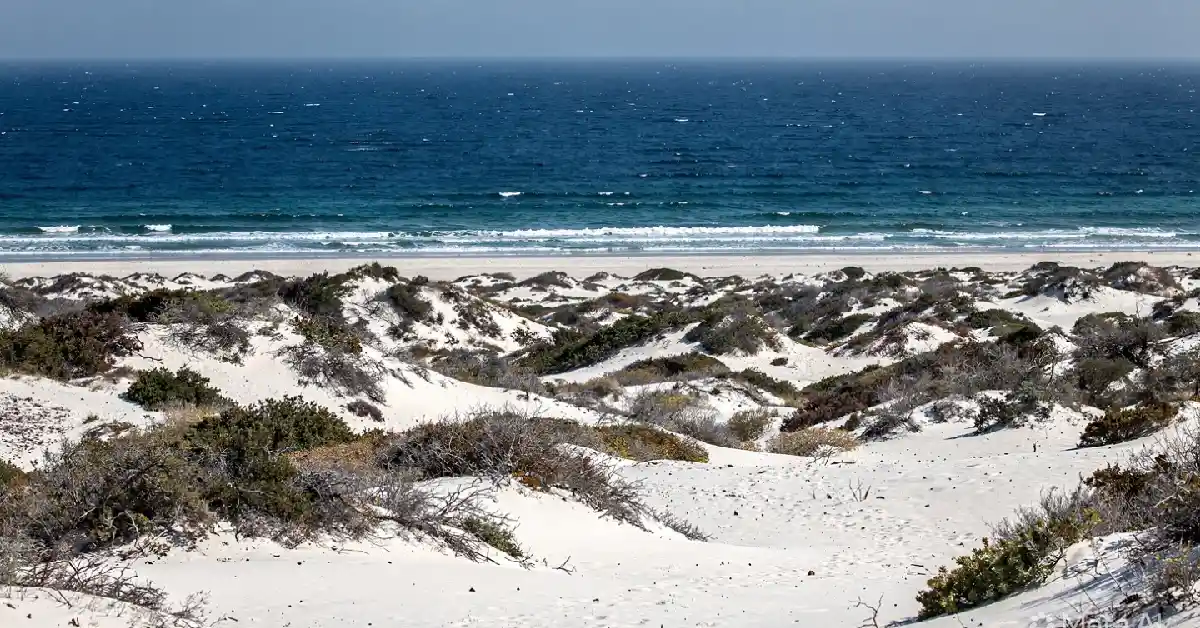
Six kilometres of uninterrupted white sand. No hotels, No umbrella hire, No concession stand. No infrastructure whatsoever, just dunes, Mediterranean scrub, a coastline curving further than you can see from either end, and water so rich with marine life that snorkelling here feels almost unfair.
Torre Salsa sits between Sciacca and Agrigento, inside a 760-hectare protected nature reserve. Even during the busiest weeks of August, the beach is wide enough that space still exists. The waves are gentle. The snorkelling is exceptional, because the reserve protects the marine ecosystem as rigorously as it protects the land, fish populations and sea floor diversity here exceed anything an equipped tourist beach can offer.
As a result of the zero facilities, though, you must arrive fully prepared. Water, food, portable shade, sun protection. There is nothing here except the beach itself, and that is entirely the point.
Lido di Foggia, The Closest Sciacca Beach to the Town Centre
Counterintuitively, the beach nearest to Sciacca’s historic centre is also the most undeveloped. Lido di Foggia is reachable on foot, has minimal facilities, and has resisted the resort development that typically swallows beachfront proximity to town.
It’s raw in a way that works for the right kind of traveller. If your beach checklist requires a bar, lounger service, and rows of matching parasols, this isn’t your beach. However, if your checklist includes salt air, natural scenery, and freedom from performing vacation for anyone, Lido di Foggia is exactly where you should be.
Stazzone, Rocky, Alive, and Deeply Underrated
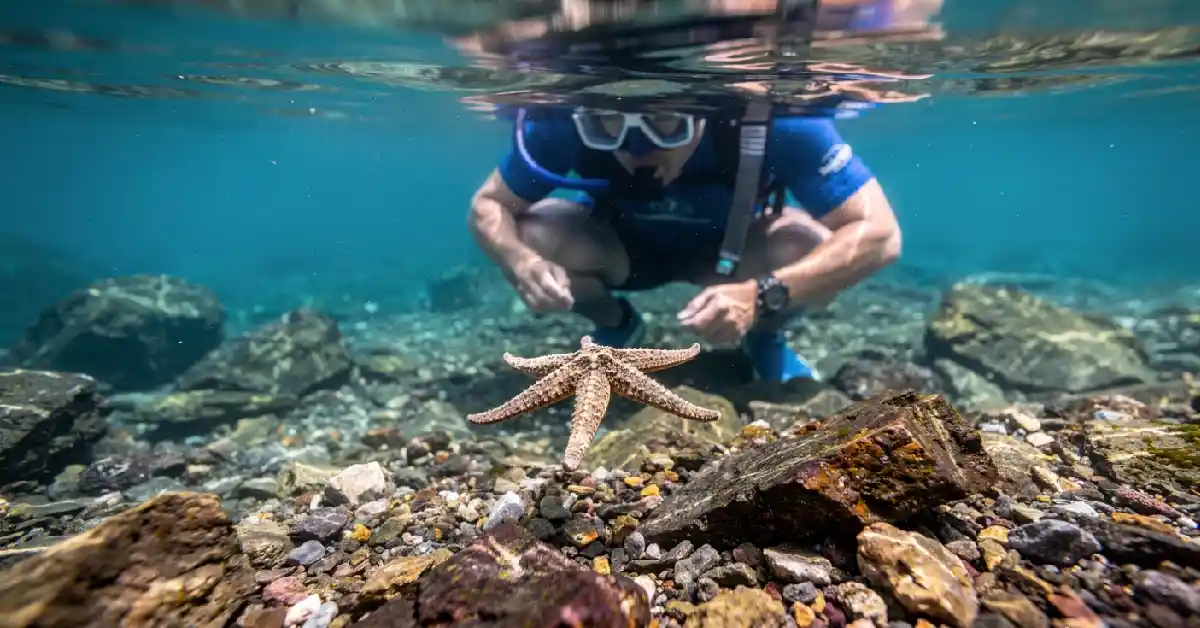
Water shoes. That’s the price of entry. It’s worth paying.
Stazzone is Sciacca’s original town beach, rocky bottom, rocky shoreline, not designed for easy swimming. What it is designed for, however, is underwater life. The rock formations create natural crevices and sheltered zones that sandy beaches simply cannot replicate: sea urchins, octopus, wrasse, and starfish in densities that feel almost staged. Bring a snorkel, get in, and stop trying to swim anywhere in particular. You’re here to look, not to move.
Sovareto, The Most Photographed Sciacca Italy Beach
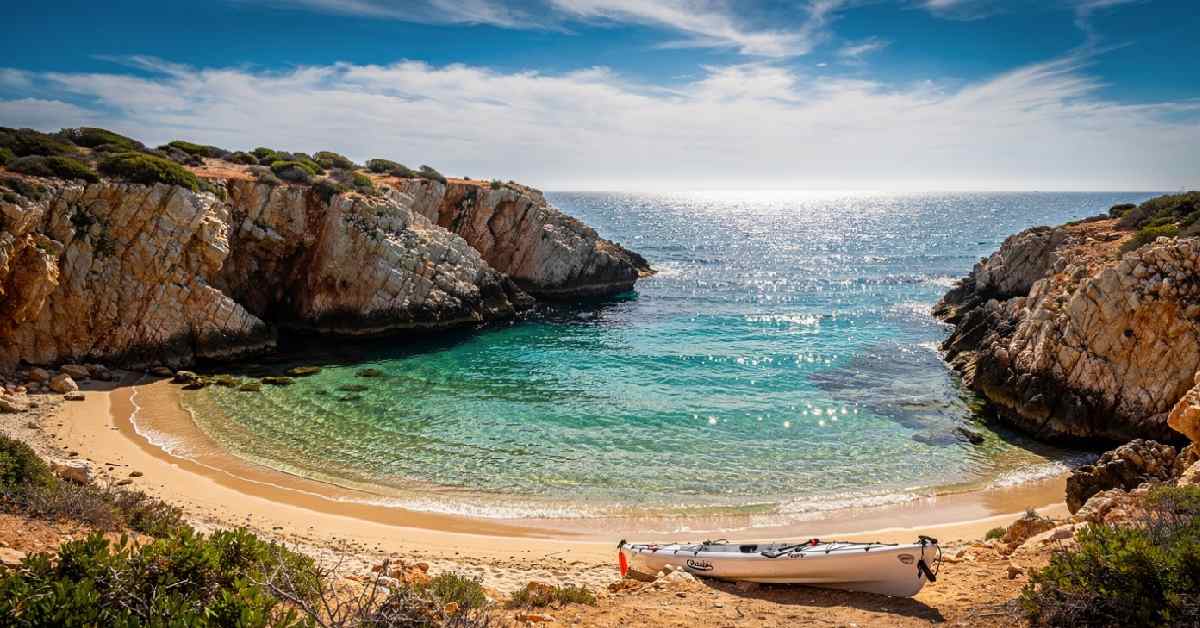
Ask anyone who has visited multiple beaches in Sciacca Sicily which one they’d return to fastest, and Sovareto comes up again and again. It’s a curved sandy cove heading west from town. The cliffs and low Mediterranean scrub framing the water create an enclosed, discovery feeling that flatter beaches simply don’t produce.
Kayak hire is available here. Paddleboarding conditions are good on most days. Both a free beach section and a paid lido exist side by side. Because it photographs so well, it also fills up earlier than other Sciacca beaches in July and August, therefore, arriving before 10am in peak season is essential.
Torre del Barone – Drama First, Comfort Second
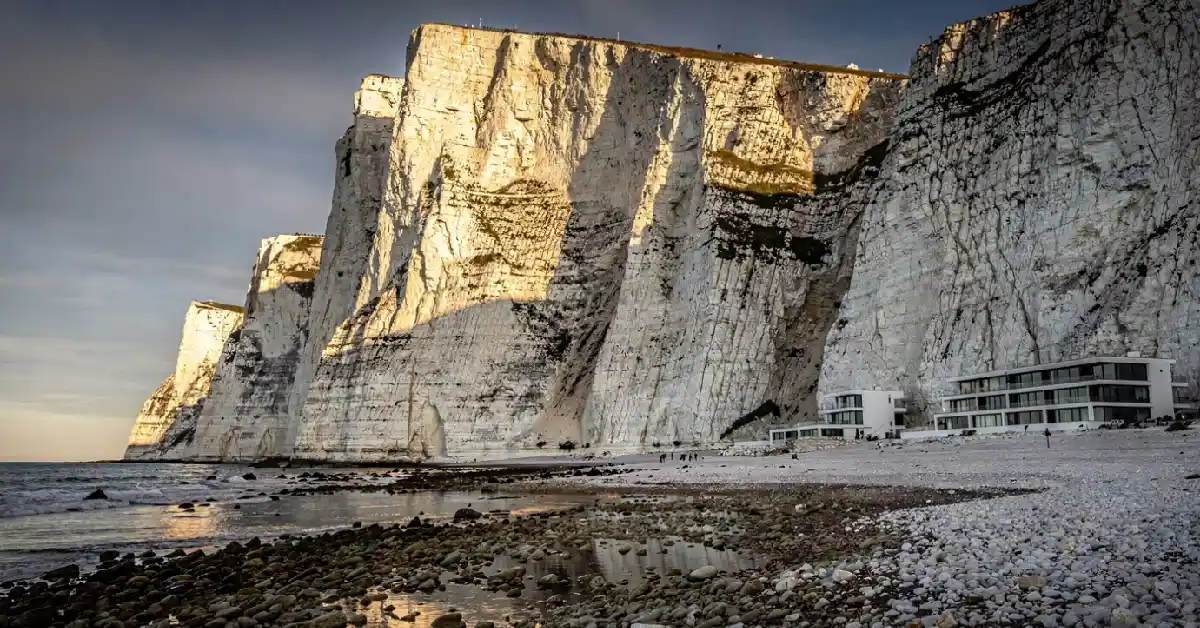
Long pebbly beach. White limestone cliffs rising sharply behind it. A modern resort sits adjacent, which means loungers and umbrellas are available alongside the natural spectacle of those cliffs.
The pebble underfoot thins the crowd in a useful way, people who can’t be bothered with uneven ground go elsewhere. Consequently, Torre del Barone stays calmer than its quality would suggest it should be. Several strong seafood restaurants are nearby, which makes the day structure obvious: beach all morning, long slow lunch, done.
Casello 11 and Pianagrande – Where Sciacca Beach Italy Gets Strange
Drive east toward Selinunte and you enter the Belice River Nature Reserve. Pianagrande appears here, large, pebbly, quieter than beaches closer to town, with crystal-clear water and kayak hire on-site.
Casello 11, however, is something else entirely. Named after a derelict railway tollhouse buried inside the reserve, it’s the kind of beach you’d dismiss as too obscure to bother with, until you’re actually standing there. Free-roaming donkeys occasionally appear near the shoreline. There is no infrastructure. A rusted piece of railway history sits in the scrubland nearby. It is genuinely strange, and that strangeness is the entire draw.
What Most Guides Miss About Sciacca Beach Italy
The Thermal Baths Are Not a Bonus – They’re Core
Most visitors to Sciacca beach Italy treat the thermal baths as optional. This is the wrong instinct.
The caves of Monte Cronio release natural sulphurous steam that has drawn visitors consistently since Roman times, the town was named Thermae Salinuntinae for exactly this reason. After a day of salt water and sun, soaking in mineral-rich thermal water produces a physical recovery that no hotel spa can replicate. The water is warm. The minerals are real. The tradition behind the practice is 2,000 years old and uninterrupted.
The practical structure: morning at a Sciacca beach, afternoon at the Monte Cronio thermal baths. Thank yourself that evening.
The Port at Dawn Beats Most Tourist Attractions
My alarm went off at 5:45am on my second morning in Sciacca. I seriously considered ignoring it.
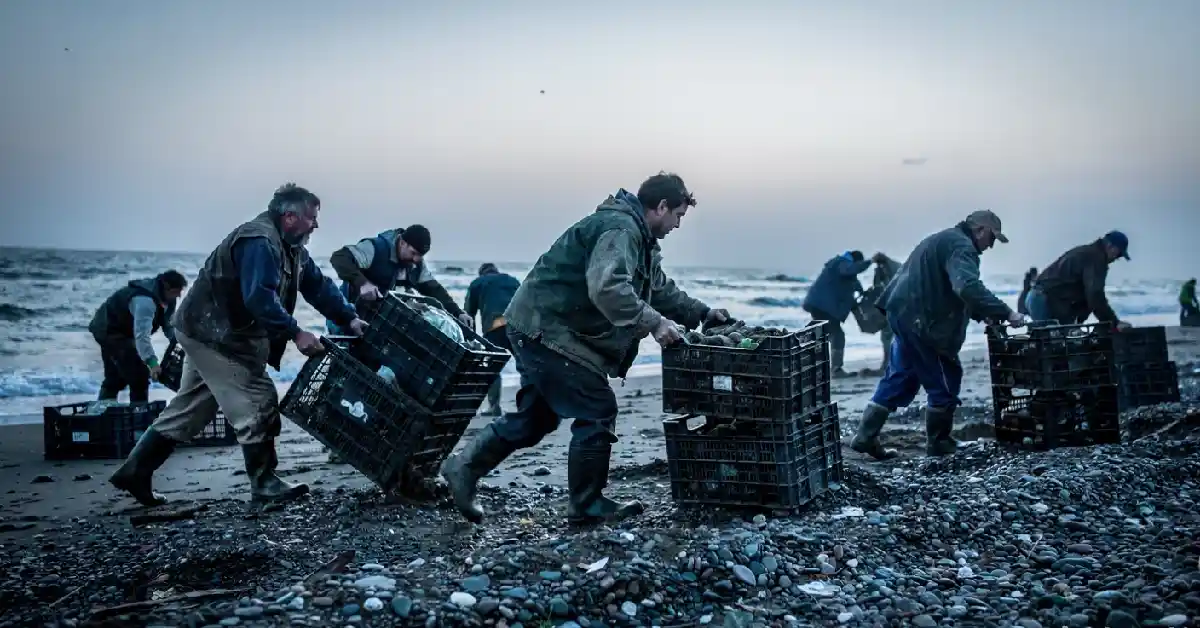
The fish market at dawn is chaotic, loud, fast, and authentic in a way that curated “local experience” tours attempt to recreate and nearly never do. Night fishing boats dock, the catch comes up from the hold, buyers arrive, arguing begins. By 8am, that fish is in restaurant refrigerators. By noon it’s on a plate. That chain, sea to table inside a single morning, is one of the strongest arguments for spending time in coastal Sicily over almost anywhere else.
The Ceramics Here Are Different From Anywhere Else in Sicily
Caltagirone attracts all the attention for Sicilian ceramics. Nevertheless, Sciacca has its own tradition with a visually distinct regional character. The workshops on Via Licata produce pieces with darker palettes, heavier geometric influences, and a Moorish thread running through the design vocabulary that directly reflects the Arab history of this town. Worth an hour of browsing even if you leave empty-handed.
Sciacca Beach: Honest Pros and Cons
| What Works | What Doesn’t |
|---|---|
| Eight distinct beaches covering every type of traveller | Getting here and between beaches without a car is genuinely difficult |
| Far fewer crowds than north coast Sicily resorts | Accommodation options are limited, book early for summer |
| Exceptional seafood priced for locals, not tourists | Limited English spoken in restaurants and smaller shops |
| Thermal baths unique to this part of southern Italy | Torre Salsa and Casello 11 have zero facilities, plan fully |
| Free beach access available at every major beach | August heat reaches 35°C+ and beaches are noticeably busier |
| Cultural depth: working port, ceramics, 2,000 years of history | Parking at Capo San Marco fills by 10am in July and August |
Best Time to Visit Sciacca Beach
Late June and September are the clear answer. Water temperature sits between 24–26°C. Beaches are occupied but never overwhelmed. Restaurants operate at full capacity. Accommodation remains available without booking months ahead. Additionally, the September light, lower angle, amber-warm, makes the coastal landscape measurably more photogenic than the flat midday glare of August.
July and August work if you arrive at beaches before 10am and avoid the midday heat. Even so, they’re still far quieter than Taormina or Cefalù at the same time of year. Book accommodation early regardless.
May and October suit anyone who prefers quiet over warmth. Temperatures sit in the low-to-mid twenties Celsius, and the beaches feel as though they belong entirely to you. Water remains swimmable through most of October.
Winter is for the town, the history, and the thermal baths. The Sciacca beach scene is dormant, but the fish market still runs at dawn, and the restaurants are excellent without any competition for tables.
How to Get to Sciacca, Italy
Sciacca sits on Sicily’s southwestern coast, roughly 100 km from Palermo and 60 km from Agrigento.
By car, the only practical option if you want access to multiple beaches. From Palermo: A29 motorway to Castelvetrano, then SS115 southwest, around 90 minutes. From Agrigento: SS115 direct, 45 minutes. Without a car, you’re limited to Lido di Foggia and Stazzone.
By bus. AUTOLINEE LUMIA connects Sciacca with Palermo, Agrigento, and Trapani. Workable for reaching the town. Not useful for outlying beaches.
Nearest airports:
- Palermo Falcone-Borsellino (PMO) – 100 km, 90-minute drive
- Trapani Birgi (TPS) – 90 km, 90-minute drive
- Catania Fontanarossa (CTA) – 200 km, approximately 2.5 hours
Must Read: White Lotus Filming Locations Sicily Visit
Practical Tips Before You Visit Sciacca Beach
- Water shoes are non-negotiable at Stazzone and Torre del Barone, and useful everywhere else along this coast.
- Carry cash. Many beach lidos, local restaurants, and smaller shops remain cash-only. ATMs exist in the historic centre but are sparse elsewhere.
- Torre Salsa requires full self-sufficiency. Bring water, food, and portable shade. Nothing is for sale there.
- Capo San Marco parking fills by 10am in peak season. Arrive early or accept a long walk from wherever you leave the car.
- Cucchiteddi – Sciacca’s regional almond-and-pumpkin cookie, are sold at La Favola bakery in three variations. Order all three. They’re small and worth every one.
- The Riserva Naturale San Marco, adjacent to Capo San Marco beach, offers kayak hire and coastal hiking trails that pair naturally with a beach morning.
A 3-Day Sciacca Beach Italy Itinerary That Actually Works
Day 1 – Arrive and get oriented. Walk the historic centre and port in the morning. If you’re willing to set an early alarm, the fish market at dawn is worth it. Lunch near the harbour, order whatever came in that morning and ask what it is afterward. Spend the afternoon at Lido di Tonnara, walkable from town and easy for a first beach day. In the evening, walk the Scala Sciacca tiled staircase, have aperitivo in the upper town, browse the ceramics workshops.
Day 2 – The full Sciacca beach experience. Capo San Marco before 10am, snorkel gear in hand. Stay until early afternoon, the water genuinely earns the time. Drive back through town and spend the afternoon at the Monte Cronio thermal baths. This combination, salt water then mineral thermal water, is the best possible use of a Sciacca afternoon.
Day 3 – Go further afield. Drive to Torre Salsa early with a full picnic. Two to three hours of swimming and snorkelling in the reserve. Then head east toward Agrigento’s Valley of the Temples, the late afternoon light on those Greek ruins is one of the more genuinely spectacular things in southern Italy, and it’s only 60 km from Sciacca.
Expert View: Why Sciacca Beach Rewards the Deliberate Traveller
Sciacca hasn’t been optimised for tourism yet. That friction, fewer English menus, less signage, more effort to navigate, is the same reason the beaches are still worth visiting. Fully optimised destinations have traded that friction for convenience, and in doing so have lost the quality that made them worth going to in the first place.
The fish market exists to sell fish. The thermal baths have run continuously for 2,000 years because they work, not because a wellness brand decided to monetise local geology. Eight distinct Sciacca Italy beaches sit within easy driving distance of each other, ranging from family-friendly lidos to wild nature reserves to dramatic cliff-backed coves. That combination, genuine coastal variety plus an unpackaged Sicilian town, is what makes this stretch of the south coast worth the deliberate effort to reach it.
It will not stay undiscovered. Go while the friction is still worth the reward.
Conclusion
Yes. Unambiguously.
Sciacca beach Italy delivers the Sicily that most visitors spend their whole trip searching for and mostly don’t find. Golden sand and layered-clear water at Capo San Marco. Six kilometres of wild reserve coastline at Torre Salsa. Rocky marine life at Stazzone. Shallow family safety at Lido di Tonnara. Drama and white cliffs at Torre del Barone. And threading through all of it, a real Sicilian town with 2,000 years of history, a working fishing port, thermal springs, and ceramics being made by people who care about the craft.
Plan it deliberately. Rent a car. Carry cash. Pack water shoes and a snorkel. Arrive at the best beaches early. Eat whatever came off the boats that morning.
Sciacca won’t disappoint, it just requires that you show up properly.
FAQ Schema
What are the best beaches near Sciacca, Italy?
The best beaches near Sciacca Italy are Capo San Marco (fine golden sand, reef diving, sea turtles), Lido di Tonnara (shallow and sandy, ideal for families), Torre Salsa (six-kilometre wild reserve beach with exceptional snorkelling), Sovareto (scenic sandy cove with water sports), and Lido di Foggia (closest to town, natural and undeveloped). Each suits a different type of visit, the right choice depends entirely on what you want from a beach day.
Is Sciacca beach Italy good for families with young children?
Yes. Lido di Tonnara is the strongest family option, gradual sandy entry, calm shallow water, full facilities, and walkable from the town centre. Capo San Marco also has family-friendly sections alongside its more active dive areas. Most beaches in Sciacca Sicily see gentle Mediterranean conditions through summer, making them safe for children under normal supervision.
When is the best time to visit Sciacca beach Italy?
Late June and September offer the ideal balance, water temperatures of 24–26°C, manageable crowds, and good accommodation availability. July and August are peak season: hotter, busier, but still far quieter than Sicily’s north coast resorts. May and October work well for very quiet beach days, with cooler but swimmable water and almost no other visitors.
Do you need a car to reach the beaches in Sciacca Italy?
For Lido di Foggia and Stazzone, no, both are walkable from the Sciacca town centre. For Capo San Marco, Sovareto, Torre del Barone, Torre Salsa, and the Belice River Reserve beaches, a rental car or scooter is necessary. Public transport connections to outlying Sciacca beaches are extremely limited or non-existent.
What else can you do in Sciacca besides visiting the beach?
The thermal baths at Monte Cronio are unique to this area and worth treating as a core activity, not an afterthought. The historic centre features the majolica-tiled Scala Sciacca staircase, the 12th-century Basilica of Santa Maria del Soccorso, and a street art trail through the old Jewish quarter. The working fish market runs at dawn on the port. Day trips to Selinunte (30 km east) and Agrigento’s Valley of the Temples (60 km east) are both straightforward from a Sciacca base.